










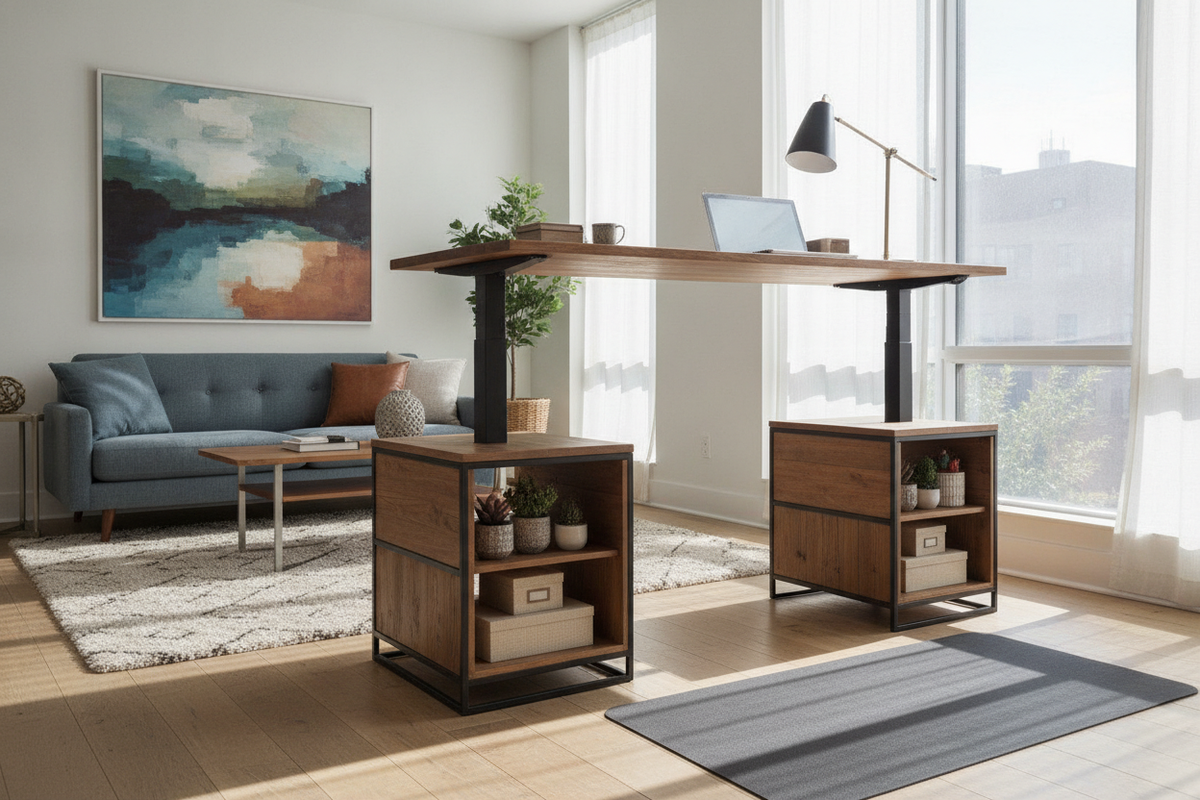
Upgrading a dedicated workspace often brings a familiar dilemma: how to embrace dynamic height adjustability without discarding a well-crafted writing surface, an heirloom timber top, or an executive unit full of tailored cabinetry. Learning how to make desk a standing desk allows you to merge the architectural character of your current furniture with the flexibility of a modern active workstation.
Strategic Foundations: Why Convert Existing Furniture into a Standing Setup
Transforming your current work surface protects your investment in quality materials, matched veneers, and custom room layouts. Many standard executive desks offer deep work surfaces, rich wood grains, and integrated side drawer banks that standalone motorized desks may lack out of the box. When converting a bedroom into an office, maintaining a cohesive aesthetic across dressers, credenzas, and desks helps preserve the residential warmth of the environment.
Opting to turn desk into standing desk configurations also reduces material waste while allowing full customization of working heights, surface depth, and peripheral placement. Whether you work with an expansive solid oak top or a compact laminate writing surface, deliberate retrofit planning ensures structural stability and design continuity.
Assessing Desk Geometry, Mass, and Structural Compatibility
Before disassembling any joinery or placing heavy conversion hardware on top, evaluate whether your existing furniture is structurally suited to convert regular desk to standing desk utility. A thorough pre-conversion audit includes:
- Top Plate Detachability: Check whether the desktop is secured via metal brackets, pocket screws, wooden dowels, or permanent glue joints to side pedestals.
- Core Material Density: Solid hardwoods and high-grade composite boards handle retrofit fasteners securely, whereas hollow honeycomb panels require reinforcement plates.
- Under-Desk Clearances: Modesty panels, pencil drawers, and structural crossbeams must be measured to determine whether a lifting mechanism will fit unobstructed.
- Total Load Distribution: Factor in the collective weight of multiple monitors, heavy task lighting, and desktop accessories alongside the surface itself.
Core Conversion Methodologies: Risers, Mechanical Frame Swaps, and Scissor Lifts
To successfully turn any desk into a standing desk, select a conversion path that aligns with your woodworking comfort level and spatial goals.
1. The Motorized Under-Frame Swap
This method involves detaching your existing desktop and mounting it onto a dedicated height-adjustable base. If your primary surface has substantial surface area, pairing it with a purpose-built base like a 71" height adjustable standing desk base gives you seamless electronic movement while preserving your original tabletop.
2. Desktop Converter Platforms (Scissor & Gas-Strut Risers)
A desktop converter sits directly on top of your existing furniture. This non-invasive solution requires no disassembly and provides an elevated keyboard tier and monitor platform, making it suitable for antique desks or rental spaces where permanent alterations are not practical.
3. Fixed-Height Leg Extenders and Base Plinths
If you prefer a permanent standing height paired with an architectural drafting stool, stationary risers or wooden plinths can be mounted beneath the desk legs. This approach maintains a traditional appearance without mechanical components.
The 9-Step Strategic Execution Blueprint for Executive Desk Conversions
Executing a standing desk retrofit on an executive or multi-component desk requires structured, step-by-step progress:
- Clear the Entire Workstation: Remove monitors, hardware, and all contents from drawers to eliminate shifting weight during modification.
- Inspect and Label Fasteners: Photograph underneath the desk before backing out screws or cam locks so modular pieces can be reassembled cleanly if desired.
- Decouple Pedestals and Modesty Panels: Gently separate storage pedestals from the main top plate using a rubber mallet and appropriate screwdrivers.
- Prep the Desktop Underside: Fill stripped screw holes with hardwood dowels and wood glue, sand smooth, and mark the centerline for the new base alignment.
- Assemble the Lifting Frame: If utilizing an adjustable motorized base, assemble the crossbars, transmission rods, and support feet according to manufacturer alignments.
- Position and Secure the Base: Center the lifting frame on the inverted desktop. Pre-drill pilot holes to prevent splitting, then secure with heavy-gauge wood screws. An adjustable height standing desk with electric lift system provides programmable presets to quickly transition between seated and standing postures.
- Upright the Desk with Assistance: Always pivot the assembled desk onto its feet with a partner to avoid lateral stress on the mounting brackets.
- Install Dynamic Cable Tracks: Mount an under-desk cable spine or articulated tray to route power cords smoothly as the desk travels up and down.
- Level and Calibrate: Adjust the leveling glides beneath the feet to eliminate surface wobble before loading computer equipment.
Managing Storage Pedestals, Modesty Panels, and Cabinet Synergy
One challenge when you make your desk a standing desk is retaining the storage utility of executive drawer banks. Because motorized frames must travel vertically without obstruction, attached side pedestals cannot remain rigidly fastened to both the floor and the moving top.
Consider reconfiguring detached pedestals as standalone credenzas positioned beside or behind your active desk. Alternatively, paired alongside a spacious surface like a super-sized standing desk layout, mobile pedestal cabinets on soft-rolling casters can glide beneath the work surface when seated and roll out smoothly when standing.
Spatial Clearance, Cable Management, and Room Layout Integration
A converted standing desk requires deliberate spatial planning to operate safely within your room. Ensure that your room arrangement accommodates full vertical movement without pinching cords or colliding with surrounding architecture:
- Wall Offset Margin: Maintain a small visual gap between the desk edge and adjacent drywall to prevent friction or scuffing during height transitions.
- Window and Sill Clearance: Position the standing trajectory clear of projecting windowsills, picture frames, and wall-mounted shelving.
- Slack-Loop Wiring: Bundle monitor, hub, and power cables with sufficient slack at the lowest sitting point so they never pull taut at peak standing height.
If you need to fit a stylish work desk into any small corner, compact tabletop converters or clean two-leg adjustable bases keep your floor footprint minimal while delivering full ergonomic flexibility.


Dejar un comentario
Este sitio está protegido por hCaptcha y se aplican la Política de privacidad de hCaptcha y los Términos del servicio.