










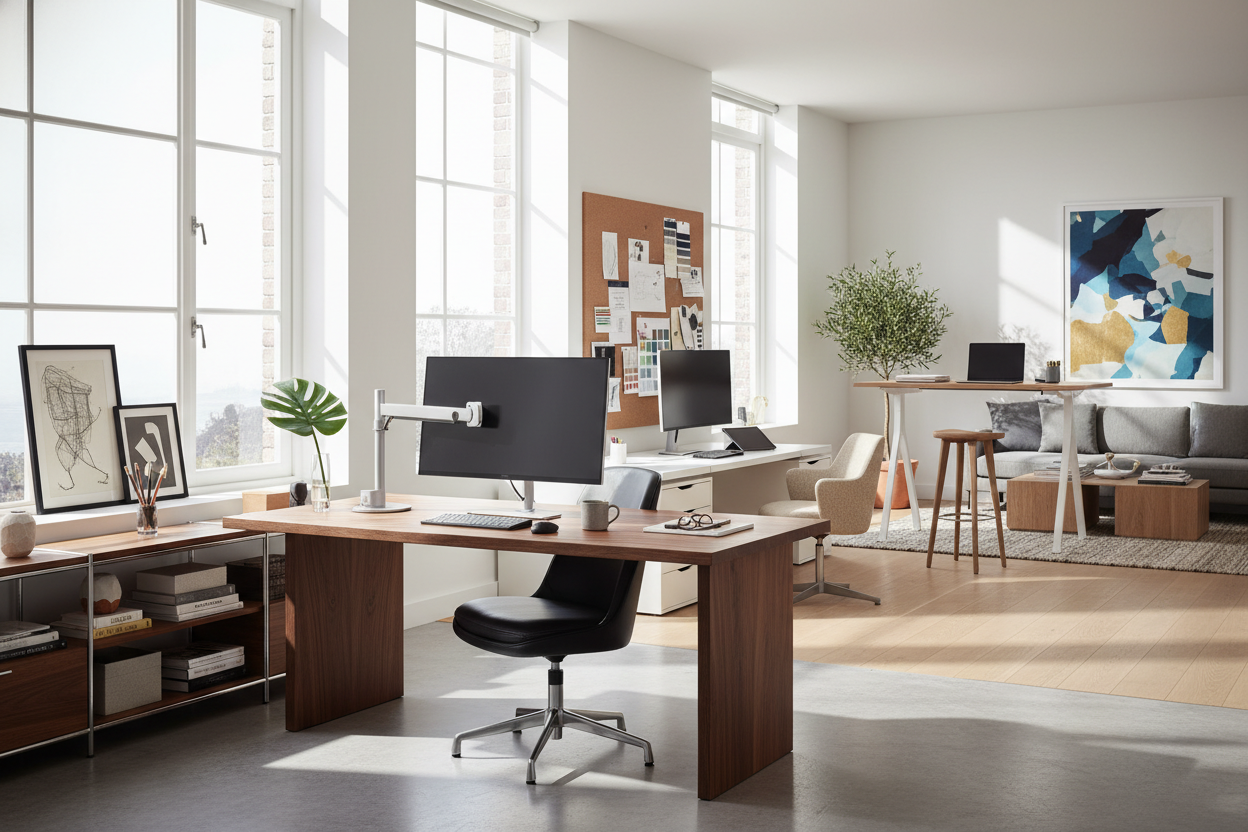
Many of us transitioned to remote work by throwing a laptop on the dining table, assuming it was temporary. Years later, you might still be dealing with a makeshift setup that kills your posture and clashes with your living room decor. Finding the right home office desks ideas isn't just about picking a flat surface; it is about creating a dedicated zone that signals your brain it is time to focus, without making your home feel like a corporate cubicle.
In this guide, you will learn how to choose the right desk for your space, coordinate it with your existing style, and avoid the ergonomic disasters that plague cheap furniture.
Quick Decision Guide
- Prioritize depth over width: A 24-inch deep desk is the minimum for a monitor and keyboard setup without eye strain.
- Match the visual weight: If your room is small, opt for open-frame metal or tapered wood legs rather than a heavy, solid pedestal base.
- Consider cable management: Desks with built-in grommets or hidden channels prevent the dreaded cord spaghetti.
- Know your materials: Solid wood ages beautifully but requires coasters, while high-pressure laminate offers worry-free durability for heavy daily use.
Space Planning & Layout
Finding the Right Footprint
When looking for ideas for home office desk placements, the first hurdle is always dimensions. In a typical North American suburban bedroom-turned-office, you want to leave at least 36 inches of clearance behind the desk for your chair to roll back comfortably. If your desk faces a wall, ensure you have adequate task lighting. If you are floating the desk in the center of the room, you will need a floor outlet or a highly strategic rug placement to hide power cords.
The Small Apartment Compromise
For condo dwellers or those carving out a workspace in an open-concept living room, visual weight is everything. A bulky executive desk will immediately swallow the room. Instead, look for home work desk ideas that utilize vertical space, like a leaning ladder desk or a wall-mounted floating desk. These profiles keep the floor visible, tricking the eye into perceiving more square footage.
Material & Build Quality
Solid Wood vs. Engineered Alternatives
A solid walnut or oak desk brings incredible warmth and texture to a room, fitting perfectly into mid-century or transitional aesthetics. However, solid wood is susceptible to humidity changes and scratches. If you are someone who eats lunch at your desk or constantly shuffles heavy binders, a high-quality engineered wood with a commercial-grade veneer or laminate top might be a smarter investment. It provides the wood look without the constant anxiety of ruining the finish.
Comfort & Ergonomics
The 29-Inch Rule
Standard desk height in North America is around 29 to 30 inches. While this accommodates the average person, it is not universally perfect. If you are on the shorter side, a standard desk might force your shoulders up, leading to tension. When you design home office desk setups, consider an adjustable standing desk frame paired with a custom top. This allows you to dial in the exact millimeter of height for seated ergonomics, while giving you the flexibility to stand during afternoon slumps.
Designer's Honest Take
Over my 15 years designing residential interiors, I have made my fair share of mistakes when selecting office furniture. Early in my career, I bought a stunning, vintage glass-top desk for my own home studio. It looked incredibly chic and practically disappeared into the room. But I learned the hard way that glass is a nightmare for daily work.
Optical mice refuse to track on it, every single fingerprint and coffee smudge is magnified, and the cold, hard surface was miserable to rest my forearms against during long drafting sessions. I ended up covering half of that beautiful glass with an oversized leather desk mat just to make it functional. Now, I always steer clients toward warm, matte surfaces that absorb light and hide daily wear, even if the glossy option looks better in the showroom.
Frequently Asked Questions
What size desk do I need for two monitors?
For a dual-monitor setup, you need a desk that is at least 48 inches wide, though 60 inches is ideal. Depth is equally important; aim for 24 to 30 inches deep so the screens are not sitting too close to your eyes.
Where should a desk be placed in a home office?
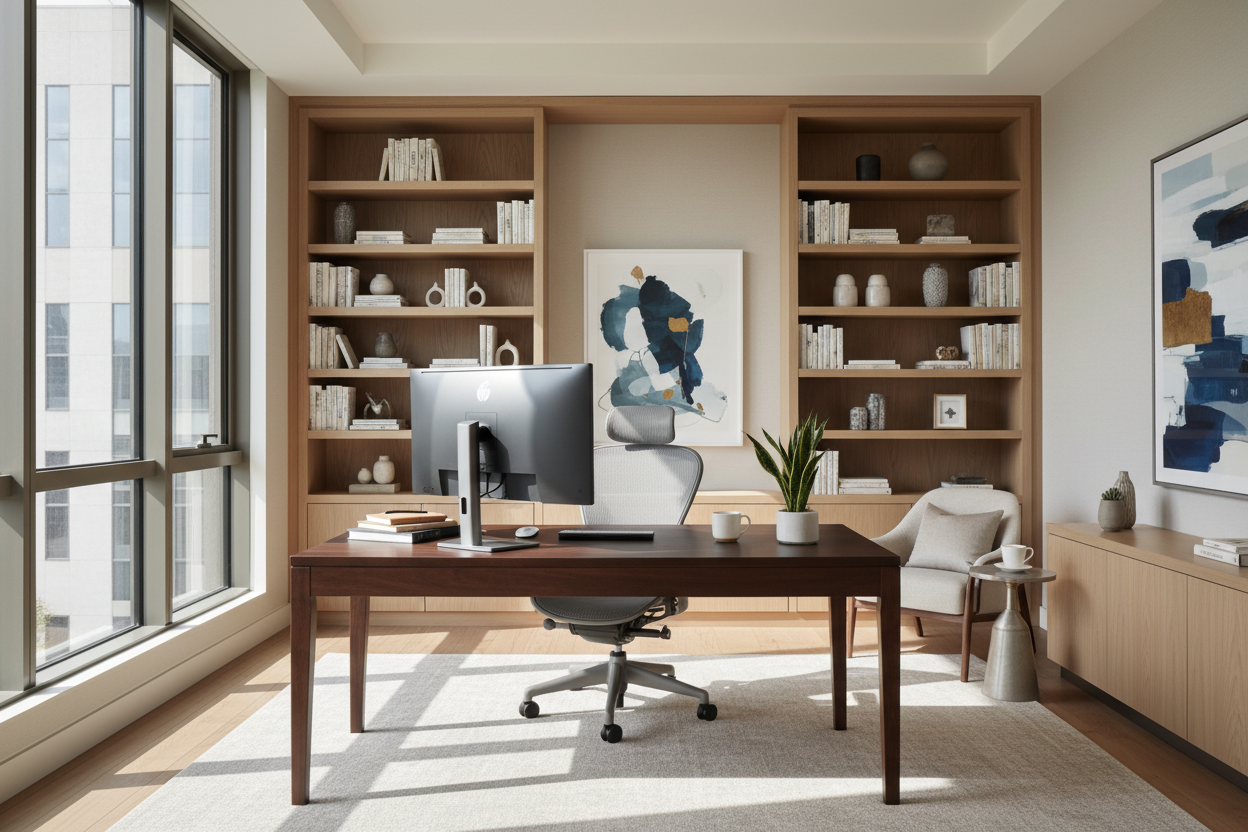
Ideally, place your desk perpendicular to a window. This gives you the benefit of natural light without the harsh glare on your screen (if the window is behind you) or the distracting contrast (if the window is directly in front of you).
Are standing desks worth the investment?
Yes, if you actually use the standing feature. The real value of an adjustable desk, however, is being able to set the exact seated height for your specific body proportions, which drastically reduces back and neck strain.


Dejar un comentario
Este sitio está protegido por hCaptcha y se aplican la Política de privacidad de hCaptcha y los Términos del servicio.