










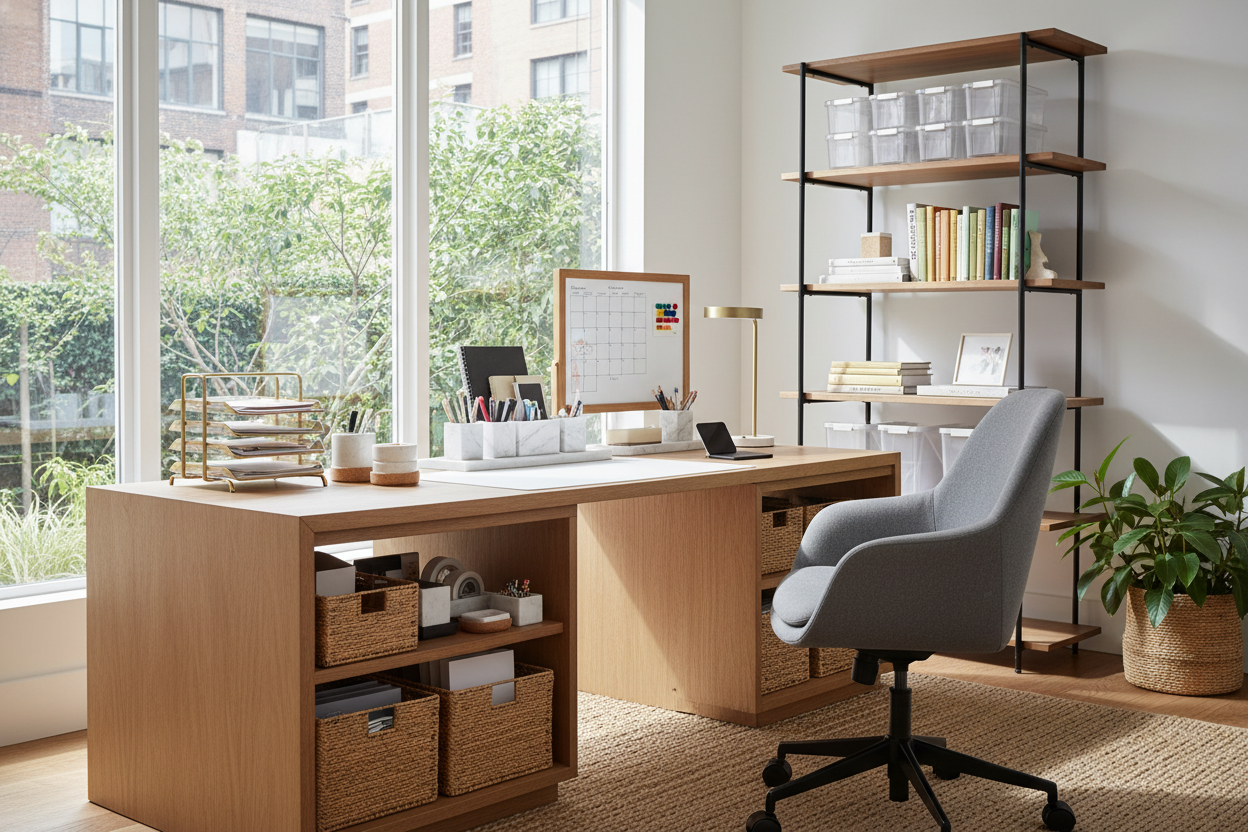
We've all been there: you sit down at your desk on a Monday morning, and instead of feeling ready to tackle the week, you are instantly overwhelmed by scattered mail, tangled cords, and random sticky notes. Creating a workspace that fosters true focus requires more than just a beautiful desk; it requires the best home office organization products tailored to how you naturally work.
In this guide, I will walk you through how to select pieces that manage the daily mess while maintaining a high-end, cohesive aesthetic. You will walk away knowing exactly how to balance visual appeal with heavy-duty storage.
Quick Decision Guide: Organizing Your Workspace
- Assess your workflow first: Buy storage based on your daily habits and actual paperwork volume, not aspirational catalog photos.
- Prioritize vertical space: Wall-mounted shelving and tall bookcases draw the eye up and clear precious desk real estate.
- Hide the ugly, display the pretty: Conceal cables, printers, and tax documents in closed storage; display art, books, and curated objects on open shelves.
- Invest in modularity: Choose drawer organizers and filing systems that can adapt as your professional needs change over time.
Mastering Your Office Layout
Creating Zones for Focus
When selecting organizational items for office setups, visual weight matters just as much as physical storage capacity. If you pile all your heavy filing cabinets and shelving on one side of the room, the space will feel completely off-balance. I always recommend establishing distinct zones: a primary work zone (your desk and immediate reach), a reference zone (bookshelves), and a supply zone. Keep your daily-use items within a 36-inch radius of your chair to minimize physical disruptions while you work.
Integrating Storage with Your Decor
Matching Materials and Textures
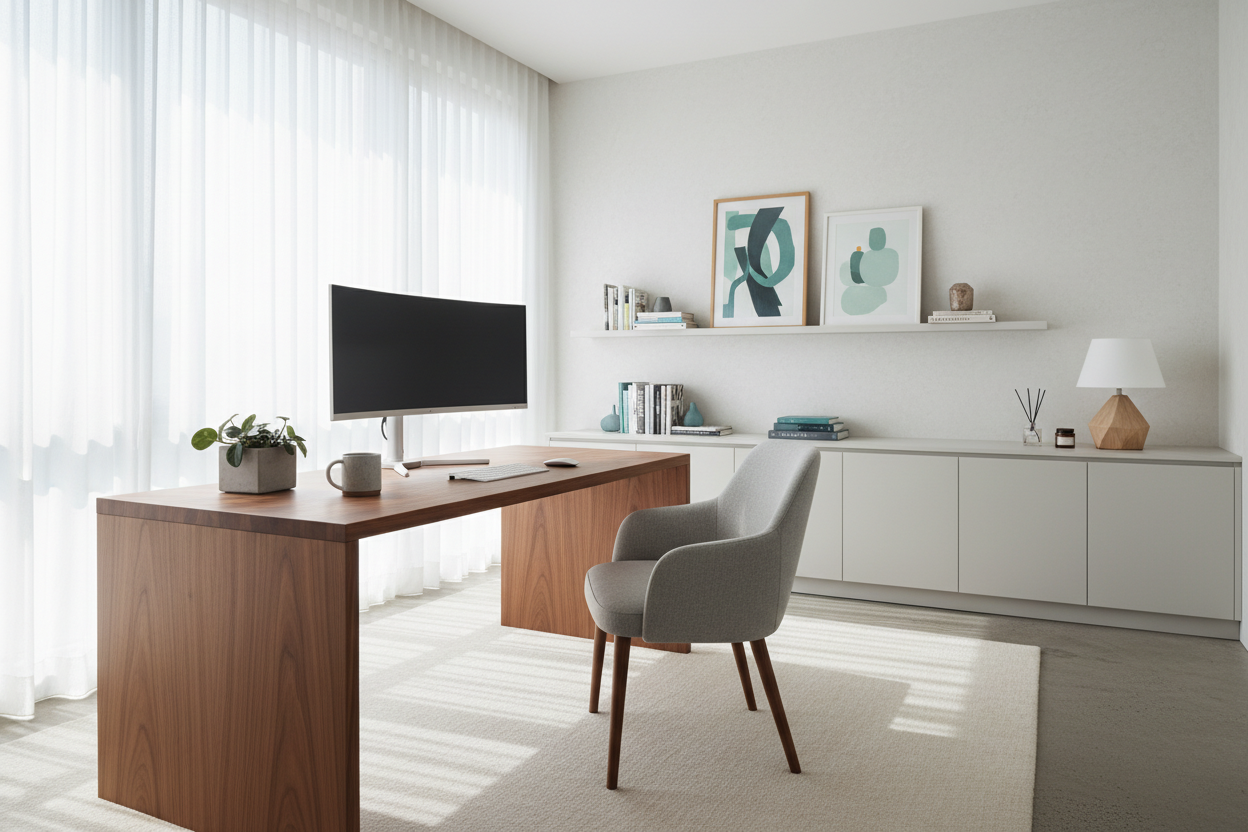
Nothing ruins the look of a beautifully curated mid-century modern or transitional room faster than cheap, mismatched plastic bins. To maintain a sophisticated silhouette, your storage solutions should speak the same design language as your furniture. If you have a warm walnut desk, look for leather desk pads, matte black metal trays, or woven linen boxes. Layering these textures prevents the room from feeling sterile. You need the right office supplies to stay organized, but they should never look like they were bought in a panic at a big-box store.
Where to Spend and Where to Save
Investing in High-Touch Items
I advise my clients to allocate their budget toward items they interact with daily. A solid wood monitor stand or a heavy-gauge steel filing cabinet will withstand years of use, whereas cheap particleboard alternatives will inevitably chip or warp under the weight of heavy reference books. Save your money on secondary storage—like opaque bins for the top shelf of a closet—and invest heavily in the tactile pieces that sit directly on your primary work surface.
Designer's Honest Take: Lessons from My Own Office
Early in my career, I fell in love with a set of gorgeous, clear acrylic desk organizers. They looked incredibly sleek and minimalist on day one. But here is the unvarnished truth: clear acrylic shows absolutely everything. Within a week, the smudges, dust, and random assortment of half-used pens made my desk look ten times messier than before.
I learned the hard way that closed storage is a necessity, not an option. Now, I only use open trays for items that are inherently beautiful, like a brass letter opener or a nice notebook. Everything else goes into opaque, textured boxes. It is the only reliable way to maintain a clean visual line at the end of a long workday.
Frequently Asked Questions
What size storage units do I need for a small home office?
In tight spaces, rely entirely on vertical storage. Look for bookshelves that reach close to the ceiling (at least 84 inches high) with a depth of no more than 12 to 14 inches. This provides maximum shelving without eating into your floor plan or making the room feel cramped.
How do I hide cables and cords effectively?
Cable management is critical for a tailored look. Mount a wire-management tray directly to the underside of your desk to catch heavy power strips. Then, use neoprene cable sleeves to bundle the remaining cords together, routing them down the back of a desk leg so they disappear from view.
Are built-in cabinets better than freestanding furniture?
Built-ins offer a seamless, custom look that maximizes every inch of negative space, making them ideal for long-term homeowners. However, freestanding furniture offers flexibility. If you rent or anticipate moving your office to a different room, invest in high-quality modular pieces that can travel with you.

Leave a comment
This site is protected by hCaptcha and the hCaptcha Privacy Policy and Terms of Service apply.