










There is nothing quite as frustrating as settling in for a day of productive work, only to be distracted by a drawer that sticks or a surface that wobbles every time you type. As an interior designer, I see this scenario constantly: clients invest heavily in ergonomic chairs but treat the desk as an afterthought. This is a critical error in spatial planning. A quality office desk is not merely a surface; it is the anchor of your workspace, dictating both the visual tone and the functional flow of the room. In this guide, we will dissect what actually separates a high-end investment piece from fast furniture, ensuring your home office serves you for decades, not just seasons.
Key Features to Look For
- Joinery Construction: Look for dovetail or mortise-and-tenon joints rather than staples and glue.
- Material Integrity: Prioritize solid hardwoods or high-grade architectural veneers over particle board.
- Hardware Quality: Soft-close drawer slides and heavy-gauge metal pulls indicate longevity.
- Ergonomic Dimensions: A standard height of 29-30 inches with adequate knee clearance is non-negotiable.
- Cable Management: Integrated grommets or hidden channels to maintain a clean visual silhouette.
Decoding Material: Solid Wood vs. Veneer
When curating top rated home office desks for clients, the conversation always begins with materials. There is a misconception that "quality" exclusively means solid wood. While a solid walnut or oak desk offers undeniable heirloom potential and can be refinished, high-quality veneers are often more stable in fluctuating humidity.
However, you must distinguish between architectural veneer (a thick slice of wood over a stable core) and paper-thin laminates found on budget options. A true quality desk will have a tactile finish—you should feel the grain. If it feels like plastic, it will age like plastic.
The Silhouette and Visual Weight
Many popular desks on the market fail because they ignore visual weight. In a smaller home office, a heavy, double-pedestal executive desk can make the room feel claustrophobic. Conversely, a spindly writing desk in a large library looks lost.
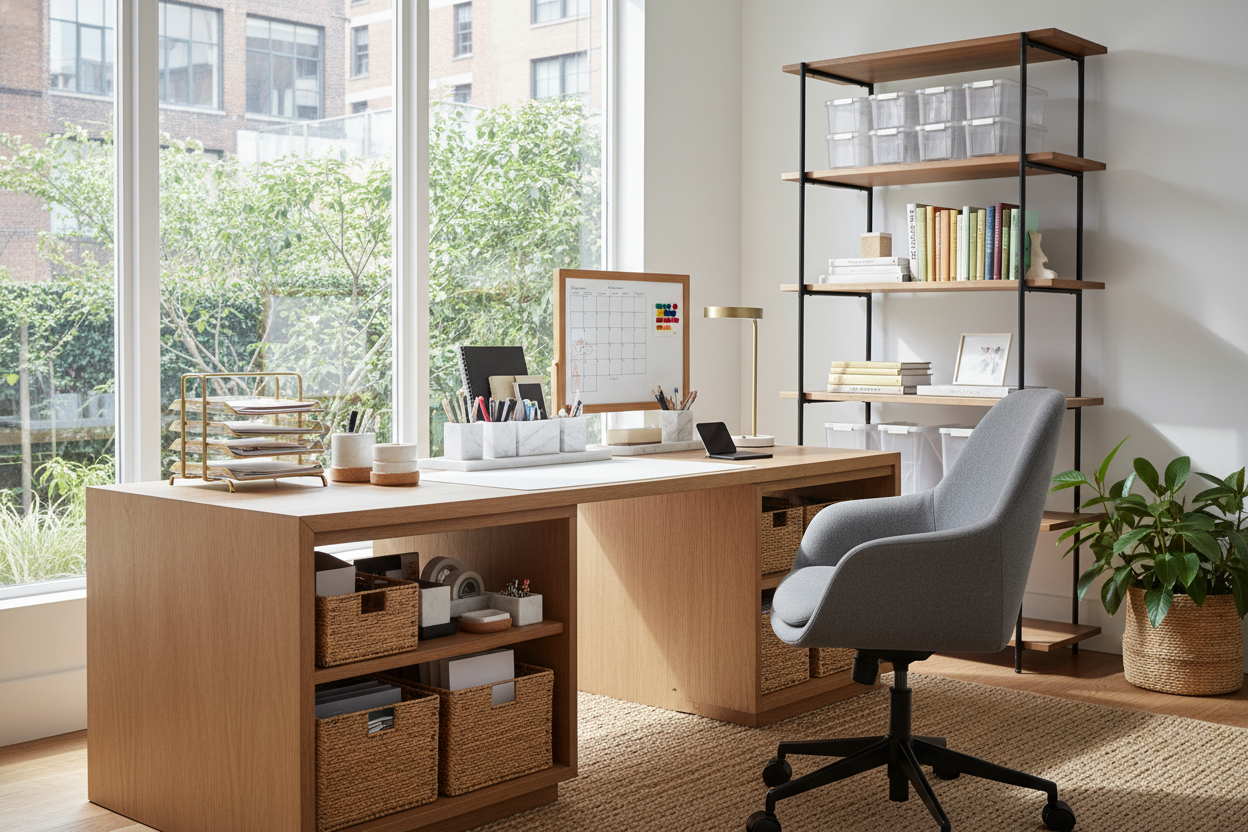
For a luxury aesthetic, consider the "floating" look. If the desk is positioned in the center of the room (which I highly recommend for commanding authority), the back of the desk must be finished. Inspect the back panel; if it is raw plywood or cardboard, it is designed to be pushed against a wall, limiting your layout options.
Functionality: Beyond the Surface
Top desks for home office setups must marry form with function. We are moving away from clunky keyboard trays, which often break the design lines, toward deeper desktops (30 inches plus) that allow you to rest your forearms comfortably on the surface. Look for integrated power solutions that are discreet. A mess of wires instantly degrades the look of even the most expensive furniture.
My Personal Take on Quality Office Desks
I learned the difference between "photogenic" and "quality" the hard way early in my career. I once specified a stunning, high-gloss lacquer desk for a client who was a heavy coffee drinker. It looked incredible in the portfolio photos. However, within six months, I received a call. The finish hadn't just scratched; it had clouded permanently from the heat of his mug because the lacquer wasn't heat-cured properly.
Now, when I inspect a desk, I do the "underside check." I run my hand underneath the desktop and inside the drawer boxes. If the wood is rough, unfinished, or snagging my sweater, the manufacturer cut corners where they thought you wouldn't look. If they skimped there, they definitely skimped on the structural integrity. A true quality desk feels as polished underneath as it does on top.
Conclusion
Investing in a quality office desk is an investment in your own headspace. By prioritizing superior joinery, appropriate scale, and durable finishes, you create an environment that commands respect and fosters focus. Don't just fill a space; curate it.
Frequently Asked Questions
How do I maintain a solid wood desk finish?
Avoid harsh chemical cleaners. Dust regularly with a microfiber cloth and use a high-quality beeswax polish every 6-12 months to nourish the wood and maintain its luster.
What is the ideal depth for a home office desk?
For laptop work, 24 inches is sufficient. However, if you use multiple monitors, aim for a depth of 30 to 36 inches to prevent eye strain and allow room for peripherals.
Are standing desks considered "quality" furniture?
They can be. Look for dual-motor systems for stability and solid wood tops. Avoid wobble-prone single-motor frames if you want the piece to last.

Leave a comment
This site is protected by hCaptcha and the hCaptcha Privacy Policy and Terms of Service apply.