










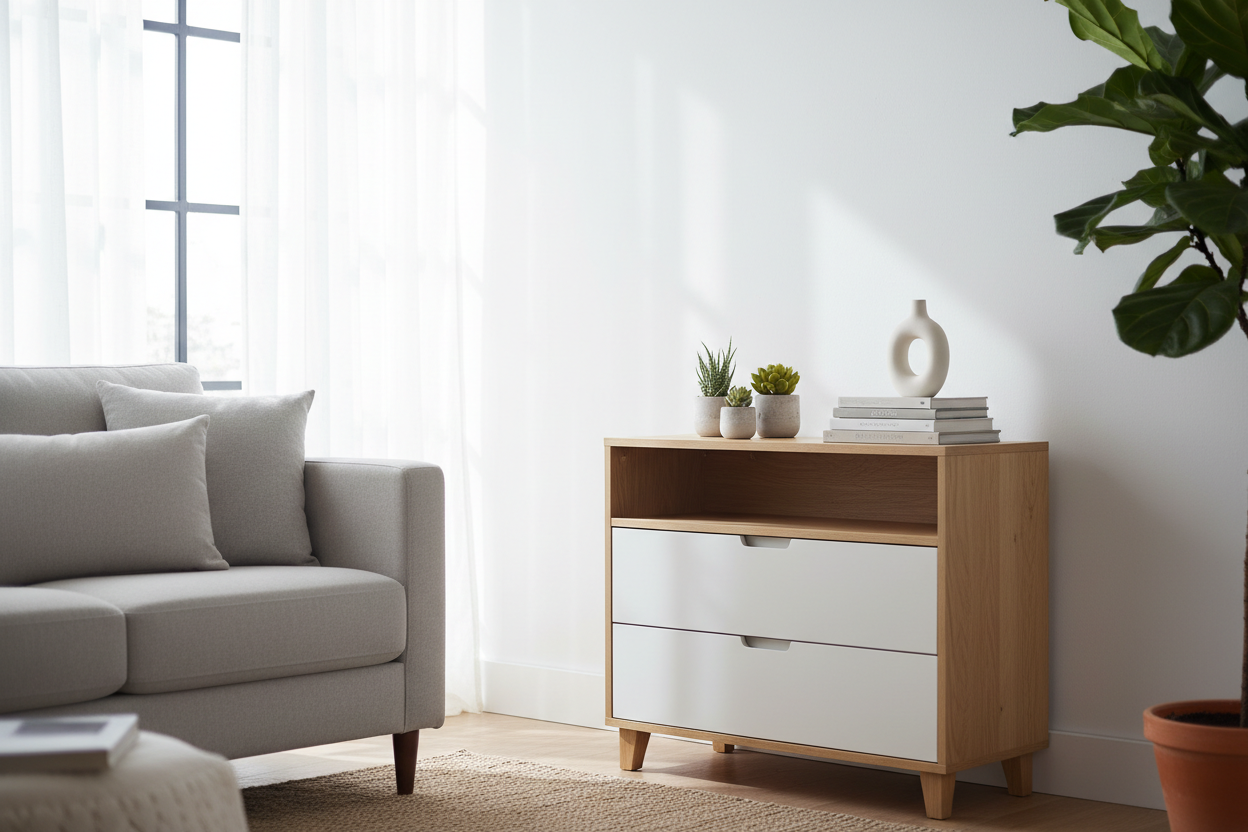
Finding the balance between storage and floor space is the eternal struggle of modern interior design. You want a place to tuck away the remotes, board games, and miscellaneous clutter, but you don't want a piece of furniture that swallows the room whole. The solution often lies in selecting a living room cabinet small enough to respect your square footage but substantial enough to make a design statement. Rather than viewing these compact pieces as compromises, think of them as opportunities to add architectural interest and curated organization to your home.
The Art of the Compact Console
A smaller cabinet serves a distinct purpose differently than a sprawling wall unit. It acts as an anchor for specific zones within the room. In an open-plan apartment, a waist-high cabinet can define where the lounge area ends and the dining space begins without blocking light or sightlines. The key is to identify exactly what function the piece needs to serve. Are you trying to hide a router and tangled cables, or are you looking for a surface to display a lamp and a stack of art books?
When you select a small cabinet in living room settings, visual weight becomes just as important as physical dimensions. A cabinet sitting flush on the floor with a solid base will feel heavier and more imposing than a piece raised on legs. If your room feels cramped, opt for mid-century modern styles or pieces with slender legs. Being able to see the floor underneath the furniture tricks the eye into perceiving the room as larger than it actually is.
A Lesson from My First Apartment
I learned the value of scale the hard way in my first true city apartment. The living area was barely ten feet wide, and I made the mistake of buying a standard-sized sideboard I found on sale. Once I wrestled it up the stairs and into place, the room felt instantly claustrophobic. The flow of traffic was cut off, and my shins paid the price daily. I eventually swapped it for a vintage record cabinet that was half the width but slightly taller. The difference was immediate. The room could breathe again, and that vertical storage proved far more practical for the narrow space than the horizontal sprawl of the previous piece. It taught me that footprint is everything; you have to respect the negative space.
Choosing the Right Materials
Material choice dictates the vibe of a small lounge cabinet. In tighter quarters, reflective surfaces can be a secret weapon. A cabinet with mirrored doors or a high-gloss lacquer finish bounces light around the room, making the piece disappear slightly rather than demanding attention. Glass-fronted cabinets are excellent for display, but they require discipline; if the interior is messy, the whole room feels messy.
Wood tones bring warmth, but be wary of dark, heavy woods like mahogany in a small, poorly lit room. Lighter oaks, birch, or painted finishes in soft neutrals tend to integrate more seamlessly. If you crave the industrial look, metal cabinets can offer a sleek, rugged aesthetic that is often physically lighter and easier to move if you decide to rearrange your layout—a frequent habit for those of us trying to maximize small spaces.
Functionality: Doors, Drawers, or Open Shelves?
The internal configuration of your living room small storage cabinet matters more than the exterior finish. Drawers are superior for small, loose items like batteries, charging cables, and coasters. They keep the visual clutter completely hidden. Doors with internal shelving offer more flexibility for larger items like vases or stacks of vinyl records. Adjustable shelving is a feature you should always prioritize; being able to move a shelf up two inches can be the difference between fitting your favorite oversized art book or having to lay it flat on top.
Open shelving on a small cabinet is a double-edged sword. While it looks airy, it demands curation. If you need this piece to hide the unglamorous reality of daily life, solid doors are your best friend. Cane or rattan webbing offers a beautiful middle ground, providing the concealment of a solid door while maintaining a visual lightness and texture that feels organic and breezy.
Placement Strategies for Tight Corners
Where you place the cabinet can revolutionize the room's flow. The most obvious spot is against a flat wall, but don't ignore the corners. A diagonal placement in a dead corner can soften the boxy feel of a room. Alternatively, placing a low cabinet behind a floating sofa can act as a sofa table, providing storage without taking up wall space. This is particularly effective in rentals where you might not be allowed to mount shelves.
Another underutilized strategy is flanking. If you have a fireplace or a large window, using two identical small cabinets on either side can create a sense of grandeur and symmetry usually reserved for larger homes. It provides double the storage without the visual bulk of a single massive unit.
Styling Your Surface
Once you have the piece in place, styling the top surface is where the design comes together. Because the surface area is limited, clutter accumulates quickly. A good rule of thumb is the triangle arrangement: a tall item (like a lamp or vase), a medium item (like a framed photo), and a low item (like a decorative bowl or stack of books). This guides the eye upward and creates balance.
Avoid covering every square inch of the surface. Leaving some negative space on top of the cabinet ensures it looks intentional rather than like a landing strip for mail and keys. If the cabinet is intended to catch keys, place a dedicated small tray on top to contain the mess.
Integrating with Existing Decor
You don't need to match your wood stains perfectly. In fact, a small cabinet is the perfect candidate for an accent piece. If your coffee table and media stand are neutral wood, a painted cabinet in sage green, navy, or terracotta can inject necessary personality into the room. It becomes a focal point, drawing the eye away from the room's size limitations and toward a specific design element.
Ultimately, the goal is to find a piece that works hard for its footprint. Whether it’s holding your media collection, serving as a mini bar, or just hiding the paperwork you haven't filed yet, the right cabinet proves that you don't need a massive amount of space to have a home that feels organized and stylish.
Frequently Asked Questions
How deep should a small living room cabinet be to avoid blocking traffic?
For high-traffic areas, aim for a depth between 12 and 15 inches. This is deep enough to store books and dinner plates but shallow enough to allow easy movement around the room. Anything deeper than 18 inches can start to feel intrusive in a compact layout.
Can I use a bedside table as a small living room cabinet?
Absolutely, provided the height aligns with your seating. Many nightstands offer excellent storage with drawers and shelves, and their compact footprint makes them ideal for use as side tables or auxiliary storage next to an armchair.
What is the best way to anchor a small cabinet so it doesn't look like it's floating?
Use artwork or a mirror on the wall above the cabinet to visually anchor it to the space. The wall decor should be roughly two-thirds the width of the cabinet to create a balanced, cohesive look that connects the furniture to the architecture of the room.

Leave a comment
This site is protected by hCaptcha and the hCaptcha Privacy Policy and Terms of Service apply.