










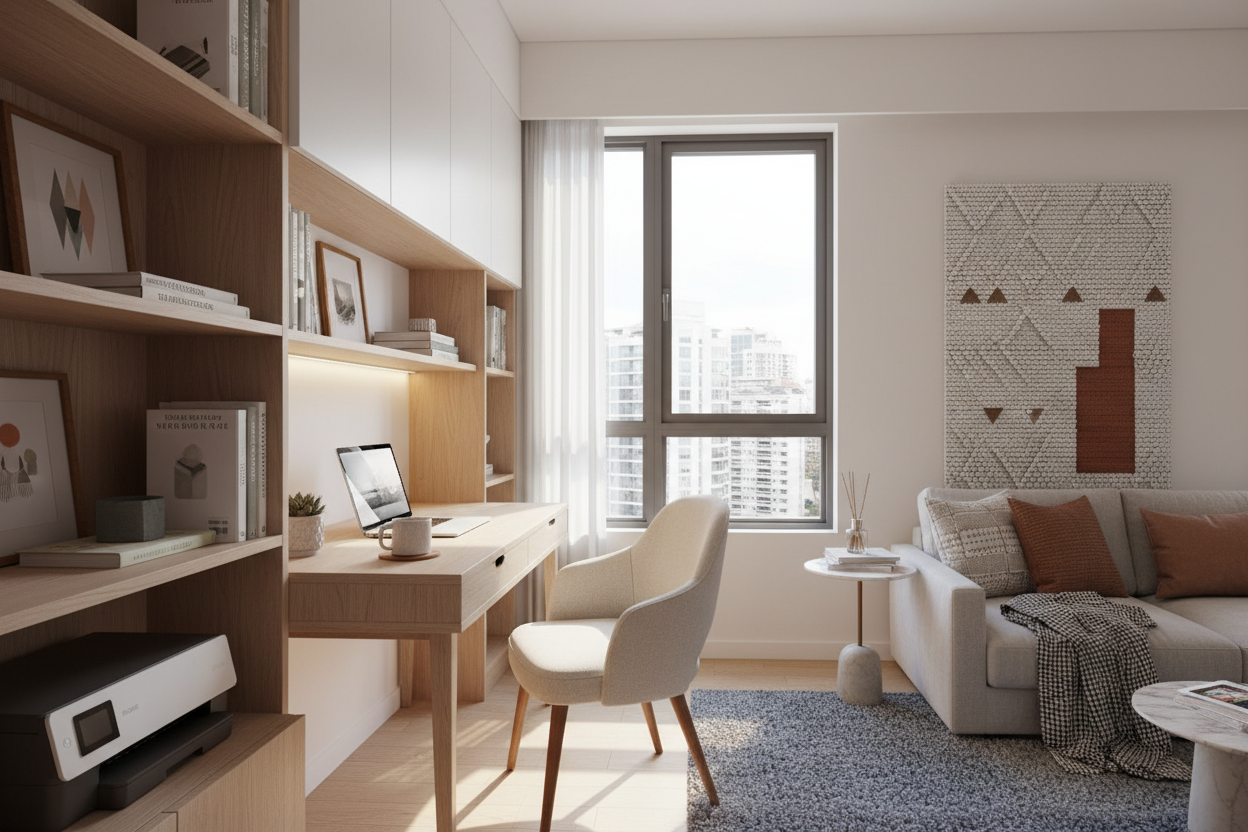
Merging your sanctuary with your workspace is one of the most complex challenges in residential interior design. The goal isn't just to squeeze a desk into a corner; it is to intentionally curate an apartment for office functionality that respects your downtime. When the lines between "living" and "working" blur, the risk is a space that feels cluttered and a mind that never truly rests. By focusing on visual weight, acoustic zoning, and multi-functional joinery, you can create a professional environment that disappears when the workday ends.
Quick Decision Guide: The Essentials
If you are rushing to purchase furniture, prioritize these four elements to ensure your space remains livable:
- Visual Weight: Opt for desks with slender legs or floating mounts to keep the floor visible, making the room feel larger.
- Material Warmth: Avoid sterile office laminates. Choose walnut, oak, or matte lacquers that blend with your existing residential furniture.
- Vertical Utility: In a work from home small apartment, use height for storage (shelving units) to save precious floor square footage.
- Ergonomic Disguise: Look for task chairs that feature fabric upholstery rather than corporate mesh to maintain a cozy aesthetic.
Zoning: The Art of Invisible Boundaries
In an open-plan layout, psychological separation is just as vital as physical separation. You cannot simply place a laptop on the dining table and expect peak productivity without long-term burnout. A successful apartment work from home set up relies on "micro-zoning."
Use area rugs to anchor the workspace. A high-pile rug under the sofa and a flat-weave kilim under the desk creates a tactile distinction between relaxation and focus. Additionally, consider the orientation of your desk. Facing a wall often feels confining in tight quarters; if possible, position your desk perpendicular to a window or floating in the room (facing the living area) to command the space rather than hiding from it.
Furniture Selection: Scale and Silhouette
When selecting pieces for a small apartment work from home scenario, scale is paramount. A standard executive desk is typically 60 inches wide and 30 inches deep—often too bulky for urban living. Look for "writing desk" dimensions (typically 48" x 24") which provide ample laptop space without dominating the room.
Materiality and Texture
The finish of your furniture dictates the room's atmosphere. For a sophisticated look, solid wood or high-quality wood veneer is superior to melamine. Wood introduces organic texture that softens the tech-heavy nature of monitors and keyboards. If your apartment leans modern, a glass or acrylic desk can minimize visual clutter, though be warned: glass requires constant cleaning to remain pristine.
Lighting: Balancing Task and Ambient
Commercial offices use cool, 4000K lighting, which is jarring in a home setting. For a cohesive work from home setup small apartment, layer your lighting. Use a dedicated task lamp with a directional shade for work (aim for 3000K LED bulbs) and rely on floor lamps with linen shades for ambient evening light. This allows you to "turn off" the office vibe simply by switching lighting circuits.
Lessons from My Own Projects
I learned the hard way that cable management is the single biggest destroyer of a luxury aesthetic. In my own apartment, I set up a beautiful mid-century modern desk floating in the center of the living room. It looked stunning in photos, but I hadn't accounted for the power strip.
For three months, I tripped over a thick black extension cord snake running across my hardwood floors. It ruined the flow entirely. I eventually had to swap the desk for a console table pushed against the sofa back, allowing me to hide the cables between the sofa frame and the table legs. The lesson? Never buy a floating desk unless you have floor outlets. Also, be wary of "ergonomic" stools; I tried a wobble stool to save space, but after four hours, my posture collapsed. Sometimes, a bulky chair is worth the square footage for the sake of your spine.
Conclusion
Transforming your apartment into a functional workspace doesn't require sacrificing your personal style. By choosing materials that age well, respecting the scale of your room, and managing your lighting, you can build a space that fosters productivity by day and peace by night. Invest in pieces that you love looking at, even when the laptop is closed.
Frequently Asked Questions
How do I hide my monitor when I'm not working?
Consider a secretary desk with a fold-down front or a dedicated armoire. If that isn't an option, use a monitor arm to swing the screen flat against the wall and drape a linen cover over it, or utilize "Frame TV" technology for a digital art display.
What is the minimum depth for a comfortable desk?
While you can find consoles as shallow as 12 inches, they are not functional for full-time work. Aim for a minimum depth of 20 to 24 inches to accommodate a laptop and allow for wrist support.
How can I dampen sound in a small apartment office?
Soft surfaces are your best friend. Incorporate heavy velvet curtains, upholstered chairs, and canvas wall art to absorb sound bounce. A bookshelf filled with books also acts as a surprisingly effective acoustic diffuser.

Leave a comment
This site is protected by hCaptcha and the hCaptcha Privacy Policy and Terms of Service apply.