










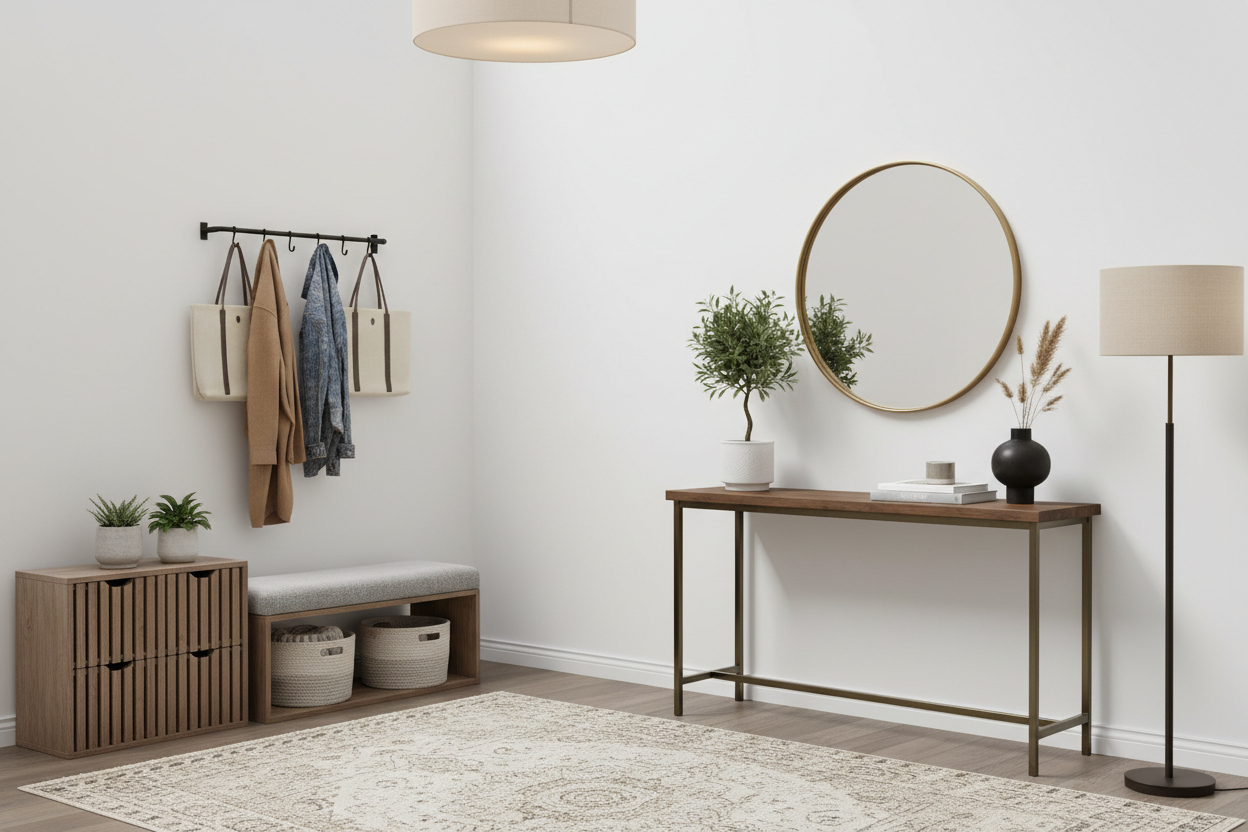
Your front door is the transition point between the world and your sanctuary, but for many of us, it is also a disaster zone of kicked-off sneakers, scattered mail, and damp umbrellas. The right hall entry furniture does more than just fill space; it acts as a functional filter for your home. You need a dedicated drop zone that handles the daily influx of items while maintaining enough style that you aren't embarrassed when guests knock. Whether you are working with a sprawling mudroom or a tight apartment corridor, the goal is identical: maximize vertical storage and hide the clutter.
I learned this lesson the hard way in my first townhome. The front door opened directly into the living room with zero architectural definition for an entry. For two years, I stepped over a growing mountain of coats and bags every time I came home. It wasn't until I bit the bullet and bought a substantial piece of furniture—a tall unit with hooks and a bench—that the entire downstairs felt cleaner. That single piece of furniture didn't just hold jackets; it psychologically separated the "outside" from the "inside." It taught me that organization is rarely about having less stuff; it is about having the right place to put it.
The All-in-One Solution: The Entryway Hutch Cabinet
If you have a blank wall and about three to four feet of width, an entryway hutch cabinet is often the most efficient choice. These units are the Swiss Army knives of foyer organization. Typically, they combine a bench for putting on shoes, hooks for coats, and upper cubbies for rarely used items. The real magic, however, lies in the verticality. By utilizing the height of the room, you get significantly more storage footprint without encroaching on the walkway.
When shopping for a hutch, pay close attention to the depth of the seating area. You want it deep enough to sit comfortably while tying laces, but not so protruding that it blocks traffic flow. Look for models that include storage underneath the bench—either open cubbies for baskets or a flip-top lid. This is the perfect spot to hide unsightly items like dog leashes, winter gloves, or that stash of reusable grocery bags that usually ends up on the floor.
Creating a Built-in Look with Cabinet Sets
For larger families or homes with a dedicated mudroom, a standalone hutch might not offer enough volume. In this scenario, an entryway set with cabinets is the superior option. These modular systems often come with two tall towers flanking a central bench or a console unit. They mimic the look of custom carpentry but cost a fraction of the price of hiring a contractor.
The advantage here is concealed storage. Open hooks are great for the coat you wear every day, but they look messy if they are overloaded with five different jackets. A set with cabinet doors allows you to close the door on the chaos. You can designate specific lockers or cabinet sections for different family members, which helps keep kids accountable for their own gear. When installing these sets, anchor them to the wall. Even if they feel stable, the weight of winter coats and backpacks can shift the center of gravity, making safety anchors non-negotiable.
Refining the Formal Foyer
Not every entrance is a mudroom. If your front door opens into a more formal space, utilitarian lockers might clash with your decor. Foyer storage furniture tends to focus on lower profiles and cleaner lines. A sideboard or a console table with deep drawers can serve as a catch-all for keys and mail without looking heavy. However, the modern hero of the formal foyer is the tilt-out shoe cabinet.
These cabinets are incredibly slim, sometimes only 10 inches deep, making them perfect for narrow hallways. The drawers tilt forward, allowing you to store shoes vertically. When closed, the unit looks like a sleek console table. You can style the top with a lamp, a mirror, and a tray for keys, completely disguising the fact that it holds a dozen pairs of sneakers. It is a specific type of hall entry furniture that prioritizes aesthetics without sacrificing function.
Navigating Budget Constraints
Furniture prices have skyrocketed, and outfitting a hallway shouldn't require taking out a loan. Finding cheap entryway furniture that doesn't fall apart in six months requires a discerning eye. Avoid cardboard-backed units if you plan on heavy daily use. Instead, look for metal and wood composites. Industrial-style racks often use metal frames which offer high durability at a lower price point than solid wood pieces.
Another route to affordability is repurposing. A simple, sturdy bookshelf turned on its side can function as a bench with cubby storage. Add a foam pad on top and some fabric bins, and you have a functional piece for under $50. If you are buying flat-pack furniture to save money, use wood glue on the dowels during assembly. This simple step significantly increases the rigidity and lifespan of budget-friendly pieces, preventing that dreaded wobble that develops over time.
Material Matters: Durability in High-Traffic Zones
Your entryway sees more abuse than almost any other area in the house. Wet raincoats, muddy boots, and heavy school bags take a toll on materials. When selecting foyer storage furniture, consider the surface resilience. Laminates and metal are easy to wipe down and resist water damage. Solid wood is beautiful and durable but requires more care to prevent water spots or scratches.
If you choose a bench with a cushion, ensure the fabric is performance-grade or outdoor-rated. Being able to wipe away a mud stain is essential. For wooden surfaces, using a tray for keys and coins prevents surface scratching. It is a small detail, but protecting the finish extends the life of the furniture significantly.
Measuring for Flow and Function
Before clicking "buy" on that entryway set with cabinets, map out the floor plan with painter's tape. Physical dimensions on a screen can be deceiving. You need to ensure there is at least 36 inches of clearance for walking past the furniture. If you have a door that swings inward, check that the furniture doesn't obstruct the swing radius. Nothing is more frustrating than a front door that bangs into a cabinet every time you open it.
Think about your electrical outlets as well. If you plan to put a lamp on your console or need a spot to charge your phone, you don't want your new furniture to block the only available outlet. Some modern entryway units come with built-in USB ports, which can be a massive convenience for keeping devices charged and ready to grab on your way out the door.
Frequently Asked Questions
What is the best furniture for a very narrow hallway?
Tilt-out shoe cabinets are the best option for narrow spaces because they often have a depth of less than 12 inches. Alternatively, wall-mounted floating shelves with hooks underneath keep the floor completely clear, creating an illusion of more space while providing necessary storage.
How do I keep my entryway furniture from smelling like shoes?
Ventilation is key. If you use a closed cabinet, look for one with slatted doors or a ventilated back panel to allow air circulation. You can also place activated charcoal bags or cedar blocks inside the drawers and cabinets to absorb moisture and neutralize odors naturally.
Can I use a regular bookshelf as an entryway locker?
You can, but you must secure it to the wall. Standard bookshelves aren't designed to handle the uneven weight distribution of heavy coats hanging on one side. If you add hooks to a bookshelf, ensure they are screwed into the solid structural parts of the frame, not the flimsy backing material.

Leave a comment
This site is protected by hCaptcha and the hCaptcha Privacy Policy and Terms of Service apply.