











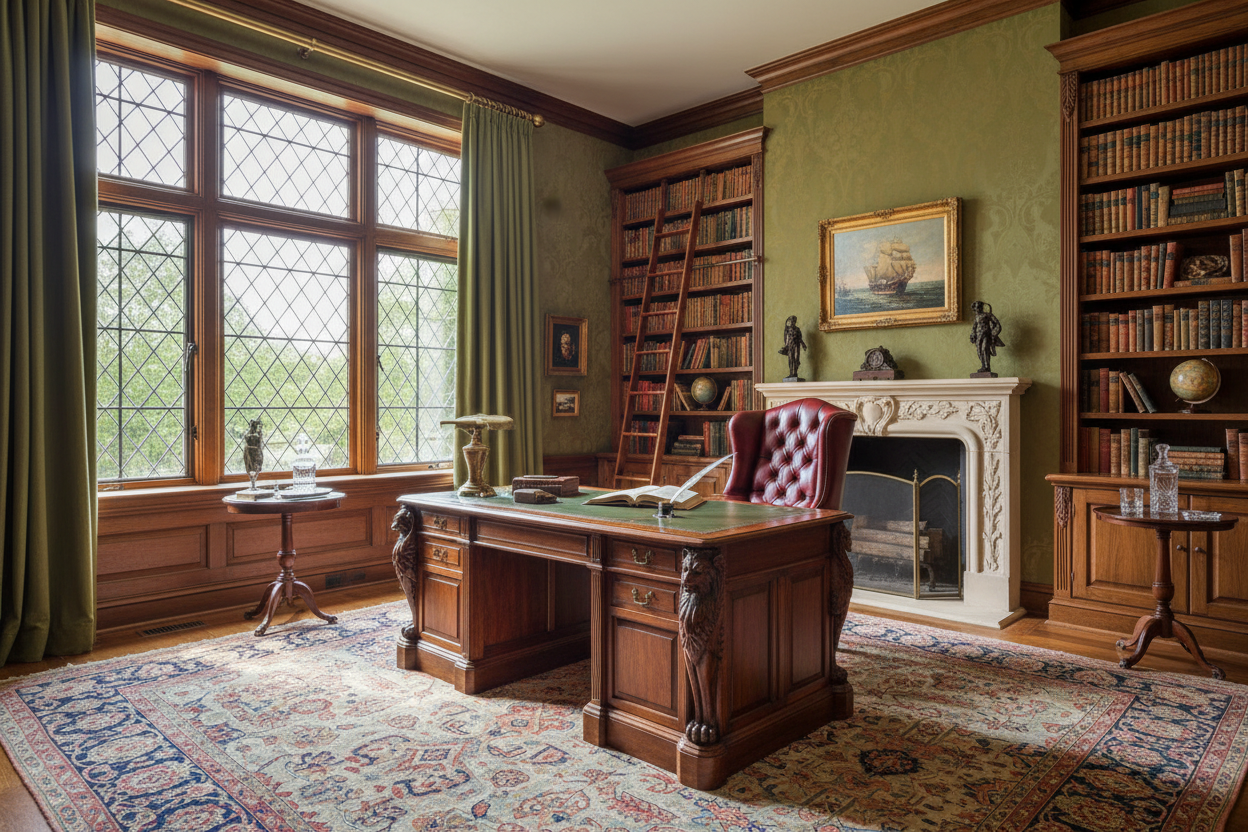
There is a distinct, grounding gravitas to a room wrapped in mahogany, leather, and the scent of old paper. Unlike the sterile minimalism that dominates corporate spaces, an old world home office offers a sanctuary for deep work and contemplation. However, the challenge lies in curating this aesthetic without making the room feel like a dusty museum exhibit or a movie set. It requires a delicate balance of heavy textures and practical ergonomics. In this guide, I will walk you through the architectural and furnishing decisions required to build a study that feels established, sophisticated, and thoroughly usable.
Key Features to Look For
- Material Integrity: Prioritize solid hardwoods like walnut, cherry, or mahogany over particle board composites.
- Rich Color Palette: Focus on deep greens, burgundies, navy blues, and warm wood tones.
- Textural Depth: Look for button-tufted leather, heavy velvet drapery, and intricate Persian or Oriental rugs.
- Lighting Hierarchy: Layer warm ambient lighting with focused brass or bronze task lighting (e.g., a banker's lamp).
- Substantial Silhouettes: Furniture should have visual weight; think heavy plinths, rolled arms, and carved detailing.
Anchoring the Room: The Executive Desk
The desk is the undisputed protagonist of any old world study. When selecting this piece, size and provenance matter. A "partners desk"—deep enough for two people to face each other—is often the gold standard for this aesthetic. It commands the center of the room and allows you to face the door, a command position essential for the psychological feel of the space.
Solid Wood vs. Veneer
While solid wood is the purist's choice, high-quality veneers on a hardwood core are often more stable against humidity changes, preventing the warping that can plague antiques. Look for "book-matched" veneers where the grain pattern mirrors itself across the surface. If you are buying an antique, check the drawer joinery; dovetail joints are non-negotiable indicators of quality craftsmanship.
Seating: Balancing Aesthetic with Ergonomics
Here is where many homeowners falter. A vintage Chesterfield wingback chair looks incredible, but it offers terrible lumbar support for an eight-hour workday. You do not want to sacrifice your spinal health for the sake of a vibe.
The solution is a high-back executive chair that disguises modern mechanics with traditional upholstery. Look for:
- Top-grain leather: Ideally in oxblood or cognac, which develops a patina over time.
- Wood-clad bases: To hide the metal gas-lift mechanism and casters.
- Nailhead trim: Brass or antique bronze detailing that mimics the construction of stationary furniture.
Lighting and Atmosphere
Fluorescent overhead lighting is the enemy of the old world study. To achieve that moody, library-esque atmosphere, you must layer your lighting. Start with a central chandelier or pendant in oil-rubbed bronze or wrought iron. Complement this with a classic green-shaded banker’s lamp or a brass pharmacy lamp on the desk for directed task lighting.
Don't neglect the perimeter. Wall sconces or picture lights installed over bookcases add depth and highlight your collection, creating a warm, enveloping glow that makes the room feel cozy rather than dark.
Lessons from My Own Projects
I once designed a library for a client who insisted on an authentic 19th-century English pedestal desk. It was a stunning piece of furniture, costing upwards of $8,000. However, once we installed it, we hit a thoroughly modern wall: cable management.
Antique furniture was not designed for monitors, charging docks, or ethernet cables. We couldn't exactly drill a grommet hole into a 150-year-old antique without destroying its value. I ended up having to commission a custom leather "blotter" that sat on top of the desk with a hidden channel underneath to run the wires to the back.
My advice? If you are buying a reproduction desk, ensure it has built-in cable management. If you go true vintage, plan your floor outlets immediately and be prepared to get creative with hiding cords behind table legs or under rugs. Nothing ruins the illusion of a 1920s study faster than a tangle of white HDMI cables.
Conclusion
Designing an old world space is about respecting craftsmanship and creating an atmosphere of permanence. By investing in substantial materials and prioritizing warm, layered lighting, you create more than just an office; you create a personal legacy room that invites focus and calm.
Frequently Asked Questions
How do I integrate modern technology without ruining the look?
Hide technology whenever possible. Use a wooden frame for your TV or monitor (like the Samsung The Frame), route cables through desk legs, and use wireless peripherals. You can also house printers and routers inside lower cabinets with ventilated mesh doors.
Can I do an old world style in a small room?
Absolutely. In a smaller space, rely on floor-to-ceiling built-in bookshelves to draw the eye upward. Use a slightly smaller writing desk rather than a massive executive desk, and lean into dark paint colors on the walls to blur the corners and create a "jewel box" effect.
What are the best wall colors for this aesthetic?
Move away from whites and greys. Embrace moody, saturated tones. Hunter green, navy blue, charcoal, and even deep aubergine work beautifully. If painting the walls feels too dark, consider wood paneling or wainscoting on the lower half to break up the color.


Leave a comment
This site is protected by hCaptcha and the hCaptcha Privacy Policy and Terms of Service apply.