










The biggest misconception homeowners have when carving out a workspace is assuming that limited square footage requires compromising on ergonomics or aesthetics. In reality, a successful small office setup is less about finding the tiniest furniture available and more about mastering scale, verticality, and visual weight. Whether you are converting a closet or claiming a corner of the living room, the goal is to create a zone that feels intentional, not accidental.
Key Features to Look For
- Visual Weight: Opt for furniture with exposed legs or glass tops to keep the room feeling open.
- Vertical Utilization: Prioritize wall-mounted shelving or hutches to clear floor space.
- Ergonomic Scale: Ensure the chair width allows for movement without hitting walls or doorframes.
- Multi-functional Lighting: Use task lighting that can dim to ambient light to transition the space after hours.
- Cable Management: Integrated channels are non-negotiable in small areas where clutter is immediately visible.
Mastering the Layout: Flow and Function
When planning an office set up for small space constraints, the first step is to identify the "active zone" versus the "static zone." The active zone is where your chair moves; the static zone is your storage. A common error is placing a desk flush against a wall in a high-traffic corridor. Instead, consider a "command position"—facing the room—even in a mini office setup. This creates a psychological boundary between work and rest.
If you are working with a nook, ensure you have at least 36 inches of depth for your chair slide. Without this clearance, the space will feel claustrophobic regardless of how beautiful the finishes are.
Choosing the Right Material and Silhouette
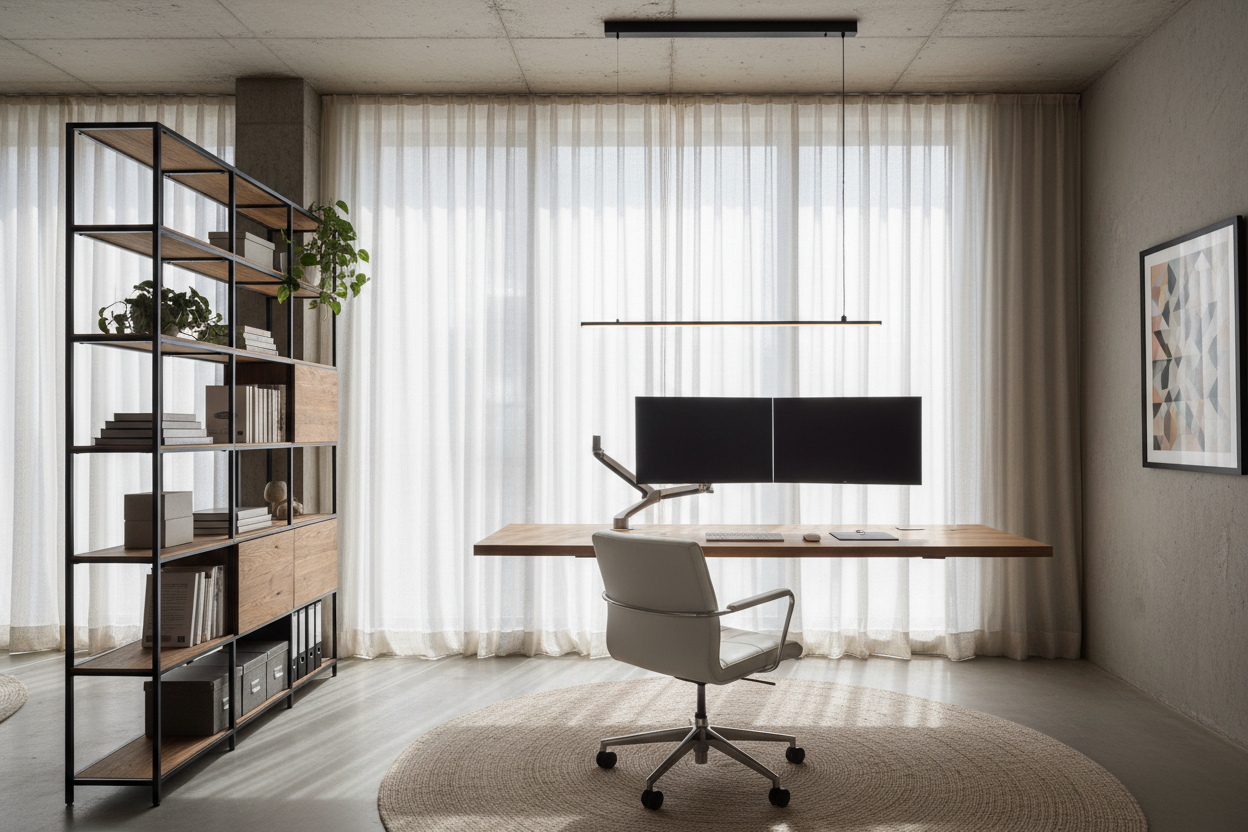
In compact design, silhouette is everything. A chunky, solid oak executive desk will visually suffocate a small room. Instead, look for materials that offer durability without bulk.
Solid Wood vs. Veneer vs. Glass
For a small office space setup, I often recommend high-quality veneers over solid wood slabs. Veneers on engineered wood are more stable against temperature changes—common in small rooms or near radiators—and are often lighter, allowing for cantilevered or floating designs. If you prefer a modern aesthetic, tempered glass is excellent for disappearing into the room, though it requires constant cleaning to maintain that pristine look.
Ergonomics in Miniature
Comfort should never be sacrificed for size. The market is flooded with "compact" office chairs that offer zero lumbar support. Avoid these. Look for armless task chairs with a high rub count (durability) fabric or a mesh back. The absence of arms allows the chair to tuck fully under the desk when not in use, reclaiming valuable floor space.
Lighting and Visual Balance
Lighting defines the mood. In a tight corner, a floor lamp takes up too much real estate. Opt for wall sconces with swing arms or a high-quality monitor bar. Ensure your light temperature is around 4000K for focus during the day, but layer it with a warm 2700K ambient light if the desk sits in a living area. This ensures your office blends into the home's atmosphere once the workday ends.
My Personal Take on small office setup
I learned a hard lesson about "floating" desks during a renovation project in a pre-war apartment in Chicago. We installed a gorgeous, custom walnut slab directly into the studs of an alcove to create a seamless look. It was stunning—until the client actually started working.
We hadn't accounted for the vibration. Because the slab was only anchored at the back and sides without a front support leg (to save space), every time the client typed vigorously, the monitor would shake slightly. It was subtle, but over an eight-hour day, it was nauseating. We had to go back and install inconspicuous steel angled brackets underneath. Furthermore, I've noticed that in small setups, matte finishes are far more forgiving than high-gloss. In a small space, you are closer to the furniture; high-gloss finishes highlight every fingerprint and dust mote, turning your desk into a constant cleaning chore.
Conclusion
Designing a functional workspace in a limited area is a satisfying puzzle. By prioritizing visual lightness and investing in pieces that serve ergonomic needs without dominating the room, you can build a sanctuary that boosts productivity. Don't let the square footage dictate your comfort.
Frequently Asked Questions
What is the minimum depth for a small desk?
Ideally, aim for a minimum depth of 24 inches. Anything shallower than 20 inches will force you to sit too close to your monitor, causing eye strain and leaving no room for a keyboard and wrist support.
Can I use dark colors in a small office setup?
Yes, but use them strategically. A dark "nook" painted in charcoal or navy can create depth and recede visually, making the space feel larger, provided you have adequate lighting to prevent it from feeling like a cave.
How do I hide cables in a desk with open legs?
If your desk has open metal or wood legs, use adhesive cable clips along the back of the leg to run wires down to the floor. Alternatively, use a vertebrae cable manager that flexes with a sit-stand desk to keep cords contained in one spinal column.


Leave a comment
This site is protected by hCaptcha and the hCaptcha Privacy Policy and Terms of Service apply.