










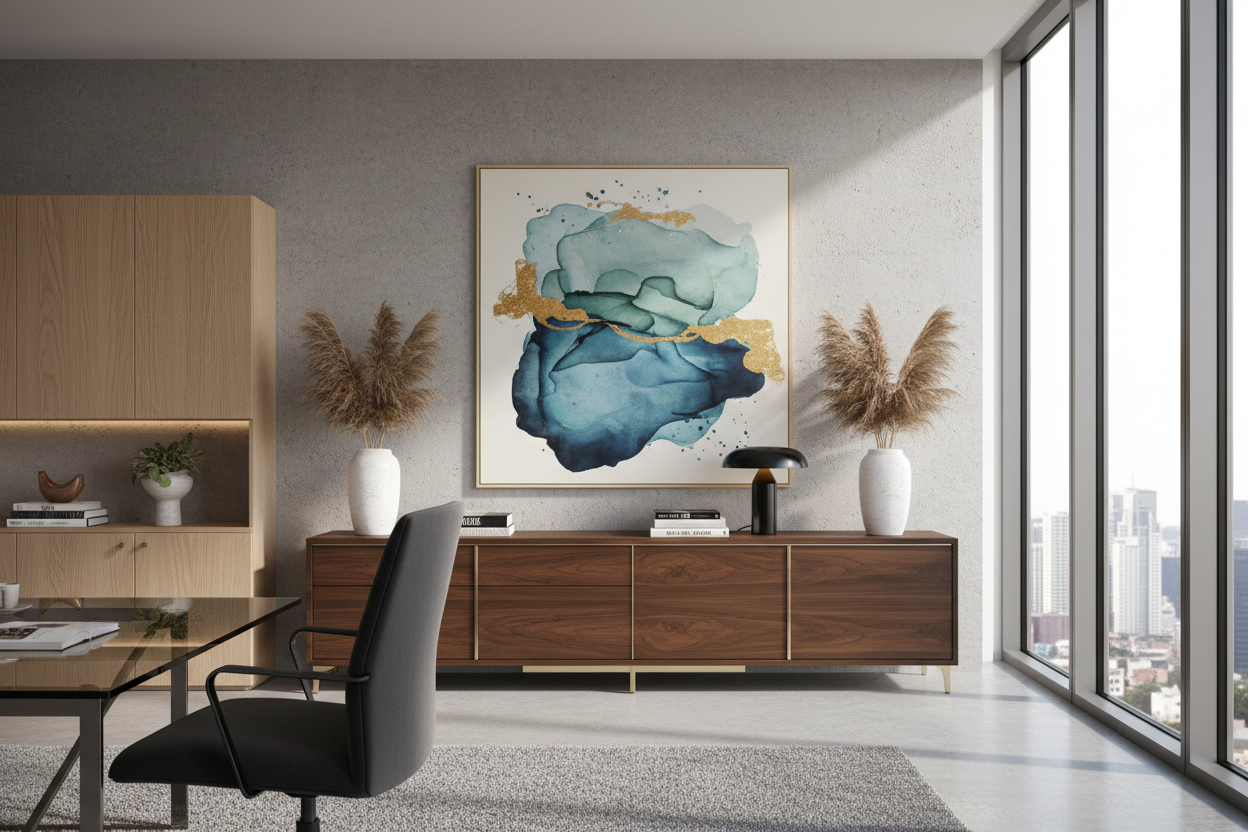
There is a specific kind of visual noise that accumulates in a workspace—stacks of paper, tangled chargers, and overflow from the desktop—that destroys focus. As a designer, I often see clients try to solve this with flimsy plastic bins or oversized bookshelves that loom over the room. The elegant solution is almost always lower to the ground and significantly more substantial: the credenza in office design.
This low-profile workhorse does more than hide clutter; it anchors the room, provides a secondary surface for staging projects, and defines the professional boundary of your workspace. Whether you are outfitting a corporate suite or a dedicated corner at home, selecting the right piece requires balancing aesthetics with heavy-duty utility.
Key Features to Look For
- Depth & Dimensions: A standard office credenza should be 18 to 24 inches deep to accommodate printers and scanners without overhang.
- Cable Management: Look for pre-drilled grommets or ventilated back panels; standard residential sideboards often lack these, leading to cord chaos.
- Storage Configuration: Prioritize an office credenza with drawers for hanging files versus adjustable shelves for binders and boxes.
- Finish Durability: In high-traffic zones, high-pressure laminate or sealed wood veneers resist coffee rings and scratches better than softer solid woods.
Defining the Function: Storage vs. Staging
Before selecting a finish, you must audit your workflow. Are you looking for an office storage credenza to act as a filing cabinet, or a surface to display awards and books? If your primary need is archival, an office credenza cabinet with locking lateral file drawers is non-negotiable. These units are engineered to handle the heavy weight of paper without tipping.
Conversely, if you need a credenza for home office setups where the vibe is softer, you might opt for an office sideboard with sliding doors. This allows you to hide the ugly technology (routers, modems) on one side while displaying curated decor on the shelves, maintaining a balance between cozy and corporate.
Material Matters: Wood vs. Laminate
The visual weight of the piece dictates the room's atmosphere. A wood office credenza in walnut or oak brings warmth and gravitas, ideal for executive settings. However, be wary of solid wood in environments with fluctuating humidity, as it can warp. For a home office sideboard, I often recommend high-quality wood veneers which offer the same aesthetic richness but with greater structural stability.
For high-activity zones, a metal or laminate office furniture credenza offers resilience. Modern laminates have come a long way; they can mimic the texture of wood grain while being virtually impervious to the scratches that come from sliding binders across the top.
Space Planning and Layout
One of the most frequent errors I correct is scale. A large office credenza can dominate a small room, making it feel claustrophobic. In tighter floor plans, a narrow office credenza (typically 15-18 inches deep) saves critical walkway space while still offering utility.
If you have the luxury of space, a long office credenza placed directly behind the desk creates the classic "executive L-shape" configuration. This allows you to swivel your chair 180 degrees to access files or a secondary monitor, effectively doubling your work surface. For a small office credenza, consider placing it perpendicular to the desk to create a distinct zone without closing off the room.
Lessons from My Own Projects
I want to share a specific mistake from a project I worked on about five years ago to save you the headache. I had a client who fell in love with a vintage mid-century modern dining buffet and insisted on using it as their office credenza storage cabinet. Visually, it was stunning—rich teak, tapered legs, the works.
However, within two weeks, it was a functional disaster. Because it was designed for dinner plates, not technology, it lacked ventilation. The printer they stored inside the cabinet overheated, and we had no way to run power cords without drilling into the vintage back panel—something that ruined the piece's value. Furthermore, the drawers weren't reinforced for heavy paper, and the bottoms began to sag. I learned then that while a sideboard in office settings looks nice, if it isn't built for office furniture storage specifications (reinforced joinery, cable grommets, ventilation), it will fail you. Now, I always insist on pieces designed specifically for the workspace, or I hire a joiner to professionally retrofit the piece first.
Conclusion
Investing in the right office sideboard cabinet is about more than just buying a box with doors. It is about curating a workflow that feels seamless. Whether you choose a best office credenza with integrated filing or a sleek, office credenza with shelves for display, ensure the piece serves your daily habits. When everything has a place, your mind is free to focus on the work that matters.
Frequently Asked Questions
What is the difference between a sideboard and an office credenza?
While often used interchangeably, a traditional sideboard is generally higher (waist height) for serving food, while an office credenza is typically lower (29-30 inches) to match desk height, allowing it to serve as a secondary workspace.
How much clearance do I need for an office credenza with drawers?
You should allow at least 36 to 42 inches of clearance between your desk and the credenza. This ensures you can push your chair back and fully extend the drawers of the office storage sideboard without obstruction.
Can I use a credenza as a standing desk?
Most standard office credenzas are too low for standing work. However, some modern office furniture credenza lines offer "counter height" (36-42 inches) options that can double as a standing workstation or a layout space for blueprints.


Leave a comment
This site is protected by hCaptcha and the hCaptcha Privacy Policy and Terms of Service apply.