










Designing a welcoming entrance becomes a game of inches when you are working with a tight floor plan. You want a place to sit and put on shoes or drop your bag, but standard furniture depths often turn a cozy hall into an obstacle course. Finding a bench for narrow entryway layouts is not just about aesthetics; it is a strict exercise in geometry. The goal is to provide functionality without blocking the flow of traffic, ensuring your hallway remains a passage rather than a bottleneck.
Most standard benches clock in at around 15 to 18 inches in depth. In a sprawling suburban foyer, that works perfectly. In a city apartment or a corridor-style mudroom, however, that depth eats up valuable walking space. A dedicated narrow entryway bench typically reduces that depth to anywhere between 8 and 12 inches. While that might sound impossibly shallow, it is surprisingly sufficient for a quick perch to tie a shoelace or rest a grocery bag.
My Experience with the "Skinny" Dilemma
I learned the importance of depth the hard way during a renovation of a Victorian-era row house. The hallway was barely 38 inches wide. I initially bought a standard 16-inch deep bench, thinking it looked slim in the showroom. Once placed against the wall, it felt like a barricade. You had to turn sideways just to walk past it with a laundry basket. I swapped it out for a custom skinny bench for hallway use that was only 10 inches deep. The difference was immediate. The space opened up visually and physically. We didn't lose the functionality of having a seat, but we gained back the feeling of airiness. That project taught me that in narrow spaces, visual weight is just as important as physical dimensions.
Defining Dimensions: How Thin is Too Thin?
When shopping for a thin entryway bench, you need to know your limits. A comfortable seat generally requires depth, but for a transient space like a hall, you can cheat the numbers. A very narrow bench can be as shallow as 8 inches if it is primarily for decor or dropping mail. If you actually plan to sit on it, aim for at least 10 to 12 inches. Anything less than 10 inches becomes a balancing act rather than a seat.
Length is where you can compensate for the lack of depth. Long narrow benches draw the eye down the hall, elongating the space and making the ceiling appear higher. If you have a long corridor, a 48-inch or even 60-inch long narrow bench for hallway placement creates a sophisticated gallery look. Conversely, for a small landing, a short narrow bench tucked into a corner provides utility without dominating the square footage.
Storage Solutions in Tight Quarters
One might assume that shaving off inches means sacrificing utility, but a narrow entryway bench with storage is entirely possible; it just requires clever engineering. You likely won't find deep drawers in these units. Instead, look for a narrow hallway storage bench that utilizes verticality or open space.
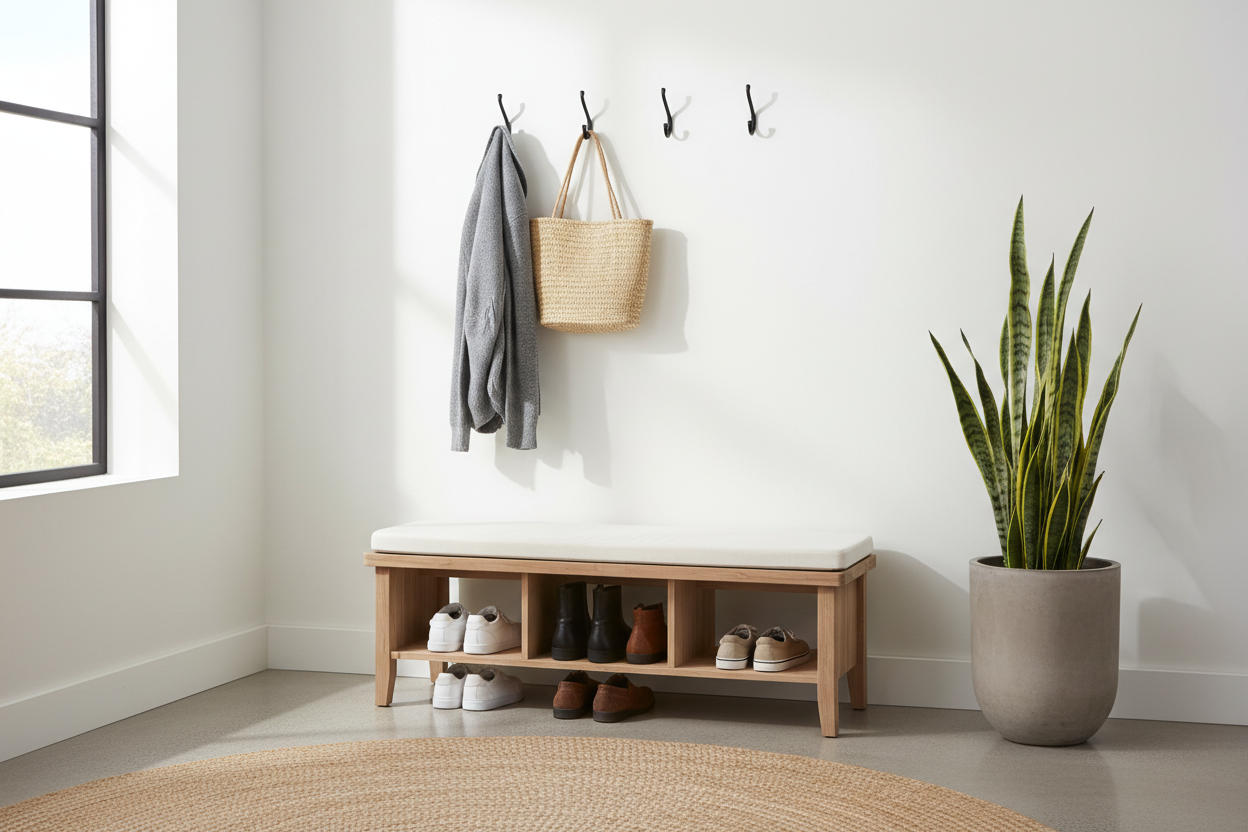
Flip-top benches are excellent for storing winter scarves or dog leashes, keeping clutter out of sight. However, in a truly narrow hall, a flip-top might be hard to access if the wall is filled with coats. A better option is often a narrow mudroom bench with an open shelf underneath. This allows you to tuck shoes away without needing clearance to open a drawer or cabinet door. A slim entryway bench with storage baskets underneath offers the best of both worlds: the clean look of drawers with the flexibility of removable bins.
Material Matters: Wood, Metal, and Upholstery
The material you choose affects how big the furniture feels. A solid, boxy narrow wood bench can feel heavy and grounding, which is great for farmhouse or traditional styles. If you go this route, look for lighter woods like oak or birch to keep the area bright. A small narrow wood bench with visible grain adds texture and warmth to what is often a utilitarian part of the home.
For modern or industrial spaces, a narrow modern bench with metal legs is often the superior choice. The "air" between the legs makes the floor visible underneath, tricking the brain into thinking the room is larger than it is. A slim wooden bench on hairpin legs, for example, offers a sturdy surface while maintaining a minimal footprint.
Comfort is another variable. A narrow bench with cushion topping adds height and softness, inviting guests to sit. However, be mindful of visual bulk. A thick, overstuffed cushion on a skinny entryway bench can look top-heavy. A streamlined, tufted seat or a simple leather pad usually works better. If you prefer a hard surface, you can always soften a narrow hall bench seat with a throw pillow that can be easily moved when you need maximum seating space.
Styling Your Slim Bench
Once you have secured your thin bench for hallway usage, styling keeps it from looking like an afterthought. Because the surface area is limited on a shallow bench for entryway designs, you cannot clutter it with decor. Instead, use the vertical space above it.
Mounting a mirror above a slim hallway bench is a classic trick to reflect light and widen the hall. Hooks installed at eye level transform a simple low narrow bench into a full-service drop zone. If the bench is strictly decorative, a narrow accent bench can host a tall, slender plant or a stack of books, turning a dead corridor into a curated vignette.
The Bench/Table Hybrid
Sometimes, the best bench isn't strictly a bench. A narrow bench/table hybrid—essentially a low console table that is sturdy enough to sit on—offers incredible versatility. These pieces often feature clean lines and can serve as a display surface most of the time, transitioning to seating only when you have a house full of guests. This is particularly useful for a narrow foyer bench where daily seating isn't a requirement, but holiday overflow seating is.
Making the Choice
Whether you choose a narrow entryway bench with back support for comfort or a backless very narrow bench for entryway minimalism, measure your clearance twice. Tape the outline of the bench on the floor with painter's tape and walk past it for a few days. If you don't kick the tape, you won't kick the bench. From small narrow entryway benches that fit behind a door to long, slim benches that line a gallery wall, the right piece turns a cramped pass-through into a deliberate, designed destination.
Frequently Asked Questions
What is the minimum depth for a functional entryway bench?
For a bench intended for sitting, 12 inches is generally the comfortable minimum. However, you can find "perch" style benches as shallow as 8 to 10 inches, which are suitable for momentarily resting items or quick seating, provided they are stable and weight-rated.
Can I use a console table as a narrow bench?
You can, but only if the manufacturer explicitly states it is weight-bearing or rated for seating. Most console tables are designed to hold lamps and keys, not people. Look for low, solid wood or reinforced metal console tables if you plan to use them as a skinny bench for hallway seating.
How do I stop a lightweight narrow bench from tipping over?
Because they have a shallow footprint, narrow benches can be less stable than standard ones. It is advisable to place them flush against a wall. for added safety, especially in high-traffic areas or homes with children, you can anchor the bench to the wall using L-brackets or furniture straps hidden underneath the seat.


Leave a comment
This site is protected by hCaptcha and the hCaptcha Privacy Policy and Terms of Service apply.