










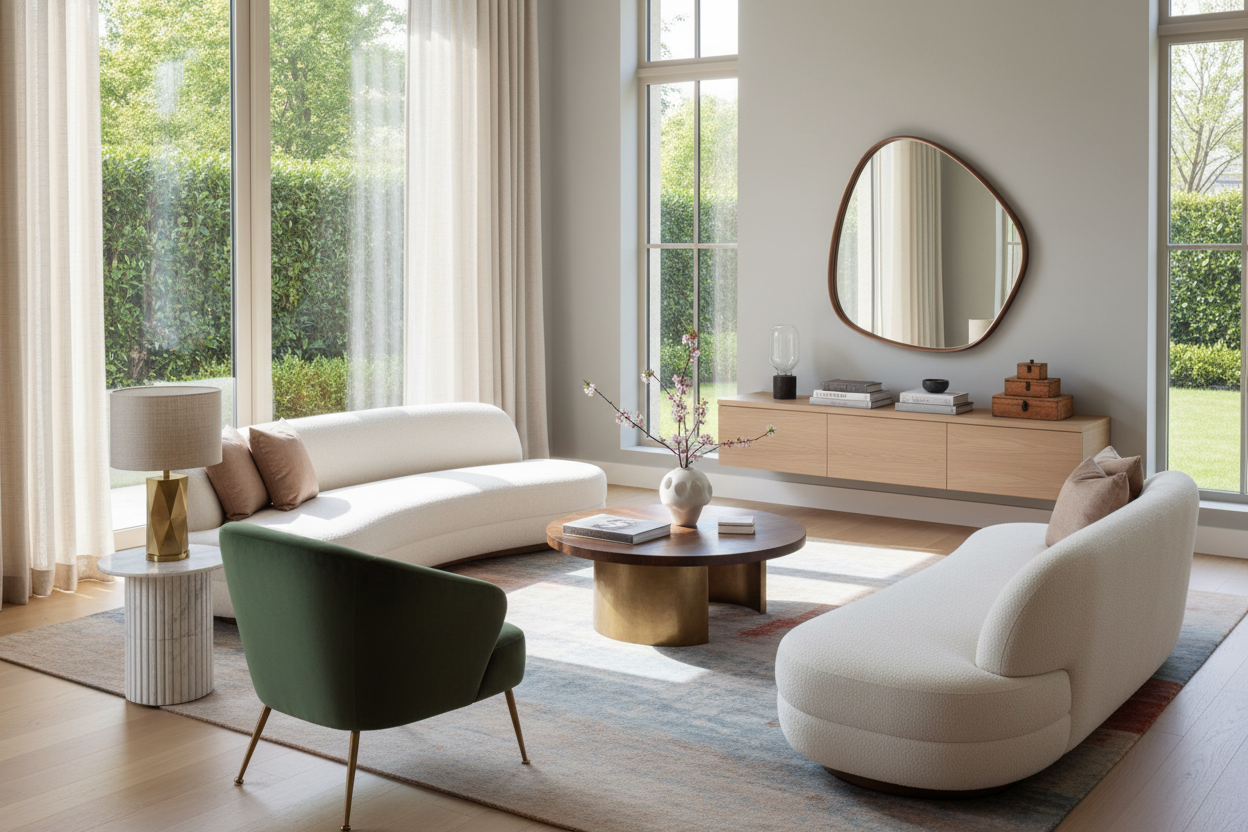
We have all walked into a space that feels chaotic despite being filled with beautiful objects. The problem is rarely the individual pieces; it is the lack of cohesion and spatial awareness. When selecting accent furniture for living room designs, the goal isn't just to fill empty corners—it is to curate a narrative of texture, silhouette, and utility. As a designer, I often see clients prioritizing a specific trend over how a piece physically interacts with the room's architecture. This guide will move beyond the catalog photos to help you select pieces that ground your space rather than clutter it.
Key Features to Look For
- Scale and Proportion: The accent piece should never visually overpower your primary seating; aim for coffee tables two-thirds the length of your sofa.
- Material Integrity: distinguishing between solid hardwoods (longevity) and MDF veneers (budget-friendly but prone to chipping).
- Visual Weight: Leggy, open-frame chairs make small rooms feel larger, while skirted or blocky pieces add gravity to large spaces.
- Tactile Contrast: If your sofa is fabric, look for leather, wood, or metal accents to create depth.
Establishing Visual Balance and Flow
The most common error in placing living room accent furniture is ignoring the negative space. In design, silence is just as important as the noise. When introducing an accent chair or a console table, you must consider the circulation paths.
Ideally, you need a minimum of 30 to 36 inches of walkway space between furniture pieces. If you are working with a compact footprint, opt for nesting tables or a C-table that can slide beneath the sofa. These pieces offer surface area without permanently claiming floor space, maintaining the room’s open silhouette.
Materiality: Beyond the Aesthetic
While color catches the eye, texture holds the interest. A well-designed room layers materials to prevent the space from feeling flat.
Solid Wood vs. Veneer
For high-traffic surfaces like coffee tables or sideboards, the distinction matters. Solid wood develops a patina over time—scratches become character. Veneer over particle board, however, cannot be refinished once the surface is breached. For investment pieces, look for kiln-dried hardwood frames which resist warping in fluctuating humidity.
Metal Finishes and Patina
Don't fear mixing metals, but do so with intention. If your architectural hardware is matte black, a brushed brass accent table can act as a jewelry piece for the room. However, avoid mixing more than two distinct metal finishes, as this can shift the look from eclectic to messy.
Ergonomics and The "Sit Test"
Accent chairs are often treated as sculptures, but they must be functional. An accent chair should generally have a firmer seat than your lounging sofa to facilitate conversation. Pay attention to seat height; if your sofa seat is 18 inches high, your accent chairs should be within an inch of that height. A drastic difference creates an awkward eye-level imbalance during social gatherings.
Lessons from My Own Projects
Early in my career, I fell in love with a stunning, high-gloss black lacquer console table for a client's entryway. It was sleek, modern, and looked incredible in the rendering. I ignored the practical reality that the client had two Golden Retrievers and a toddler.
Within two weeks, that glossy surface was a disaster. It didn't just show dust; it highlighted every single smudge, dog nose print, and micro-scratch from keys being tossed down. It became a source of stress rather than joy. That experience changed how I shop. Now, when I inspect accent furniture for living room projects, I perform a "livability test." I run my fingernail lightly over wood finishes to check for softness, and I press my thumb firmly onto metal or glass surfaces to see how glaring the oils are. If a piece requires a coaster for a glass of water or a microfiber cloth every hour, it usually isn't worth the investment for a lived-in home.
Conclusion
Selecting the right accents is about editing. It is about choosing the one sculptural armchair that speaks to you, rather than three that just fill space. Focus on the tactile quality of materials and the flow of the room, and you will create a living area that feels both curated and effortlessly comfortable.
Frequently Asked Questions
How do I mix different wood tones in the living room?
Identify the undertone of your dominant wood piece (warm/red, cool/gray, or neutral). You can mix light and dark woods (like walnut and oak) freely, provided they share the same undertone temperature. A rug can also act as a buffer to separate conflicting wood floors from furniture legs.
What is the rule for accent chair sizing?
Visual weight is key. If you have a chunky, roll-arm sofa, a delicate spindle-leg chair might look fragile next to it. Ensure the back height of the accent chair doesn't tower over the sofa unless it is a deliberate high-back wing chair intended as a focal point.
Should accent furniture match the sofa?
Rarely. The "suite" look (matching sofa, loveseat, and chair) often looks dated and commercial. Instead, coordinate through a shared color palette or complementary style (e.g., Mid-Century Modern mixed with organic textures) to create a collected, designer look.

Leave a comment
This site is protected by hCaptcha and the hCaptcha Privacy Policy and Terms of Service apply.