










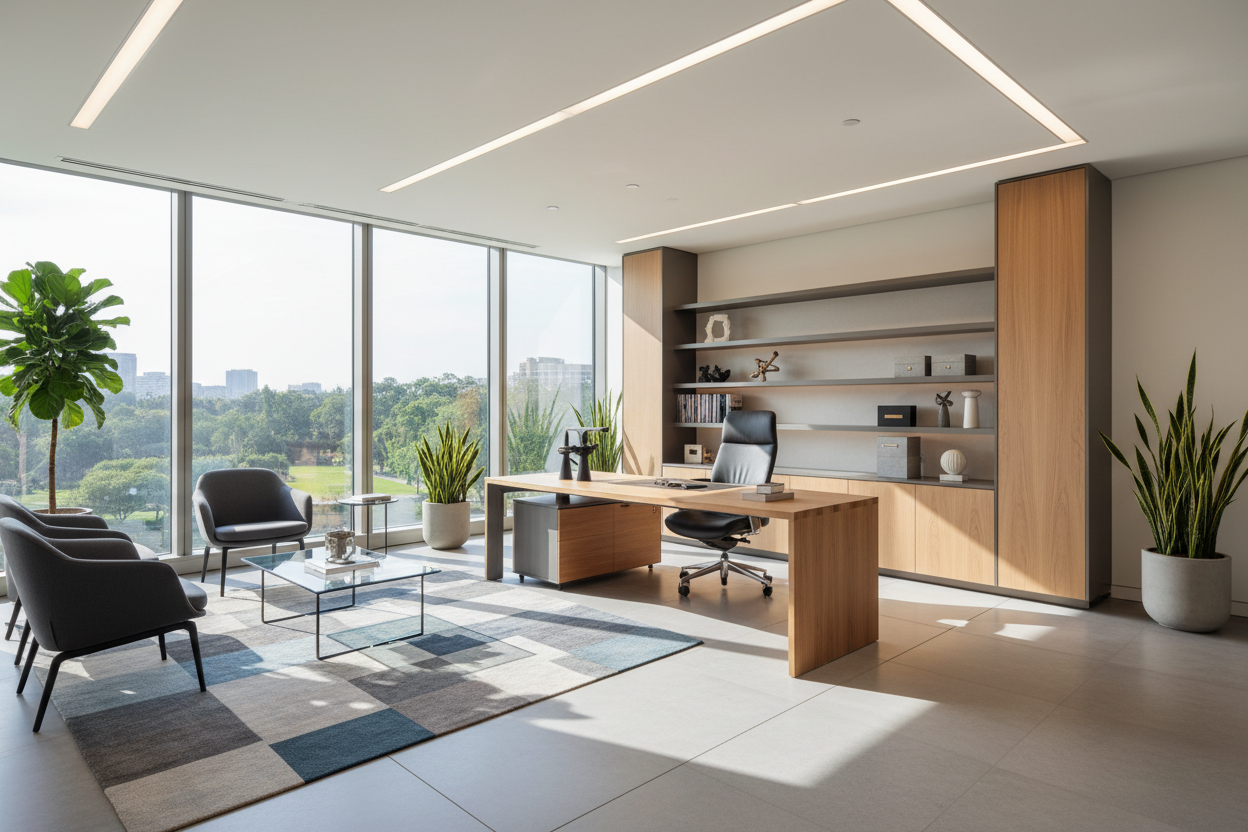
There is a distinct frustration that comes with designing a workspace: the battle between clinical functionality and genuine style. You want a space that fosters productivity, yet you dread the sterile, cubicle aesthetic creeping into your home or executive suite. The solution lies in selecting contemporary office furniture collections that treat the desk and chair not just as tools, but as architectural elements. This guide cuts through the marketing noise to help you select pieces that offer professional ergonomics wrapped in a sophisticated silhouette.
Key Features to Look For
If you are scanning options quickly, keep these critical factors in mind to ensure your investment lasts beyond the current trend cycle:
- Material Integrity: Prioritize commercial-grade laminates or genuine wood veneers over standard particle board.
- Hidden Cable Management: Look for integrated grommets and modesty panels that conceal wiring for a clean visual.
- Modular Scalability: Ensure the collection allows you to add storage or side tables later without mismatched finishes.
- Ergonomic Rating: Verify that seating meets ANSI/BIFMA standards for safety and durability.
- Hardware Quality: Soft-close drawers and heavy-duty glides are non-negotiable for a premium feel.
Defining the Aesthetic: Materials and Textures
The hallmark of a truly high-end workspace is the interplay of materials. Contemporary design has moved away from the heavy, dark mahogany of the past toward lighter, airier compositions.
The Role of Mixed Media
Don't settle for a single material throughout the room. The most successful layouts utilize a mix. For instance, a desk featuring a walnut top paired with brushed brass legs creates a sense of lightness. This contrast reduces the visual weight of the furniture, making the room feel larger. Glass and acrylic are excellent for smaller footprints, but be wary of the maintenance they require.
The "Modern Office Suite" Approach
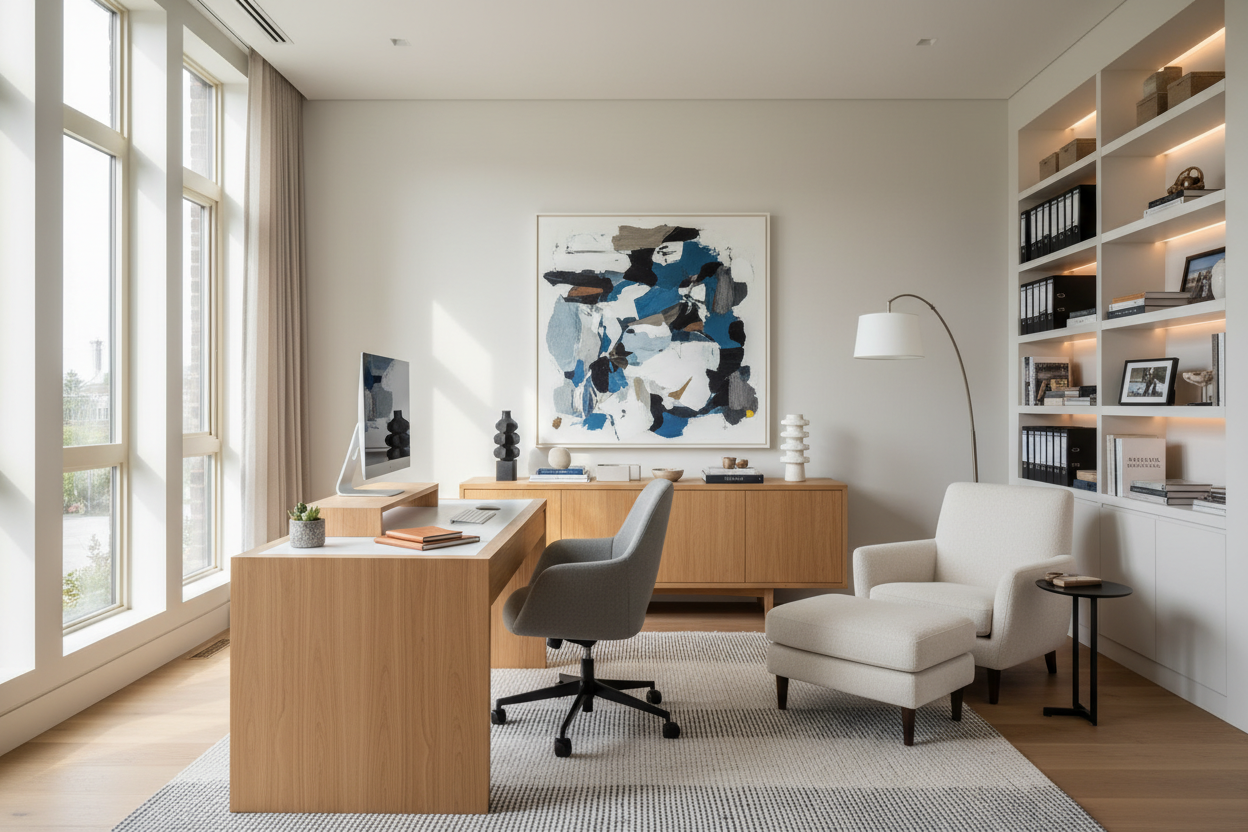
When we talk about a modern office suite, we are referring to cohesion, not uniformity. Avoid the "catalog look" where every piece is an exact match. Instead, anchor the room with a statement desk from a collection, then pair it with a credenza that shares a similar design language—perhaps the same leg profile or handle style—but in a complementary finish. This layering adds depth and prevents the space from feeling sterile.
Ergonomics Hiding in Plain Sight
As a designer, my rule is that comfort shouldn't look like a machine. High-quality contemporary collections now disguise ergonomic mechanisms beautifully.
Seating Dynamics
Look for chairs where the lumbar support is integrated into the curve of the backrest rather than attached as a bulky plastic distinct pad. Mesh backs offer breathability, but a high-quality fabric or leather upholstery often provides a more residential, welcoming texture that softens the hard lines of a desk.
Lessons from My Own Projects
I want to share a specific mistake I made early in my career so you don't have to repeat it. I once specified a stunning, high-gloss white lacquer desk for a client who was a graphic designer. It looked incredible in the photos—sleek, minimal, and ultra-contemporary.
However, within three weeks, I got a call. The issue wasn't the look; it was the "micro-scratches." Every time they slid their ceramic coffee mug or a metal ruler across the surface, it left a faint spiderweb trail visible in the afternoon sun. Furthermore, the lack of a modesty panel meant that the chaotic nest of computer wires was fully visible against the white wall behind it.
Since then, I always advise clients to test the "fingerprint and scratch" factor. I now lean toward matte, nano-texture finishes that heal micro-scratches, and I never buy a desk without checking the underside for robust cable trays. It is those unpolished, practical details that determine if you'll love the furniture six months later.
Conclusion
Investing in the right furniture transforms work from a chore into an experience. By focusing on material quality, intelligent wire management, and visual balance, you create a workspace that commands respect. Don't just fill a room; curate an environment that elevates your workflow.
Frequently Asked Questions
Q: How do I mix contemporary furniture with a traditional home architecture?
A: Focus on silhouette. A contemporary desk with clean lines creates a beautiful juxtaposition against traditional wainscoting or crown molding. Use an area rug to bridge the gap between the two styles.
Q: Is solid wood always better than veneer for office furniture?
A: Not necessarily. In an office environment, high-quality wood veneer over a stable core is often more resistant to warping from humidity changes and heat from electronics than solid wood planks.
Q: How much space do I need behind a desk?
A: For a comfortable workflow, allow at least 42 to 48 inches of clearance between the edge of your desk and the nearest wall or credenza. This allows you to push your chair back fully without obstruction.

Leave a comment
This site is protected by hCaptcha and the hCaptcha Privacy Policy and Terms of Service apply.