










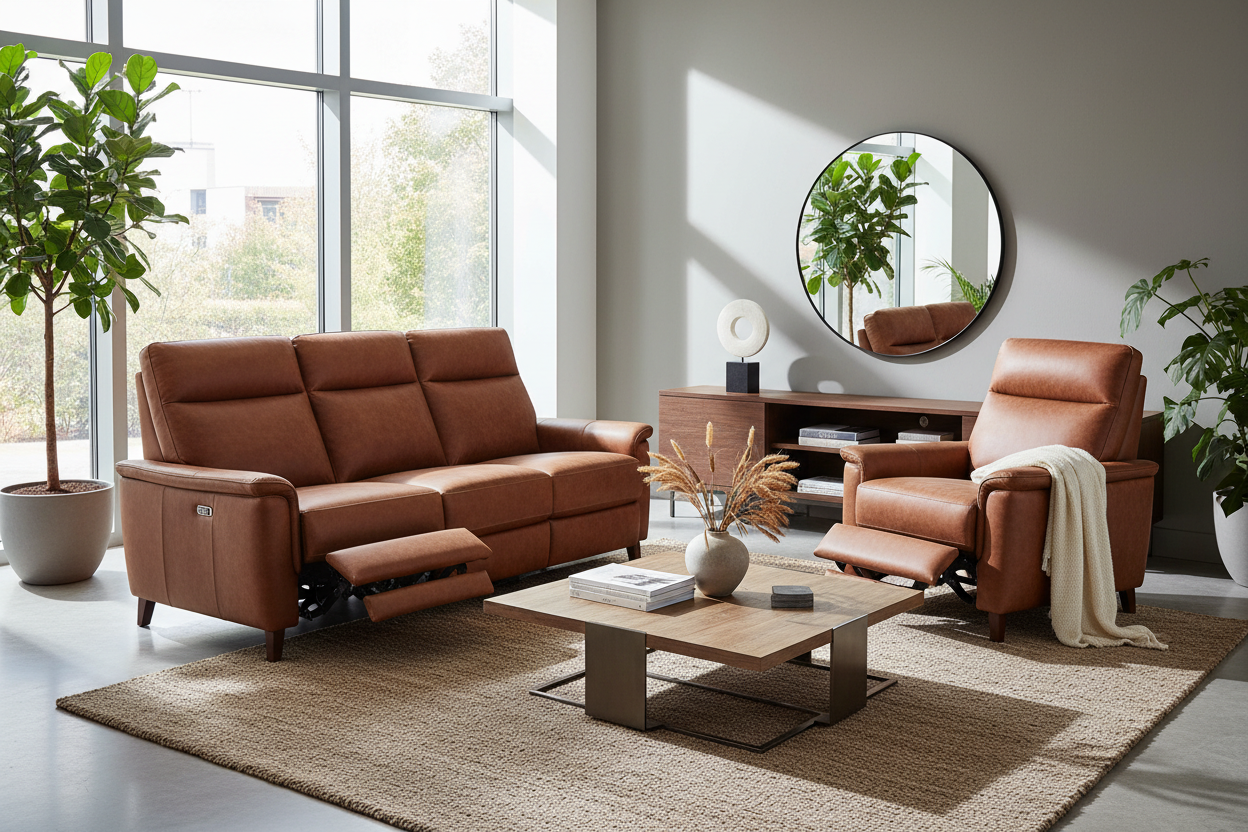
We have all walked into a living room dominated by a piece of furniture that looks more like a marshmallow than a sofa. For years, the design community held a bias against motion furniture due to its bulky, unrefined aesthetic. However, the gap between comfort and high design has finally closed. Finding the best leather recliner couch is no longer about sacrificing your room's visual integrity for the sake of kicking your feet up; it is about selecting a piece that offers ergonomic support while maintaining a sleek silhouette.
Quick Decision Guide: What Matters Most
If you are browsing showrooms or scrolling through catalogs right now, prioritize these four elements to ensure you are investing in quality:
- Leather Grade: Always opt for Top Grain or Full Grain leather. Avoid "bonded" leather, which peels over time.
- Frame Construction: Look for kiln-dried hardwood frames rather than plywood or particleboard to prevent warping.
- Suspension System: 8-way hand-tied springs or heavy-gauge sinuous springs offer the best longevity.
- The Mechanism: Ensure the reclining motor (if power) is quiet and operates smoothly without jerking.
Decoding Leather Quality for Longevity
As a specialist, the most common question I field is regarding price discrepancies. The difference usually lies in the hide. When shopping for the best leather reclining sofa, you will encounter terms like "Aniline" and "Pigmented."
Full Aniline vs. Semi-Aniline
For a buttery, natural feel that develops a rich patina over time, Full Aniline is the gold standard. However, it has no protective coating. If you have children or pets, I highly recommend Semi-Aniline or Pigmented leather. These treated hides retain the luxurious look but offer a protective polymer coating that resists scratching and staining, essential for a high-traffic family room.
The Silhouette: Avoiding the "Bulk"
The visual weight of a sofa dictates the flow of the room. Traditional recliners often suffer from "puffy" styling. To maintain a modern or transitional aesthetic, look for:
- Track Arms: Square, clean arms take up less visual space than rolled arms.
- Hidden Mechanisms: The best designs hide the footrest completely underneath the seat deck when closed, looking exactly like a stationary sofa.
- High Legs: Recliners that sit on visible wooden or metal legs (rather than a skirt or base that touches the floor) make the room feel larger by allowing light to pass underneath.
Ergonomics and Cushion Density
Comfort is subjective, but support is technical. A high-quality recliner should have high-resiliency (HR) foam wrapped in down or fiber. You want a density of at least 2.0 lbs. Anything less will result in seat puddling—where the leather stretches and the foam collapses—within the first year.
Lessons from My Own Projects
I want to share a specific challenge I encountered last year that isn't often discussed in buying guides. I was designing an open-concept loft in Chicago, and we selected a stunning, Italian-made power reclining sofa to float in the center of the room.
Here is the unpolished truth we discovered upon delivery: The power cords.
Because the sofa wasn't against a wall, we had ugly black cables trailing across a beautiful oak floor to the nearest outlet. It ruined the clean lines immediately. We had to purchase after-market battery packs (which tuck neatly under the mechanism) to make the sofa truly cordless. If you are planning to float your furniture away from the wall, do not forget to ask the manufacturer about battery pack compatibility. Additionally, I noticed that on this specific aniline leather, the "scratch test" was real—fingernail marks appeared instantly. While the client loved the "lived-in" look, it’s a shock if you aren't expecting it. Always request a swatch sample and scratch it yourself before buying.
Conclusion
Investing in the right motion furniture requires looking past the initial comfort test. By focusing on kiln-dried frames, top-grain hides, and refined silhouettes, you can secure a piece that elevates your home rather than dating it. Your living room deserves a centerpiece that functions as beautifully as it looks.
Frequently Asked Questions
How much wall clearance does a leather recliner couch need?
Standard recliners need about 12 inches of clearance. However, look for "wall-hugger" or "zero-wall" designs if you have a tight space; these track forward as they recline and require as little as 3 to 5 inches of space behind the frame.
Is a power recliner better than a manual one?
From a design standpoint, power recliners are superior because they allow for infinite stopping positions, giving you better ergonomic control. Manual levers also tend to break mechanically sooner than high-quality motors burn out.
How do I maintain the leather on a reclining sofa?
Dust it weekly with a microfiber cloth to prevent abrasive particles from settling in the grain. Apply a high-quality leather conditioner every 6 to 12 months, specifically on the headrest and armrests where body oils accumulate most.

Leave a comment
This site is protected by hCaptcha and the hCaptcha Privacy Policy and Terms of Service apply.