










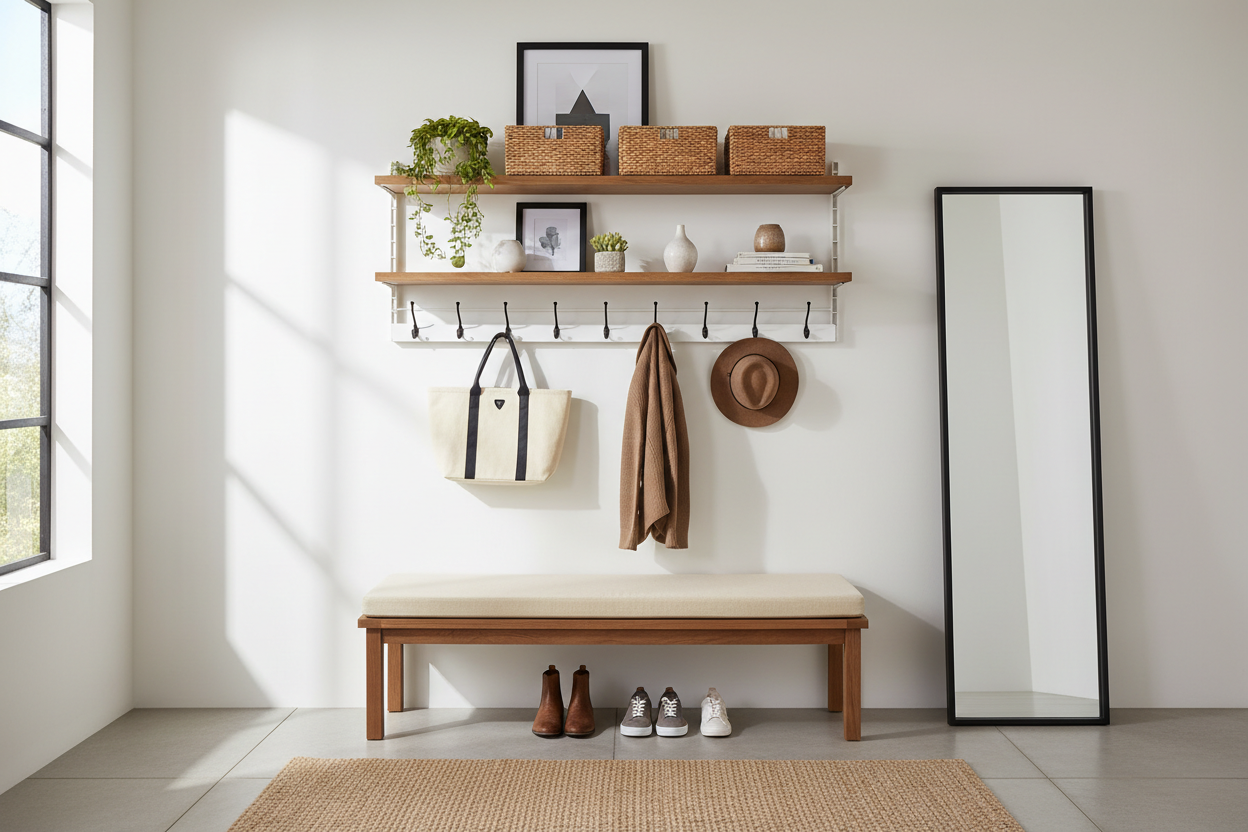
Entryways are notorious for becoming the chaotic catch-all of the home. You walk in the door, drop your keys, kick off your shoes, and toss your coat wherever it lands. Before long, the front hall is an obstacle course. The most effective solution to this clutter isn't just a shoe rack or a solitary coat hook; it is a bench with shelf above. This piece of furniture solves three problems at once: it provides a place to sit while putting on footwear, it organizes items near the floor, and it utilizes the often-wasted vertical space near the ceiling for storage.
Integrating a seating area with overhead storage creates a dedicated drop zone that forces organization. By visually framing the space, it signals to family members and guests exactly where items belong. Whether you are looking at a standalone hall tree or planning a custom built-in, the combination of low seating and high shelving is the gold standard for mudroom efficiency.
My Battle with the "Drop Zone"
I learned the value of this setup the hard way. For years, my back door area was a disaster zone. I had a small, cute bench that looked great in photos but offered zero utility. Coats were draped over the back of it, backpacks ended up on the floor in front of it, and the surface became a graveyard for unread mail. It was impossible to actually sit down to tie a shoelace without moving three piles of junk.
The game changed when I ripped out that decorative piece and installed a proper bench with shelves above. I opted for a unit that had hooks sandwiched between the seat and the top shelf. Suddenly, the backpacks went on the hooks, the winter hats went into baskets on the upper shelf, and the bench itself remained clear for sitting. It wasn't just about buying furniture; it was about changing the flow of traffic in the house. That vertical storage made the room feel taller and kept the mess out of my direct line of sight.
Understanding the Varieties
Not all storage benches are created equal, and the terminology can get confusing. Generally, you will encounter three main categories when shopping or planning a build.
The Hall Tree
This is the most common all-in-one solution. It is a single piece of furniture that connects the bench to the backing and the top shelf. These are excellent for renters or anyone who doesn't want to drill into studs. They come in various widths, from narrow 24-inch models for tight apartments to sprawling units that cover an entire wall.
The Built-In Look
If you have an alcove or a specific niche, a built-in bench with a shelf above offers the cleanest aesthetic. This usually involves mounting a floating bench and a separate floating shelf, often with beadboard or shiplap installed on the wall between them to connect the visual elements. This approach adds significant value to a home because it feels architectural rather than just furnished.
The Garage Workhorse
We often focus on the foyer, but this configuration is a staple in workshops. A heavy-duty workbench with overhead cabinetry or shelving follows the exact same principle. It keeps heavy tools low and lighter, infrequently used items high, leaving the workspace clear.
Maximizing Vertical Real Estate
The primary reason to choose a bench with shelves above is to capitalize on the dead space between eye level and the ceiling. In a standard 8-foot room, everything above the 6-foot mark is usually wasted. By installing a shelf at the 6-foot or 7-foot level, you gain cubic feet of storage without sacrificing floor space.
This upper area is perfect for seasonal rotation. During the summer, heavy wool blankets and scarves can live in opaque bins on the top shelf. When winter hits, you swap those out for beach towels and sunscreen. This rotation keeps the lower, accessible areas free for the items you use daily. If you have high ceilings, you might even consider double stacking shelves above the bench to truly maximize the volume.
Design Considerations and Dimensions
Getting the measurements right is critical for comfort. A standard bench height is between 18 and 20 inches. If the bench is too high, your feet dangle while tying shoes; too low, and it is hard to stand up. The shelf depth is equally important. A shelf that is too deep (over 12-14 inches) can make the seating area feel claustrophobic, like you are sitting in a cave. You want to be able to lean back slightly without hitting your head on the storage above.
Lighting is another element that often gets overlooked. Because a shelf casts a shadow, the seating area underneath can become dark. Installing a simple puck light or an LED strip under the shelf adds a touch of luxury and makes it easier to find missing gloves on a dark winter morning.
Styling Your Entryway Unit
Functionality comes first, but aesthetics matter, especially if this unit is the first thing guests see. The key to styling a bench with shelves above is managing visual weight. The top shelf should not look like it is about to collapse under a pile of clutter.
Baskets are your best friend here. Woven seagrass, wire, or felt bins can hide a multitude of sins. They create a uniform look even if one basket holds dog leashes and the other holds mismatched mittens. For the hooks area—usually the space between the bench and the shelf—avoid overcrowding. If you have five hooks, try to keep only three in use at a time. Leaving some negative space prevents the area from looking like a locker room.
You can soften the look of the bench itself with a cushion or a throw pillow, provided they are made of durable, cleanable fabrics. Indoor-outdoor fabrics are excellent choices for mudrooms because they resist staining and fading.
DIY Potential
For those handy with tools, building a bench with shelf above is a fantastic intermediate project. It does not require complex joinery. You can construct the base using 2x4s and plywood, and use standard lumber for the upper shelving. The most challenging part is usually the finishing work—painting or staining to match your existing trim.
If you are building it yourself, you have the freedom to customize the "zone" between the bench and shelf. You might install a corkboard for family notes, a mirror to check your hair before leaving, or beadboard paneling for a farmhouse texture. Customization allows you to work around electrical outlets or weirdly placed light switches that pre-made furniture would cover up.
The Garage and Utility Room Application
While the hallway gets all the glory, the utility of this design shines in the garage. A potting bench with shelves above allows a gardener to work with soil at waist height while keeping empty pots and fertilizers within arm's reach but out of the way. In a laundry room, this setup provides a place to sit while sorting clothes, with detergents and supplies stored safely overhead, away from children and pets.
The industrial versions of these benches often feature steel frames and particleboard shelving. They aren't pretty, but they are incredibly strong. If you are organizing a garage, look for units where the shelf height is adjustable. Being able to move the shelf up or down by a few inches can make the difference between fitting a large toolbox or having to leave it on the floor.
Ultimately, whether you are trying to tame a messy entryway or organize a workshop, the combination of seating and overhead storage is a layout that makes sense. It respects the limited footprint of modern homes while acknowledging that we all have stuff that needs a place to live.
Frequently Asked Questions
How much clearance do I need between the bench and the shelf above?
Ideally, you should aim for at least 40 to 48 inches of clearance between the seat of the bench and the bottom of the shelf. This allows an average adult to sit comfortably without hitting their head and provides enough vertical space for hanging coats on hooks underneath the shelf.
Should I buy a one-piece hall tree or install a separate bench and shelf?
A one-piece hall tree is easier to set up and can be moved if you relocate, making it perfect for renters. Installing a separate bench and wall-mounted shelf looks more custom and built-in, but it requires drilling into studs and permanent wall modification.
What is the best depth for the overhead shelf?
The overhead shelf should generally be shallower than the bench seat to prevent a top-heavy look and to ensure you don't bump your head when standing up. If your bench is 18 inches deep, aim for a shelf depth of 10 to 12 inches.

Leave a comment
This site is protected by hCaptcha and the hCaptcha Privacy Policy and Terms of Service apply.