










Most professionals treat their workspace as an afterthought, realizing too late that a chaotic environment kills productivity faster than a lack of caffeine. As an interior designer, I see this constantly: a client invests in a beautiful home but settles for a generic, utilitarian setup for the room where they spend eight hours a day. Finding the best office items isn't just about buying the most expensive chair; it is about curating a collection of tools that balance ergonomic science with sophisticated design.
Key Features to Look For
- Ergonomics & Adjustability: Look for chairs with dynamic lumbar support and desks with programmable height presets.
- Material Integrity: Prioritize solid woods, high-grade aluminum, and full-grain leathers over particle board and bonded leather.
- Visual Weight: Choose items that fit the scale of your room; bulky furniture can make a home office feel claustrophobic.
- Cable Management: The best designs integrate hidden channels to keep technology seamless and cord-free.
Defining the Foundation: The Desk and Chair
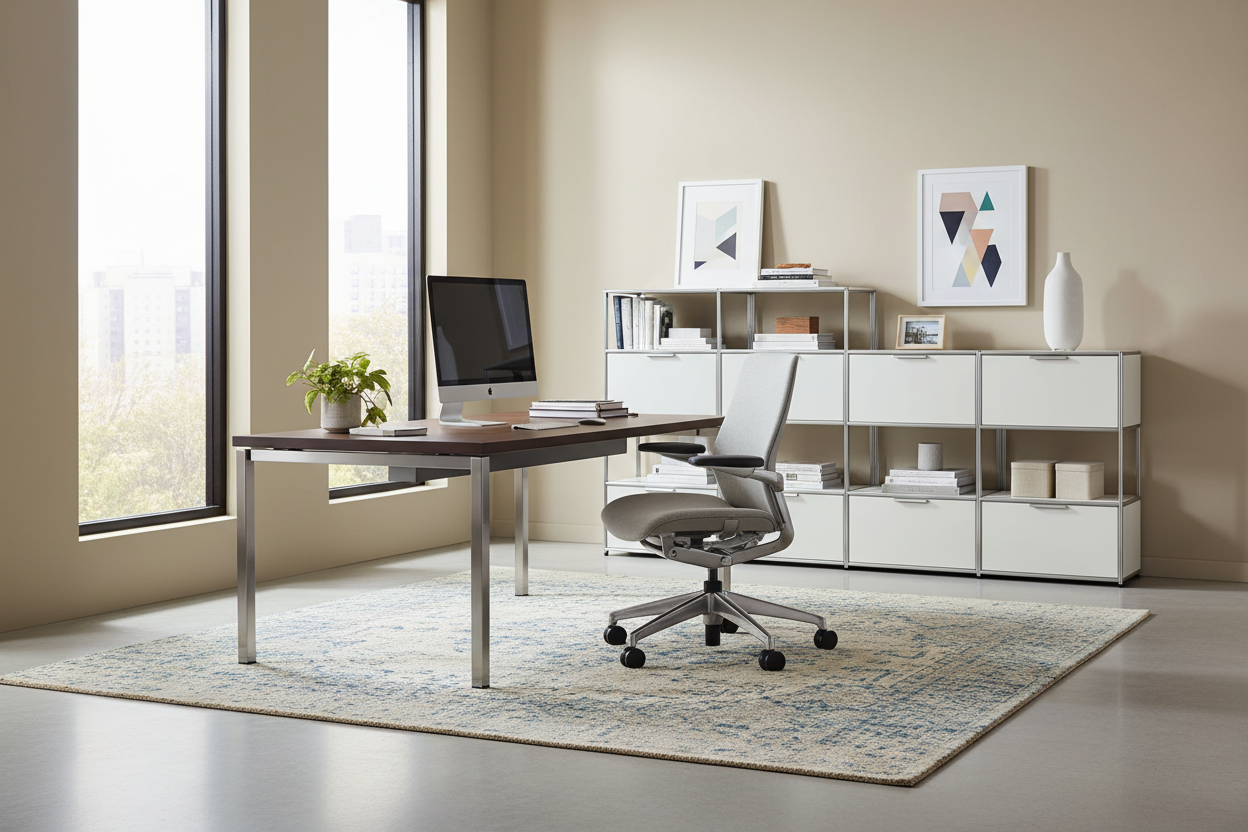
When selecting the centerpiece of your office, move away from the mindset of "buying furniture" and think about "investing in architecture." The desk is your command center. I always steer clients toward solid wood or high-pressure matte laminates. Avoid high-gloss finishes; they look sleek in photos but are a nightmare for fingerprints and glare under task lighting.
For seating, the silhouette matters as much as the mechanism. A chair should offer a synchro-tilt mechanism—where the seat and back move in a specific ratio—to maintain proper posture without feeling rigid. Ideally, the fabric should be breathable mesh or high-end textile, ensuring thermal comfort during long sessions.
Lighting: The Overlooked Essential
Lighting defines the mood. Overhead can lighting is often too harsh and creates unflattering shadows for video calls. The goal is to layer your lighting. Start with ambient light, but focus your budget on a high-quality articulated task lamp. Look for a Color Rendering Index (CRI) above 90, which ensures that colors on your desk look accurate and reduces eye strain compared to cheap LED strips.
Accessorizing with Intent
This is where we filter out the clutter. When clients ask me for the "best office stuff" to finish a room, I advise them to look for tactile materials. A wool felt desk pad, for instance, anchors your keyboard and softens the acoustics of the room. Replace plastic pen holders with ceramic or brass organizers. These small tactile touchpoints elevate the daily experience from corporate to residential luxury.
Lessons from My Own Projects
I learned a hard lesson about aesthetics versus function during a project for a tech executive in San Francisco. We installed a stunning, vintage reclaimed wood table as his primary desk. It was visually incredible—rich texture, history, character. However, two weeks later, he called me in frustration.
The surface was so uneven that his mouse wouldn't track correctly, and writing on a single sheet of paper was impossible without punching through the page. I had to rush-order a custom, thick leather desk blotter to create a usable surface. It taught me that the "best" item isn't just about the look; it's about the microscopic interaction you have with it. Also, never underestimate the wobble factor on standing desks; I now physically lean my full weight on them in the showroom before specifying them for a client to ensure the cross-bar stability is up to par.
Conclusion
Your workspace is a reflection of your professional identity. By selecting pieces that offer both structural integrity and refined aesthetics, you create an environment that invites focus rather than fatigue. Don't settle for temporary solutions; curate a space that works as hard as you do.
Frequently Asked Questions
Is it worth investing in a high-end ergonomic chair?
Absolutely. A generic chair often uses static foam that compresses over time, leading to misalignment. High-end options use pellicle mesh or memory foam designed for 12+ hour ratings, protecting your spine and circulation long-term.
How do I fit a functional office into a small apartment?
Focus on verticality and visual lightness. Use wall-mounted shelving to clear floor space and choose a desk with "hairpin" or slender legs. Acrylic or ghost chairs can also reduce visual clutter, making the room feel larger.
What is the best color temperature for office lighting?
Aim for 3500K to 4000K. This range is cool enough to promote alertness and focus without being as sterile and clinical as the 6000K daylight bulbs often found in commercial office buildings.


Leave a comment
This site is protected by hCaptcha and the hCaptcha Privacy Policy and Terms of Service apply.