










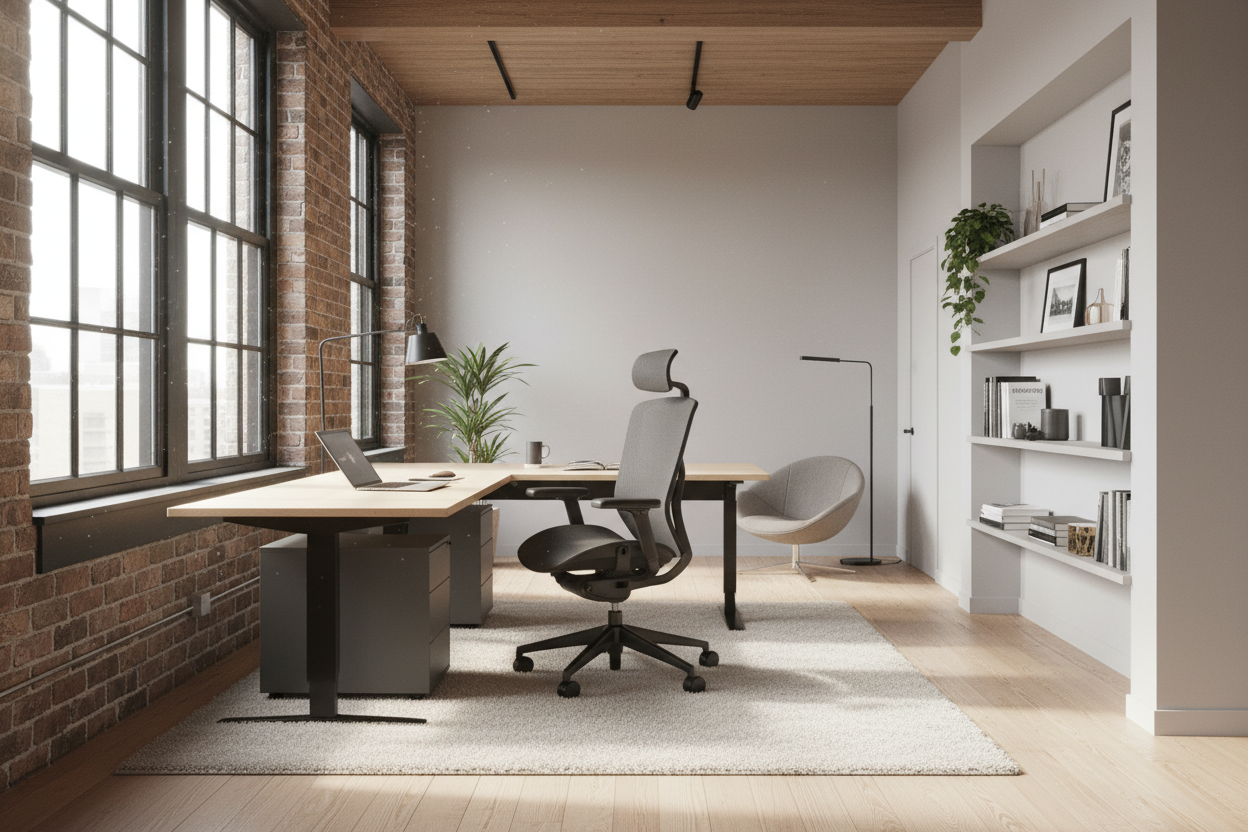
There is a distinct allure to setting up a workspace in a mezzanine or attic conversion. The architectural lines are interesting, and the separation from the main living area feels significant. However, many homeowners fall into the trap of treating this unique space exactly like a standard bedroom, ignoring the specific challenges of acoustics, thermal regulation, and sightlines. To truly succeed with home office loft design ideas, you must navigate the delicate balance between open-concept aesthetics and the need for secluded focus.
Key Features for a High-Functioning Loft Workspace
- Acoustic Control: Lofts act as echo chambers; prioritize soft furnishings and acoustic panels to dampen noise from below.
- Thermal Regulation: Heat rises. Ensure your design accommodates ceiling fans or dedicated HVAC zoning before placing furniture.
- Lighting Strategy: Skylights provide great natural light but cause screen glare; invest in automated blinds or position desks perpendicular to windows.
- Visual Weight: In small loft home office setups, opt for furniture with exposed legs to keep the floor visible, making the space feel larger.
Mastering the Layout and Flow
The most common error I see in loft room office ideas is pushing the desk directly against a knee wall (the short wall under a slanted ceiling). While this saves space, it creates a claustrophobic work environment where you are staring at drywall inches from your face.
Instead, consider 'floating' the desk. Position your primary work surface perpendicular to the wall or facing out toward the room's void (railing). This command position not only improves your visual field but also allows you to borrow the volume of the space below, making the office feel expansive rather than cramped.
Materiality and Visual Balance
Because lofts are often visible from the lower floors, your furniture selection must act as decor. A standard melamine cubicle desk will look cheap and jarring against the architectural flow of a home.
Choosing the Right Woods and Metals
Lean toward solid wood or high-grade veneers like walnut or white oak. These materials add warmth to what can often be a boxy, drywall-heavy space. If you are pursuing industrial loft office decorating ideas, incorporate matte black metal frames, but ensure the joinery is smooth. Rough-hewn industrial pieces can snag clothing and feel uncomfortable during long work hours.
Ergonomics Meets Aesthetics
In a loft, your office chair is often visible from the living room below. This creates a dilemma: the most ergonomic chairs often look like unattractive machinery. Look for 'executive' style task chairs that conceal their mechanisms. High-end fabric upholstery or cognac leather offers a sophisticated silhouette that complements the home's interior while providing the lumbar support necessary for an eight-hour workday.
My Personal Take on Home Office Loft Design
I learned a hard lesson about loft offices during a project in a converted warehouse in Chicago. We designed a stunning, minimalist workspace with polished concrete floors and a glass desk. It looked incredible in photos.
However, two weeks after installation, the client called me. Every time someone in the kitchen below opened a bag of chips, it sounded like an explosion in his office. Furthermore, the skylight above the desk—while beautiful—heated the glass surface until it was uncomfortable to touch by 2:00 PM.
We had to pivot. We brought in a thick, high-pile wool rug to absorb the sound bouncing off the concrete. We also swapped the glass desk for a matte-finished solid ash table that didn't retain heat. The lesson? In a loft, the environment (sound and temperature) dictates the design just as much as the dimensions do. Don't just design for how it looks; design for how the physics of the house behaves.
Conclusion
Creating a functional workspace in a loft requires more than just fitting a desk into a nook. By respecting the unique architectural constraints and prioritizing acoustic and thermal comfort, you can create a sanctuary that fosters deep work without sacrificing style.
Frequently Asked Questions
How do I handle lighting in a loft with slanted ceilings?
Avoid single overhead fixtures, which can create harsh shadows. Instead, layer your lighting with floor lamps to bounce light off the ceiling and a high-quality, adjustable task lamp for your desk work.
What is the best desk orientation for a small loft home office?
If space allows, face the room or the railing. If you must face a wall, try to position the desk near a gable window to extend your depth of field and reduce eye strain.
How can I reduce noise traveling from the floor below?
Soft surfaces are your best defense. Use heavy area rugs with thick pads, install heavy velvet or wool curtains (even if just for decor), and consider hanging acoustic art panels that mimic canvas paintings.

Leave a comment
This site is protected by hCaptcha and the hCaptcha Privacy Policy and Terms of Service apply.