










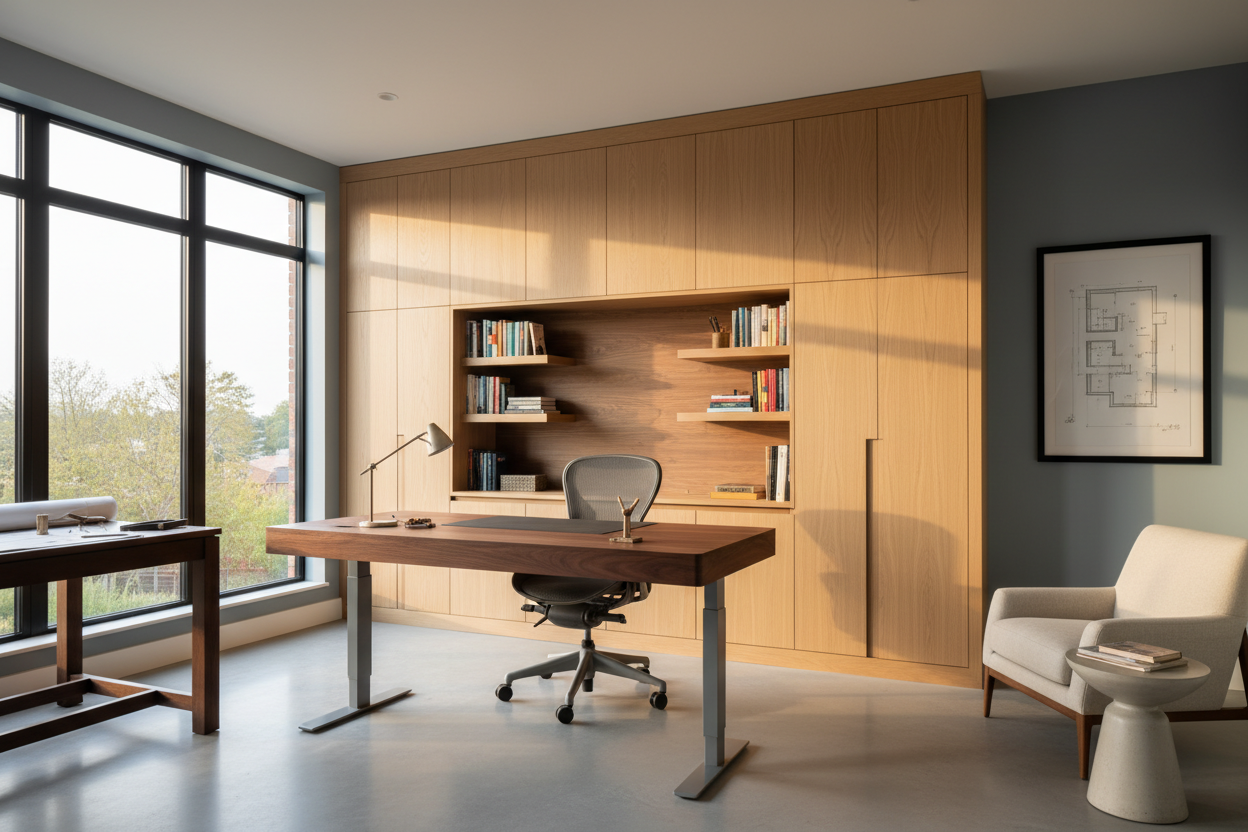
We have all spent enough time working from the dining room table to know that it is simply not sustainable. The lack of storage, the poor lighting, and the inevitable tangle of cables can stifle creativity and productivity. However, moving from a makeshift setup to a dedicated, high-performance workspace requires more than just buying a desk; it requires structural and layout expertise. This is where a specialized home office contractor becomes your most valuable asset.
Quick Decision Guide: What to Prioritize
Before you break ground or order custom cabinetry, use this checklist to ensure your contractor covers the essentials of a functional workspace.
- Electrical Load & Data: Ensure hardwired ethernet ports and dedicated circuits for high-draw equipment to prevent breaker trips.
- Acoustic Control: Look for sound-dampening insulation in walls and solid-core doors to minimize household noise transfer.
- Custom Millwork: Prioritize built-ins over freestanding furniture to maximize vertical storage and floor space.
- Lighting Layers: Require a mix of recessed ambient lighting and hardwired sconces or pendants for task lighting.
- Ergonomic Layout: Verify that the floor plan allows for a 42-inch clearance behind the desk for chair movement.
Defining the Scope: Renovation vs. Decoration
Many homeowners confuse interior decorating with contracting. While a decorator selects the rug and the paint color, a contractor handles the physical alteration of the space. If your vision involves moving walls to expand a room, installing new windows for natural light, or retrofitting electrical systems for a multi-monitor setup, you are dealing with a construction project, not just a styling update.
A specialized contractor understands the nuances of a working environment. They know that standard residential outlets are often placed too low for a desk setup, requiring you to crawl on the floor to plug in a laptop. They anticipate the need for floor outlets in the center of the room if you plan to position your desk strictly for a command position view.
Materiality and Custom Millwork
The difference between a generic study and a luxury office often comes down to the quality of the joinery. A skilled contractor will collaborate with millworkers to create built-in shelving and cabinetry that fits the architecture of your home seamlessly.
Solid Wood vs. High-Grade Veneers
For desktops and high-touch areas, I always advise clients to invest in solid hardwoods like walnut or white oak. These materials can be refinished over time and handle the wear of daily use. For vertical cabinetry and shelving, high-grade architectural veneers are often superior as they offer stability against warping while maintaining the rich aesthetic of wood. Avoid thermofoil or low-pressure laminates; they tend to peel in environments with fluctuating temperatures, such as converted attics or garages.
Lighting Design for Productivity
Lighting is often the most overlooked aspect of a home office build. A single overhead fixture casts shadows on your work surface, causing eye strain. Your contractor should plan for a layered approach. This involves installing recessed cans on dimmer switches for ambient light, but critically, planning the electrical rough-in for wall-mounted task lighting. This frees up desk space and provides directed light exactly where you need it.
Lessons from My Own Projects: The "Floating Desk" Dilemma
I want to share a specific challenge from a project I managed last year to illustrate why specialist knowledge matters. The client wanted a sleek, minimalist "floating" desk spanning wall-to-wall, made of heavy solid oak. A general handyman might have just used standard L-brackets, which would have eventually sagged or pulled out of the drywall under the weight of the wood and computer equipment.
Because we treated this as a structural build, we opened the wall and welded steel supports directly onto the studs before the drywall went back up. The result was a desk that looked like it was defying gravity but was strong enough to sit on. However, we missed one detail: cable management. We didn't cut a grommet hole through the steel support before finishing the wall. We had to retroactively drill through the beautiful oak and install a surface-mounted cable spine. It works, but it haunts me. The lesson? Always map your cable path through the structural elements before the walls are closed up.
Conclusion
Creating a home office is an investment in your career and your mental well-being. By hiring a qualified contractor who understands the specific demands of a workspace—from data ports to soundproofing—you move beyond a simple room makeover and create an environment that actively supports your success. Don't settle for "good enough"; build a space that works as hard as you do.
Frequently Asked Questions
How long does a typical home office renovation take?
For a standard room conversion involving custom millwork and electrical upgrades, expect a timeline of 4 to 6 weeks. If structural changes (like moving walls or adding windows) are involved, this can extend to 8 to 12 weeks depending on permitting.
Can a contractor help with soundproofing?
Absolutely. A contractor can install resilient channels, acoustic drywall (like QuietRock), and sound-dampening insulation (Rockwool) inside the walls. They can also replace hollow-core doors with solid-core options to significantly reduce noise transfer from the rest of the house.
Do I need a permit to convert a bedroom into an office?
Generally, if you are only adding cabinetry and painting, you do not need a permit. However, if you are adding new electrical circuits, moving plumbing, or altering structural walls, a permit is almost always required to ensure the work is up to code.


Leave a comment
This site is protected by hCaptcha and the hCaptcha Privacy Policy and Terms of Service apply.