










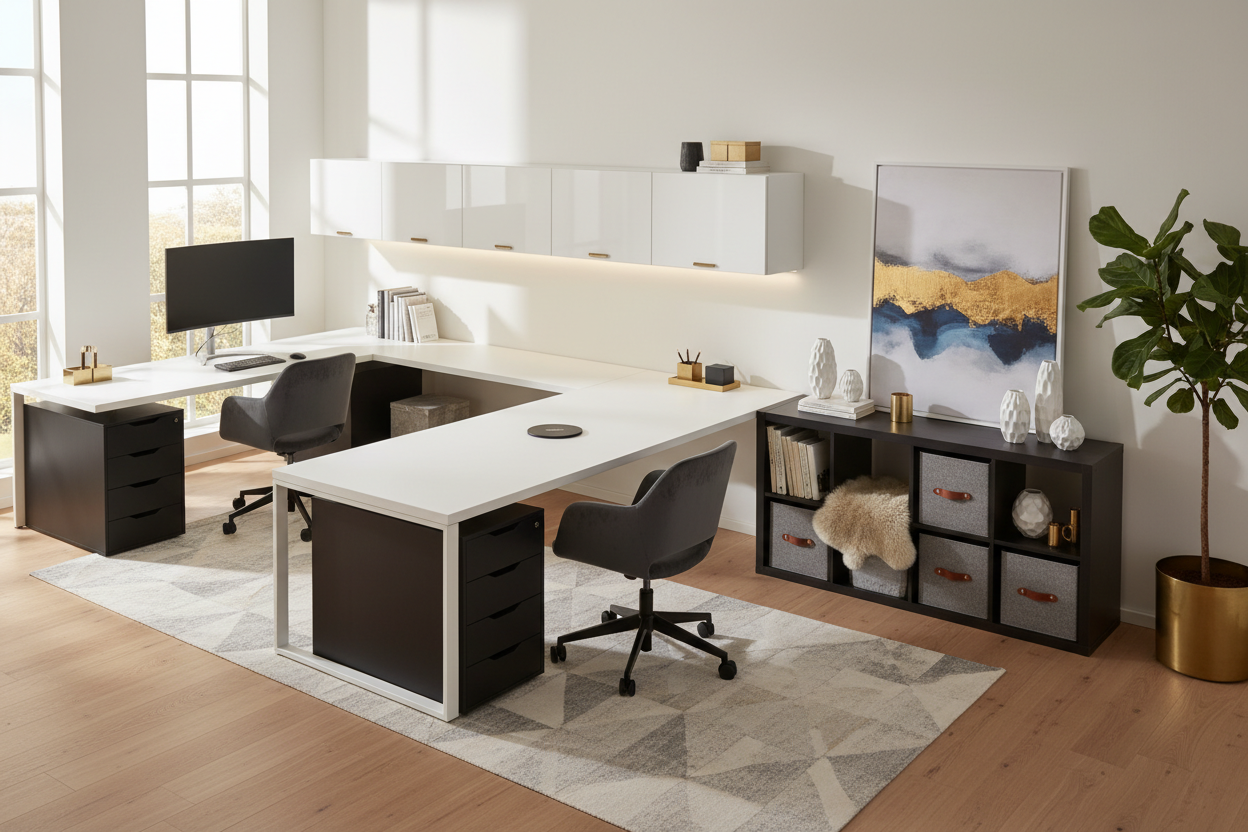
One of the most frequent concerns clients bring to me isn't budget—it's the fear that affordable furniture will result in a generic, "dorm-room" aesthetic. The truth is, high design isn't about the price tag; it is about curation, proportion, and material selection. You do not need a five-figure budget to create a professional sanctuary. By applying interior design principles to ikea office furniture ideas, we can manipulate scale and texture to build a workspace that feels bespoke, functional, and surprisingly sophisticated.
Quick Decision Guide: Curating Your Setup
Before driving to the warehouse, use this checklist to filter your options. These are the specific criteria I use when sourcing for commercial and residential projects:
- Material Core: Distinguish between honeycomb paper filling (lightweight, prone to denting) and particleboard or solid wood veneer (heavier, durable).
- Visual Weight: Balance heavy storage units (like Alex drawers) with visually light, legged furniture to avoid overcrowding the room.
- Ergonomic Rating: Prioritize chairs with adjustable lumbar support and seat depth over purely aesthetic options.
- Modularity: Select series (like BESTÅ or GALANT) that allow for future expansion as your storage needs grow.
Elevating the Aesthetic: Beyond the Catalogue Page
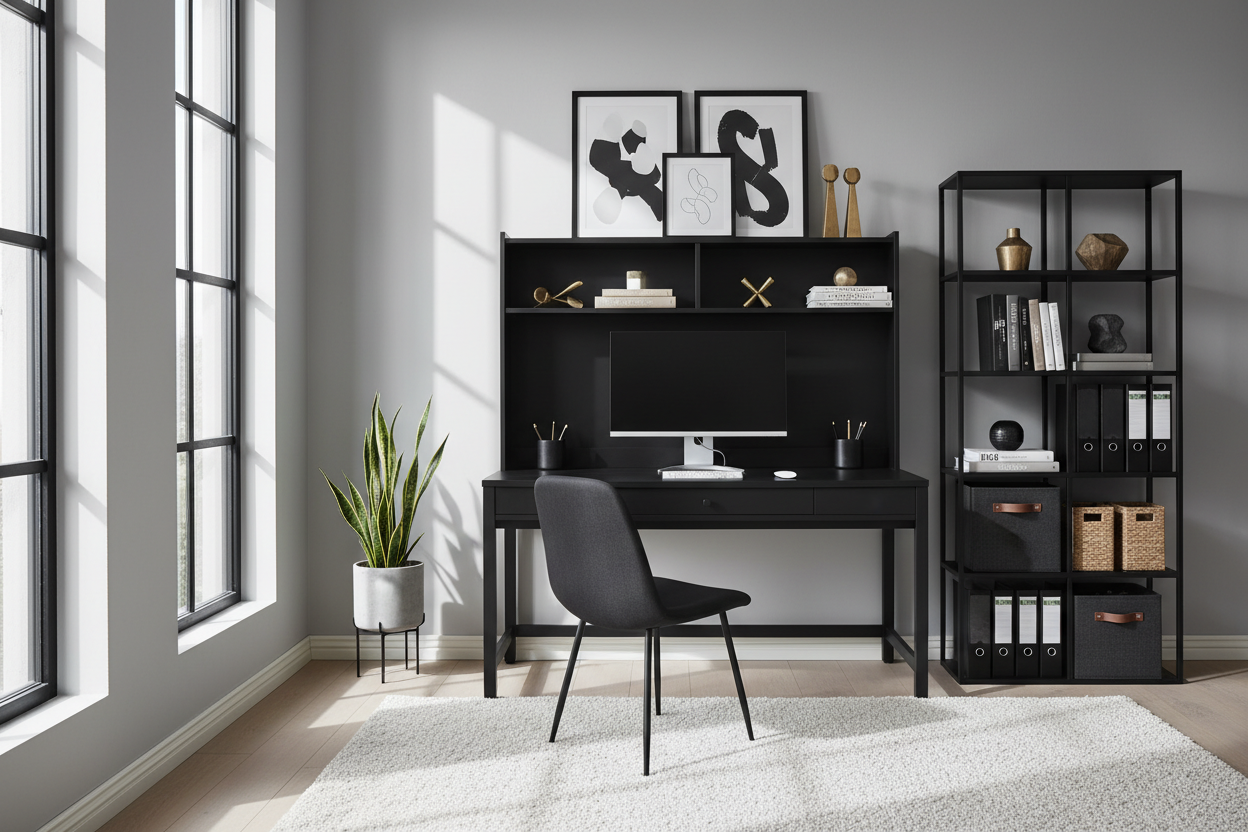
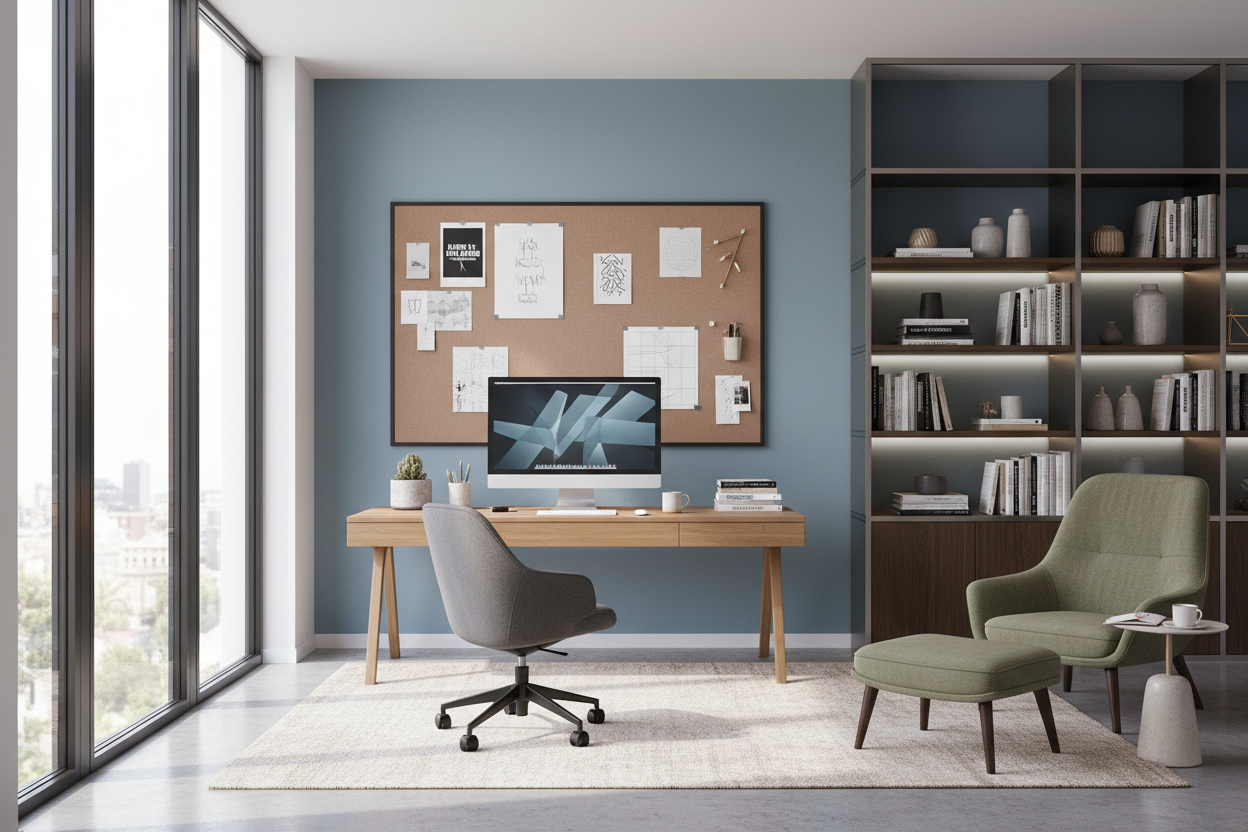
The secret to a high-end look is avoiding the "set" mentality. Buying a matching desk, bookshelf, and filing cabinet from a single series often flattens a room's character. Instead, we want to layer textures. If you select the sleek, industrial metal of the best ikea office furniture lines like IDÅSEN, pair it with the warmth of a textured rug or a walnut-finish shelf to soften the acoustics and visuals.
Materiality and Texture
In luxury design, tactile feedback is everything. When exploring ikea workspaces, pay close attention to the finish. The high-gloss finishes tend to show fingerprints and dust, which can make a space feel messy. I generally advise clients to opt for matte or wood-veneer finishes. For example, using a KARLBY walnut countertop (typically for kitchens) as a desk surface offers a solidity and warmth that standard hollow-core desk tops simply cannot match.
Space Planning and Layout Flow
A common error in home offices is pushing all furniture against the walls. To create a commanding executive feel, consider floating your desk in the center of the room, facing the door. This requires a desk with a finished back.
If you are working with a compact footprint, utilize vertical space. Wall-mounted storage combinations keep the floor clear, increasing the perception of square footage. Ensure you maintain at least 36 to 48 inches of circulation space behind your chair to prevent the room from feeling claustrophobic.
Lighting and Decor Integration
Lighting dictates the mood. Overhead lighting is rarely sufficient for focused work. Layer your lighting by combining task lamps with ambient ikea office decor. A well-placed floor lamp in the corner softens shadows, while a directional task lamp reduces eye strain. Accessorizing should be intentional—use cable management boxes (like ROMMA) to hide the visual clutter of wires, which is the fastest way to ruin a clean aesthetic.
My Personal Take on IKEA Office Furniture Ideas
I learned a hard lesson early in my career regarding weight distribution. I once designed a sprawling L-shaped desk for a graphic designer using the LINNMON tops because the dimensions were perfect. However, I didn't account for the weight of his triple-monitor mount.
Within six months, the honeycomb structure inside the desk began to bow significantly at the clamp point. It was an embarrassing callback. Since then, I strictly use the solid wood countertops or the TROTTEN/IDÅSEN lines for any client using heavy clamp-mount hardware. Another detail I've noticed: the veneer on the sharp edges of the ALEX drawers can chip if you sit in a chair with metal armrests that bang against them. I now always recommend chairs with padded arms or adjusting the height so they clear the drawer unit completely. These small durability nuances make the difference between a setup that lasts two years and one that lasts ten.
Conclusion
Creating a refined workspace is less about where you shop and more about how you assemble the pieces. By focusing on material quality, prioritizing ergonomics, and hacking standard components to fit your specific dimensions, you can achieve a studio-quality environment. Trust your eye, measure twice, and don't be afraid to mix metals and woods for a curated finish.
Frequently Asked Questions
How do I stop my IKEA desk from wobbling?
Wobble is usually caused by uneven floors or lightweight legs. Ensure you adjust the feet levelers found on most system legs (like OLOV). For maximum stability, I recommend the A-frame trestle legs (MITTBACK) or the underframes from the IDÅSEN series, which are significantly more rigid than standard post legs.
Can I paint IKEA laminate furniture?
Yes, but it requires specific preparation. You cannot paint directly over the laminate. You must use a shellac-based primer (like BIN) first to bond to the slick surface. Once primed, you can use a high-quality cabinet enamel for a custom color that integrates perfectly with your room's palette.
What is the best desk depth for a computer setup?
For a laptop, 24 inches is sufficient. However, if you use an external monitor, I always recommend a depth of at least 30 inches (approx. 75-80 cm). This ensures the screen is at an arm's length away, reducing eye strain. Many standard dining tables work better for this than compact student desks.

Leave a comment
This site is protected by hCaptcha and the hCaptcha Privacy Policy and Terms of Service apply.