










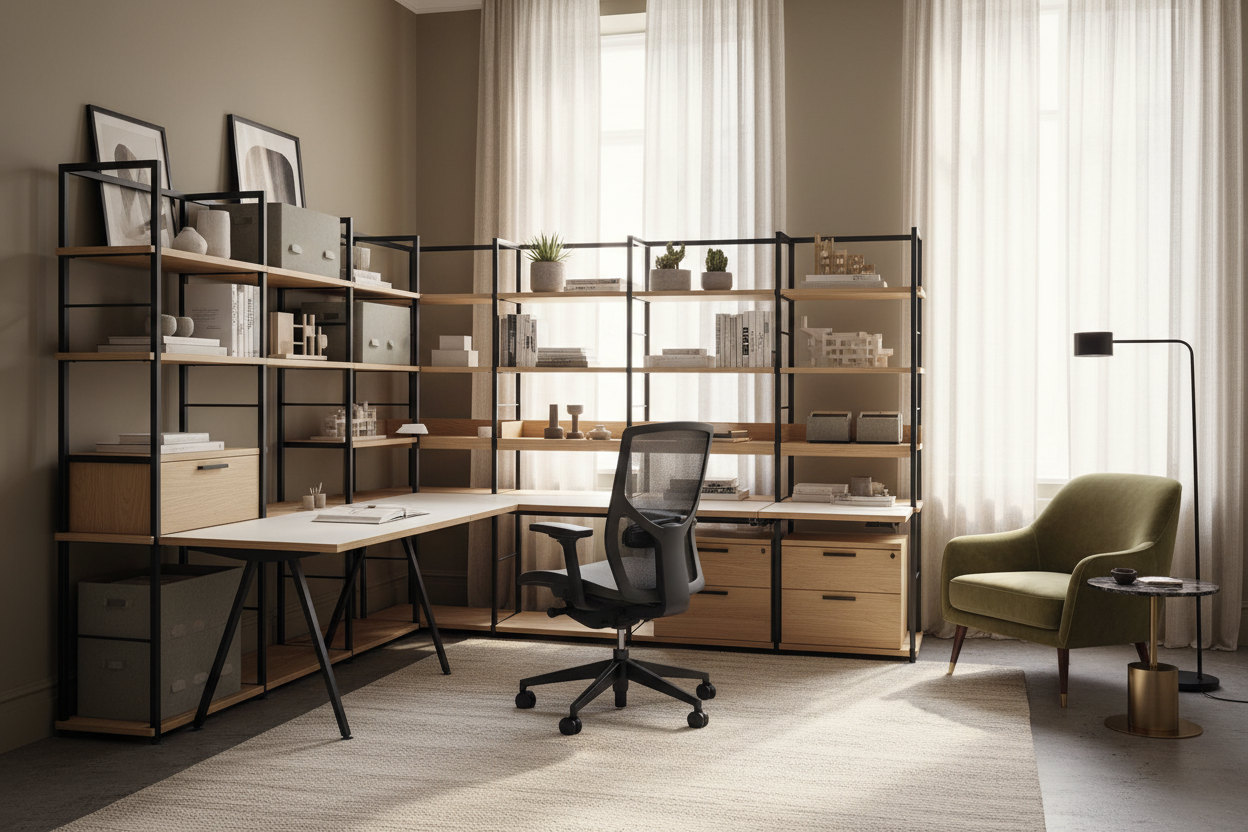
We have all walked into a workspace that feels disjointed—where the desk fights with the storage, and the cabling creates visual noise that disrupts focus. As a designer, I often see clients attempting to piece together a workspace item by item, resulting in a cluttered aesthetic and poor flow. The architectural solution to this common dilemma is systems furniture.
Moving beyond the outdated concept of the gray cubicle, modern systems are about creating a cohesive, scalable ecosystem. Whether you are outfitting a corporate floor or refining a dedicated room in your residence, understanding how to leverage these modular components is the key to achieving a high-end, integrated look that functions as beautifully as it photographs.
Key Features to Look For
- Modularity & Scalability: Can the layout expand or contract as your workflow changes?
- Integrated Wire Management: Look for hidden channels (raceways) that keep cords completely invisible.
- Material Continuity: Ensure the veneers or laminates match across desk surfaces, panels, and storage units.
- Ergonomic Adjustability: The system should accommodate sit-stand capabilities without breaking the visual line.
- Acoustic Properties: Fabric panels should offer genuine sound dampening, not just visual separation.
Defining the Systems Office Aesthetic
When we talk about a systems office, we are referring to a collection of interlocking components—panels, work surfaces, shelving, and storage—that function as a single unit. Unlike standalone desks, an office furniture system relies on a shared infrastructure. This creates a streamlined silhouette that creates a sense of permanence and intentionality in a room.
Material Selection and Texture
The difference between a sterile office and a luxury workspace often comes down to materiality. In high-end furniture systems, avoid standard high-pressure laminates (HPL) if possible, or opt for "soft-touch" matte finishes that resist fingerprints. For a warmer, residential feel, look for wood veneers like walnut or white oak. However, be mindful of "veneer drift"—if you add components years later, the color may not match the original aged wood perfectly.
Space Planning for Home Office Systems
Integrating systems office furniture into a home environment requires a delicate touch. A commercial setup is designed for large floor plates, while a home office furniture system must respect the scale of a bedroom or den.
When planning your layout, consider the "circulation path." A system often has a larger footprint than a writing desk. Ensure you have at least 36 to 48 inches of clearance behind the seated position. By anchoring the system against a wall or floating it centrally with a finished back panel, you define the room’s focal point without overwhelming the square footage.
The Role of Vertical Storage
One of the primary benefits of home office systems is the utilization of vertical space. Instead of cluttering the floor with filing cabinets, use the system's vertical stanchions to mount overhead storage or open shelving. This draws the eye upward, making the room feel loftier while keeping essential documents within arm's reach.
Sourcing and Configuration
If you are looking at a large-scale installation, you might encounter suppliers like a systems office furniture inc or similar commercial dealers. These vendors usually offer higher durability ratings (ANSI/BIFMA standards) compared to big-box retailers. When configuring your order, pay close attention to the "handedness" of the unit (left vs. right return) and the electrical requirements. A true office furniture system will often require a hardwired electrical feed, whereas residential versions will rely on standard wall plugs.
Lessons from My Own Projects
I want to share a specific realization I had while installing a high-end modular system for a client in a downtown loft. We specified a gorgeous, cantilevered system with integrated LED task lighting under the overhead bins. On paper, it was flawless.
However, once installed, we realized a practical issue with the wire management channels (the "raceways"). While they were designed for standard ethernet and power cables, they weren't deep enough to accommodate the bulky power bricks of the client's specific dual-monitor setup and external hard drives. We ended up having to force the panel covers shut, which created a slight bulge in the metal casing that drove me crazy.
Since then, I always physically test the cable trays with the actual equipment the client uses before ordering. I also learned that matte black laminate, while trendy, shows skin oils instantly. We had to add a leather desk blotter to the setup just to keep it looking clean. It is these unpolished, tactile details that brochures won't tell you, but they define your daily experience with the product.
Conclusion
Investing in systems furniture is an investment in your workflow. By choosing the right materials and planning your layout with precision, you create a workspace that supports your habits rather than hindering them. Look for quality hinges, sturdy cantilevers, and finishes that bring you joy. A well-designed system disappears into the background, letting your work take center stage.
Frequently Asked Questions
Is systems furniture suitable for small apartments?
Yes, but you must choose a "wall-mounted" or "tension-pole" system. These designs use minimal floor space and utilize vertical height, making them ideal for compact home office systems where every inch counts.
Can I disassemble and move an office furniture system easily?
It depends on the complexity. Panel-based systems (cubicle style) are notoriously difficult to move without professional installers. However, desking systems (table-based) are generally easier to dismantle. Always keep the assembly manual and the specific hex keys that came with the unit.
What is the lifespan of commercial systems office furniture?
Commercial-grade furniture systems are built to last 15 to 20 years. They undergo rigorous testing for 24/7 use. If you buy from a reputable commercial dealer, you are purchasing a product designed to outlast standard residential furniture by a decade or more.


Leave a comment
This site is protected by hCaptcha and the hCaptcha Privacy Policy and Terms of Service apply.