










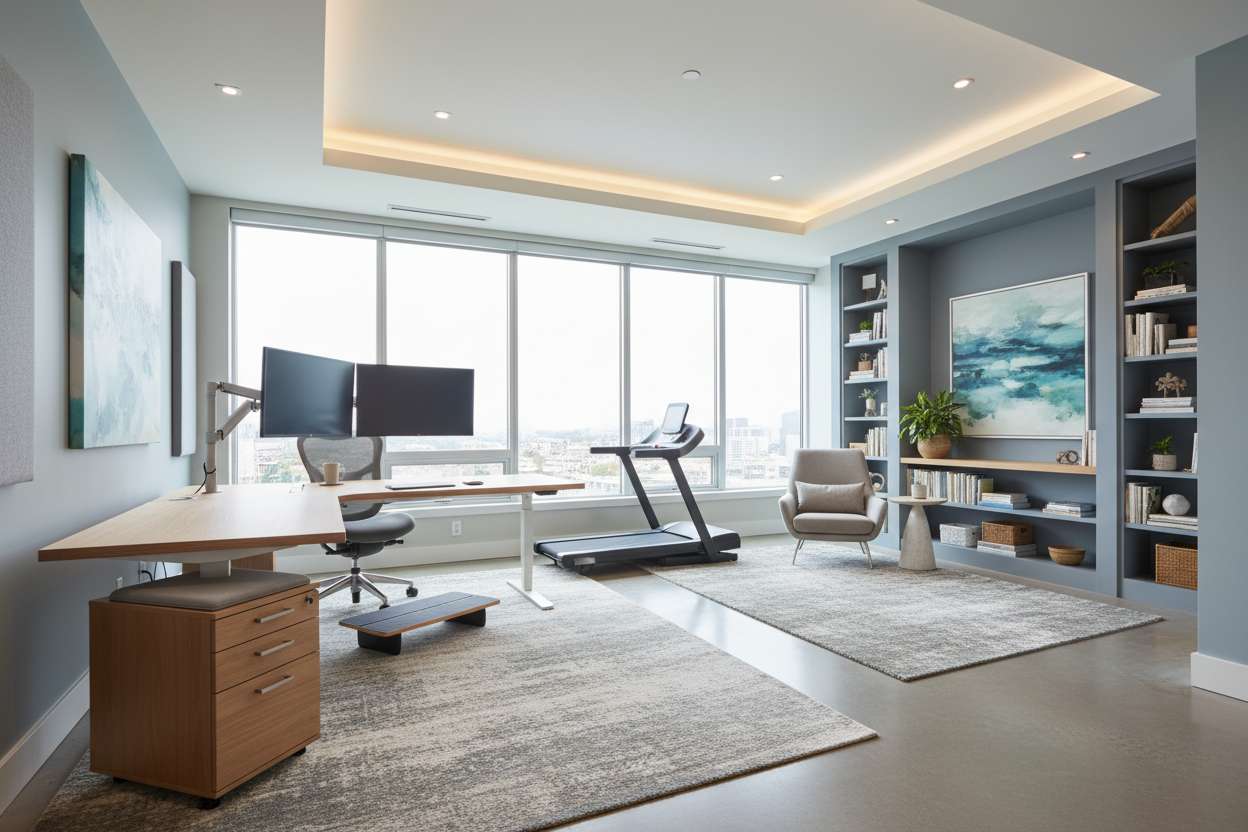
There is nothing quite as frustrating as a workspace that fights against you. You might have a stunning executive chair and a mahogany desk, but if the flow is wrong, your focus suffers. A successful private office layout is not merely about pushing furniture against the walls; it is about choreographing your daily workflow to balance psychological comfort with high-performance utility.
Key Features of a High-Performance Layout
- The Command Position: Placing the desk where you can see the door without being directly in line with it reduces subconscious anxiety.
- Zoning: Distinct areas for deep work, reference storage, and casual seating to support different mental modes.
- Light Control: Positioning screens perpendicular to windows to eliminate glare while maximizing natural light.
- Traffic Flow: Ensuring a minimum of 36-48 inches of clearance behind the desk for unrestricted movement.
Strategic Space Planning & Flow
When I approach a new project, I don't start with the furniture; I start with the private office floor plan. The goal is to establish a visual hierarchy. Your desk is the undisputed focal point, but it requires breathing room to feel authoritative. In a modern private office, we often move the desk away from the wall—floating it in the room. This creates a sense of openness and allows for a credenza behind you, forming a functional cockpit where everything is within arm's reach.
Optimizing for Small Footprints
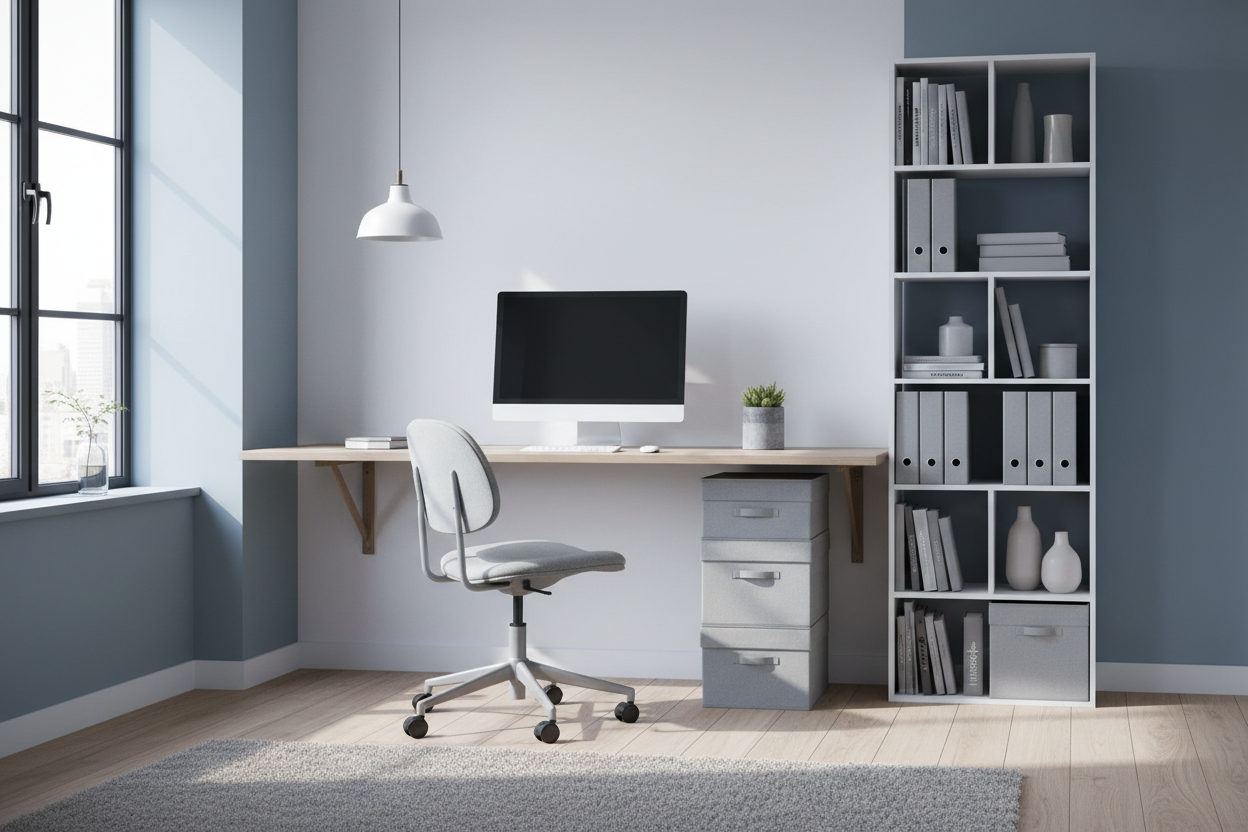
Small private office design requires a different approach. Here, verticality is your best asset. Instead of a sprawling L-shaped desk that eats up floor space, consider a streamlined writing desk paired with wall-mounted shelving units. Using legs with an open silhouette rather than heavy block pedestals increases the visible floor area, making the private office interior feel significantly larger than it is.
Materiality and Visual Weight
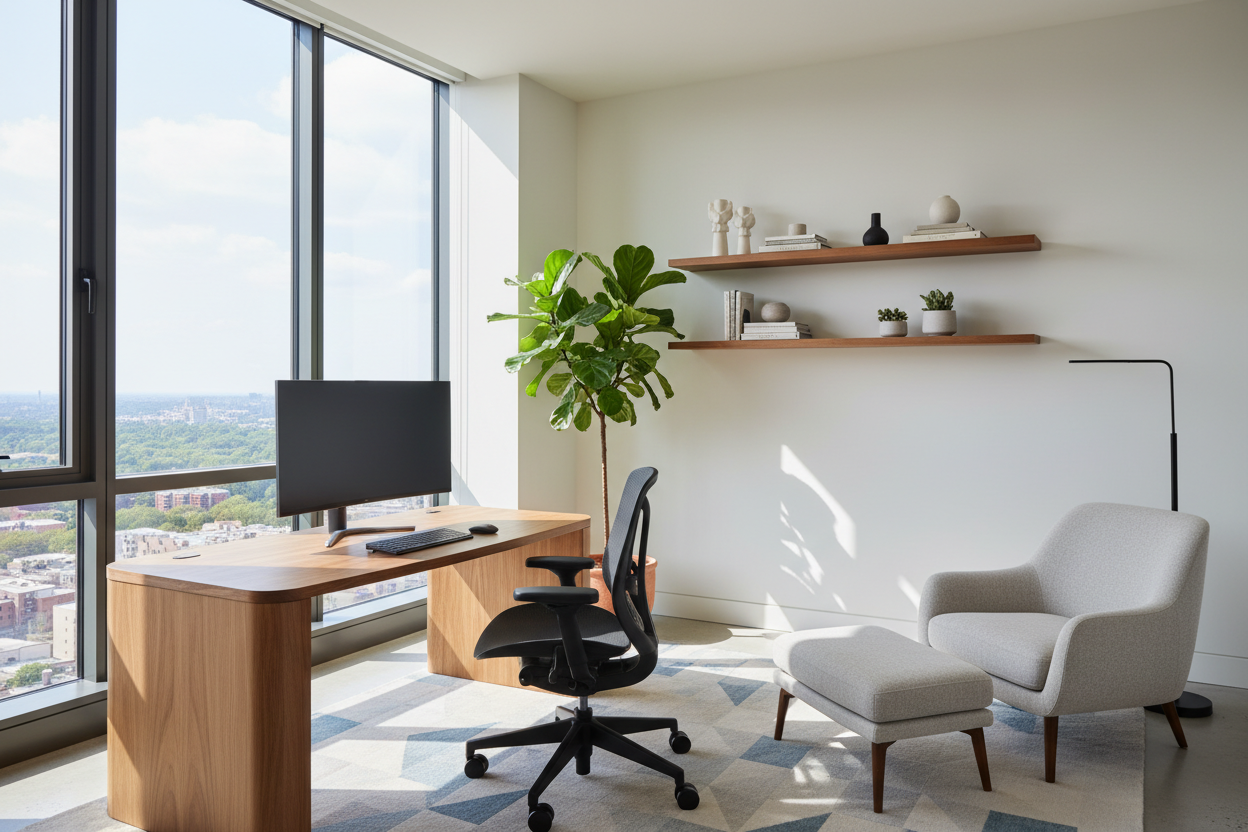
The tactile experience of your office defines its luxury. For a private office interior design that commands respect, look beyond standard laminates. A solid walnut or oak desktop offers warmth and durability, developing a patina over time that tells a story. However, be mindful of visual weight. If your room is dark, a heavy, dark wood desk can feel oppressive. In such cases, I often recommend glass or light rift-sawn oak to keep the energy buoyant.
Lighting: The Invisible Design Element
Many private office ideas fail because they rely solely on overhead recessed lighting, which casts unflattering shadows. A layered approach is non-negotiable. Start with ambient light, add task lighting (an articulated desk lamp is essential for reducing eye strain), and finish with accent lighting—perhaps a picture light over a diploma or art piece. This triad creates depth and prevents the sterile "cubicle" feel.
My Personal Take on Private Office Layouts
I learned a hard lesson early in my career regarding the "floating desk" aesthetic. I designed a stunning, minimal private office design for a client where the desk sat proudly in the center of the room. It looked incredible in photos. However, I hadn't pushed hard enough for floor-mounted electrical outlets during the renovation phase.
The result? A week later, the client called me frustrated. They had to run a thick, ugly orange extension cord across their beautiful hardwood floor to power their laptop and lamp. It ruined the sophistication instantly and created a trip hazard. Now, I never suggest floating a desk unless I know exactly how we are managing the cables. If you can't cut into the floor, a high-quality area rug can sometimes hide a flat-wire cord, but it’s a detail that separates a rendering from a livable reality.
Conclusion
Your workspace should be a physical manifestation of your career goals. By prioritizing ergonomics, light, and flow, you elevate your daily experience from mundane to inspired. Don't settle for a setup that just fits; curate a private office design that performs.
Frequently Asked Questions
What is the best desk orientation for productivity?
The "command position" is widely considered the best orientation. This involves facing the room with a view of the door, but not directly in front of it. This private office layout idea stems from Feng Shui but has practical psychological benefits, giving you a sense of control and security.
How do I layout a private office with no windows?
In a windowless private office interior, lighting becomes the critical variable. Mimic natural light with full-spectrum bulbs (around 3000K-4000K). Use mirrors to reflect light and create depth, and incorporate plants to bring life and softness to the space.
How much space do I need behind my desk?
For a comfortable private office layout, aim for at least 42 to 48 inches of space between the edge of your desk and the wall or credenza behind you. This allows you to slide your chair back and swivel without banging into furniture.

Leave a comment
This site is protected by hCaptcha and the hCaptcha Privacy Policy and Terms of Service apply.