










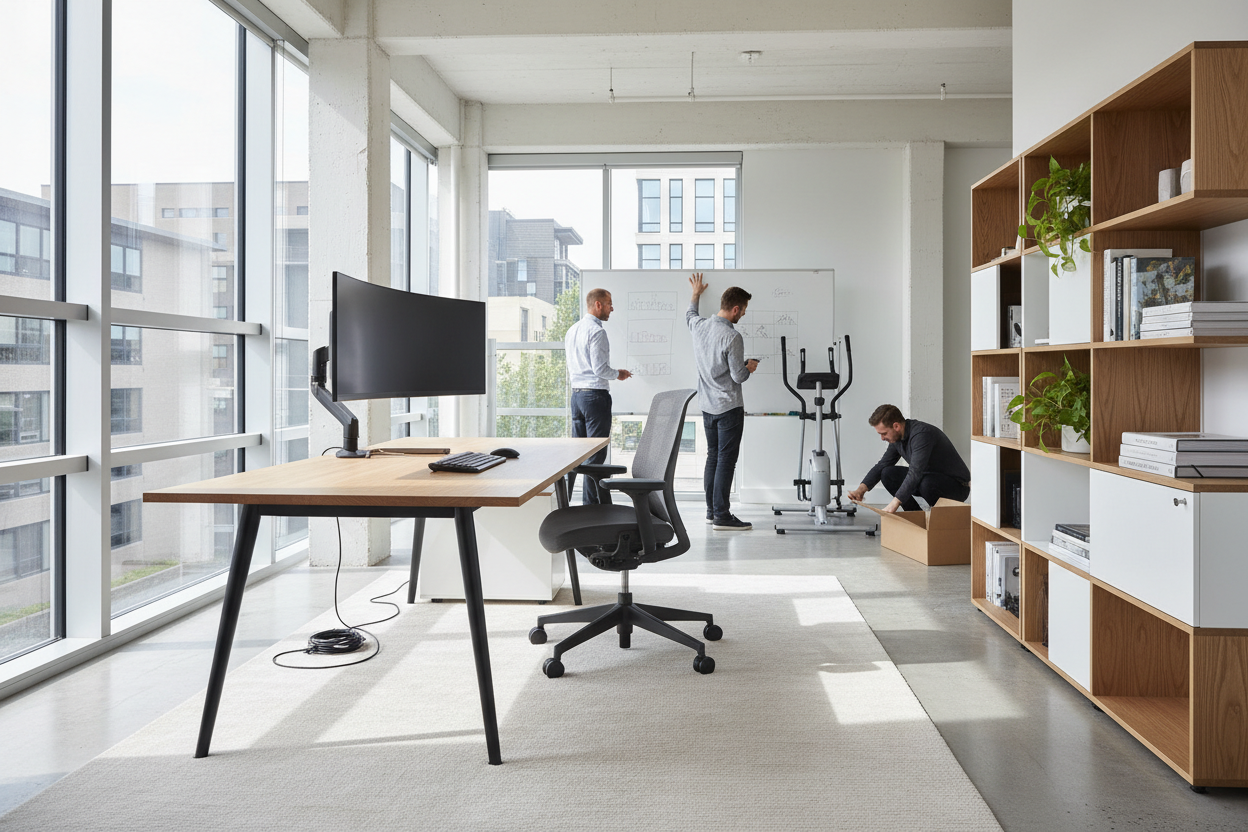
There is nothing quite as daunting—or exciting—as staring at an empty room and visualizing a workspace that balances high-end aesthetics with rigorous functionality. Whether you are carving out a corner in a master suite or dedicating a full room to business, the layout dictates your workflow. A poorly planned environment leads to fatigue and clutter, while a curated office setting acts as a catalyst for focus and professionalism. In this guide, I will walk you through the architectural and decorative decisions required to build a workspace that works as hard as you do.
Key Essentials for a Functional Workspace
If you are wondering how to set up an office space that stands the test of time, prioritize these four foundational elements before buying a single piece of furniture:
- Ergonomics First: Prioritize chairs with lumbar support and adjustable seat depth over purely aesthetic mid-century modern replicas.
- Lighting Layers: A mix of ambient (overhead), task (desk lamp), and natural light prevents eye strain.
- Acoustic Control: Incorporate soft textures (rugs, curtains, acoustic panels) to dampen echo for clearer calls.
- Traffic Flow: Ensure there is at least 30-36 inches of walkway clearance behind the desk for comfortable movement.
Mastering the Layout and Flow
When setting up an office, the placement of the desk—the command center—is paramount. Avoid pushing your desk directly against a wall, which is a common mistake in new office setup scenarios. This "cubicle effect" can feel stifling.
Instead, position the desk to face the door or into the room (the "power position"). This not only commands the space but also allows your eyes to rest on a longer distance, reducing fatigue. If you are limited on square footage and figuring out how to set up a office in a small footprint, consider a floating desk or placing the desk perpendicular to a window to maximize natural light without direct glare on your monitor.
Selecting Materials: Durability Meets Style
Setting up a business office requires furniture that conveys authority and withstands daily wear. As a designer, I always advise clients to look closely at material composition.
Solid Wood vs. Veneer
For executive desks, solid wood offers longevity and can be refinished, but it reacts to humidity. High-quality wood veneers over MDF are often more stable and cost-effective for setting up an office space, provided the veneer is thick enough to resist chipping. Look for "contract grade" laminates if durability is the absolute priority, as they resist coffee rings and heat far better than natural timber.
Textiles and Seating
When setting up an office from scratch, the chair is your most critical investment. Look for breathable mesh or high-grade leather. Be wary of cheap bonded leather; it tends to peel within two years of daily use. The silhouette of the chair should complement the desk—if the desk is heavy and traditional, balance it with a chair that has a lighter visual weight.
Lighting and Ambiance
Learning how to set up a professional office goes beyond furniture; it is about controlling the atmosphere. Overhead lighting is rarely sufficient. You need a dedicated task lamp with an adjustable arm. Ideally, choose a fixture with a Color Rendering Index (CRI) above 90, which renders colors accurately and reduces headaches. If you are setting up an office in a windowless room, use daylight-balanced bulbs (around 4000K) to mimic natural light and keep energy levels high.
My Personal Take on Office Settings
In my fifteen years of design, I have seen one specific oversight ruin more projects than budget constraints ever did: ignoring cable management during the initial install. I remember a project last year where we designed a stunning, minimalist walnut desk floating in the center of the room. It looked incredible in the renderings.
However, once the client started setting up an office space with their actual tech—dual monitors, a dock, a printer, and charging bricks—it looked like a spiderweb of chaos. We had to retrofit a cable spine down the leg of the desk and mount a tray underneath. The lesson? When you are how to set up office space, buy furniture with integrated grommets and wire channels. If you buy a vintage desk, be prepared to drill holes or use extensive adhesive clips. The psychological impact of seeing zero wires cannot be overstated; it makes the room feel 50% larger and infinitely calmer.
Conclusion
Creating the ideal workspace is a balance of rigorous planning and personal style. By focusing on ergonomics, proper lighting, and high-quality materials, you ensure your environment supports your ambition. Take the time to plan your layout before purchasing, and your office will serve you for years to come.
Frequently Asked Questions
How do I determine the right desk size for my room?
A standard executive desk is roughly 60 inches wide by 30 inches deep. However, when setting up an office, ensure you have at least 3 feet of clearance on all sides for the chair to roll back and for traffic to flow smoothly around the furniture.
Is it better to face the window or the wall?
Ideally, position your desk perpendicular to the window. Facing the window directly can cause eye strain due to brightness contrast, while having the window behind you creates glare on your screen. Perpendicular placement offers the best balance of view and light control.
What is the most overlooked item when setting up a new office?
Storage is frequently underestimated. When learning how to set up an office space, people often buy a desk and chair but forget filing cabinets or shelving. This leads to a cluttered desk surface, which kills productivity. Plan for vertical shelving to maximize floor space.


Leave a comment
This site is protected by hCaptcha and the hCaptcha Privacy Policy and Terms of Service apply.