










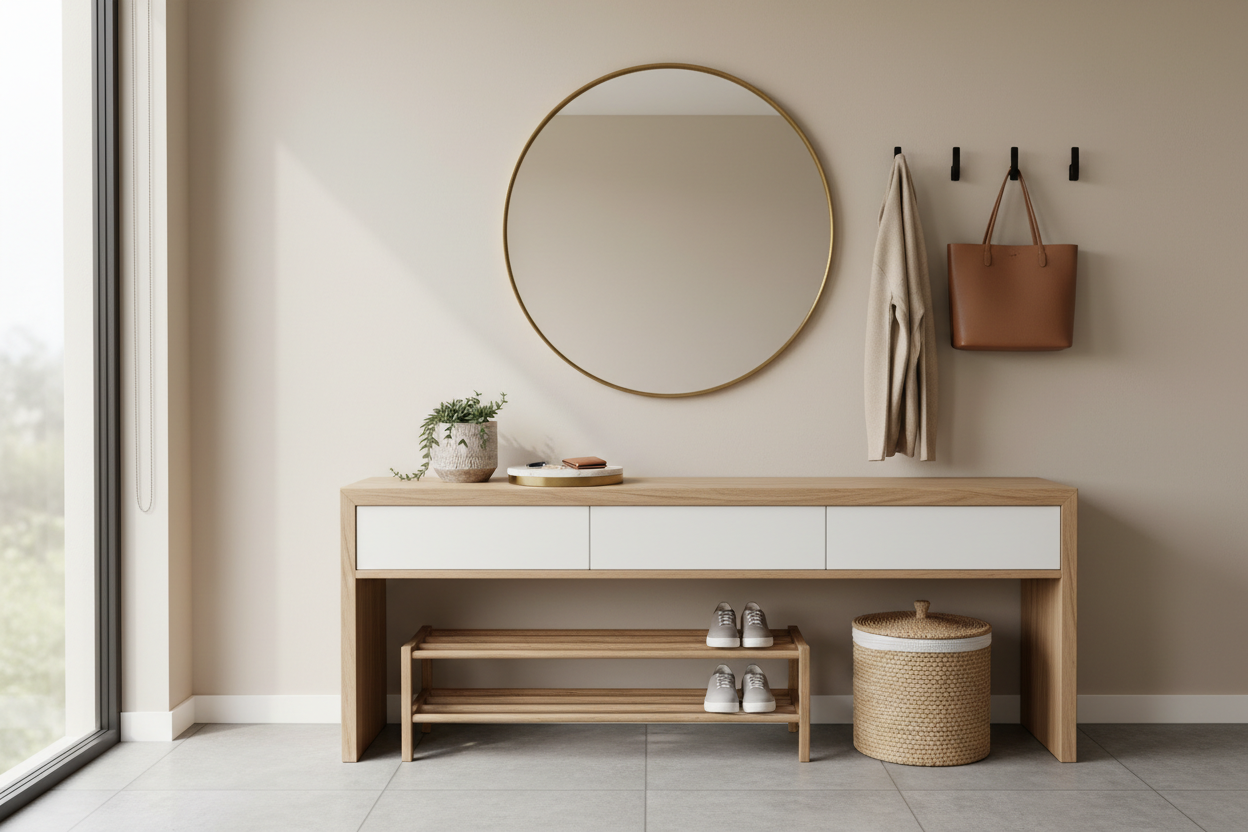
The foyer is the handshake of the home; it sets the expectations for the rest of your interior narrative. Yet, for many clients I consult, this space is a chaotic "drop zone" rather than a curated introduction. Finding a piece that balances high-traffic durability with sophisticated aesthetics is a challenge, but a well-chosen entryway organizer target carries can often bridge that gap surprisingly well.
Key Features to Look For
Before committing to a purchase, evaluate these core specifications to ensure the piece withstands daily wear while elevating your design scheme:
- Material Integrity: Distinguish between solid wood elements, metal frames, and engineered wood (MDF/particle board) which impacts longevity.
- Depth and Clearance: Ensure the unit depth (typically 12"-16") allows for comfortable traffic flow, leaving at least 36" of walkway.
- Weight Capacity: Check the load-bearing limit per shelf, especially if you plan to store heavy winter boots or ceramic decor.
- Hardware Quality: Look for reinforced mounting points and high-quality drawer glides versus simple wood-on-wood friction slides.
Selecting the Right Silhouette
When sourcing furniture from big-box retailers, the goal is to find pieces that transcend their price point through smart design. The silhouette you choose dictates the visual weight of the room.
The Hall Tree vs. The Console
For narrow corridors, a vertical hall tree utilizes vertical real estate without encroaching on the walkway. However, visually, these can feel heavy. If your space lacks natural light, I often recommend a low-profile target entryway shelf or console table with open legs. This allows light to pass through and exposes the flooring, creating an illusion of more square footage.
Materiality and Texture
Target's furniture lines—from Threshold to Project 62—vary significantly in finish quality. As a designer, I advise looking closely at the veneer application.
Faux Wood vs. Metal: Laminates have improved, but they are prone to peeling at the edges in high-humidity environments (like a rainy entryway). A powder-coated metal frame often offers superior durability against wet umbrellas and muddy boots. If you prefer the warmth of wood, look for pieces labeled "wood veneer" rather than "paper laminate" for a more tactile, authentic grain structure.
Elevating the Look: The "High-Low" Mix
You do not need to keep the piece exactly as it comes out of the box. Customization is the secret to making mass-produced furniture feel bespoke.
Hardware Swaps
The standard knobs on a budget-friendly organizer are often generic zinc alloy. Swapping these out for heavy brass knurled knobs or matte black architectural pulls instantly upgrades the perceived value of the piece.
Basketry and Storage
Avoid plastic bins. To soften the hard lines of a manufactured organizer, incorporate natural textures. Woven seagrass or felt wool baskets hide clutter (like dog leashes and mail) while adding organic warmth that counteracts the flat finish of engineered wood.
My Personal Take on Target Entryway Organizers
I recently staged a rental apartment where the budget was tight, and we utilized a mid-century modern style hall tree from Target's internal brand. Here is the unvarnished truth: while the aesthetic was spot-on for the price, the assembly relied heavily on cam locks that felt somewhat brittle.
One specific detail I noticed was the finish durability on the main surface. Within a month, keys tossed directly onto the laminate surface began to leave micro-scratches. My fix? We added a high-quality leather valet tray to the center shelf. It acted as a designated landing pad that protected the furniture surface and added a layer of luxury. Also, I cannot stress this enough: anchor these pieces to the wall. Because they are often lightweight to ship, they can be top-heavy once loaded with winter coats. That slight "wobble" you feel when opening a drawer disappears entirely once it is properly secured to a stud.
Conclusion
Your entryway deserves to be functional without sacrificing style. By selecting a piece with the right proportions and upgrading the small details, a standard organizer can look like a custom installation. Measure your space, choose your materials wisely, and anchor your furniture for a polished, professional result.
Frequently Asked Questions
How do I clean a laminate entryway organizer without damaging it?
Avoid harsh chemical sprays or soaking wet cloths, as moisture can seep into the seams and cause the particle board to swell. Use a slightly damp microfiber cloth and dry the surface immediately.
Can I paint a Target entryway shelf to match my walls?
Yes, but preparation is key. Because these pieces often have a smooth, non-porous laminate finish, you must use a high-adhesion bonding primer before applying your topcoat, otherwise, the paint will scratch off easily.
What is the ideal depth for an organizer in a small apartment?
In tight urban spaces, look for "slim" console tables or shoe cabinets that are between 10 to 12 inches deep. This provides storage without obstructing the natural flow of traffic entering the home.

Leave a comment
This site is protected by hCaptcha and the hCaptcha Privacy Policy and Terms of Service apply.