










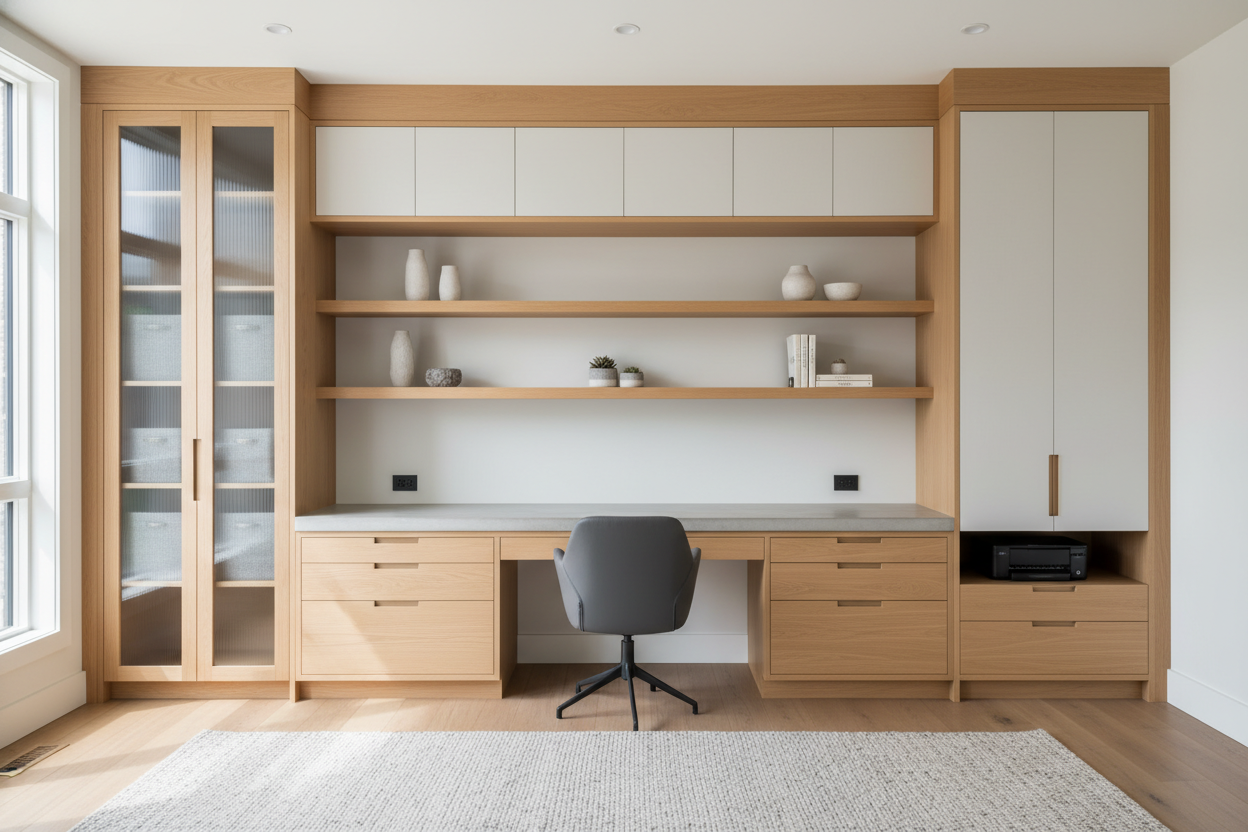
The difference between a chaotic, makeshift desk and a high-functioning executive sanctuary often comes down to a single element: storage. As designers, we often see clients invest heavily in ergonomic chairs and high-end technology, only to treat storage as an afterthought. However, well-executed cabinetry for home office environments is the backbone of visual order and workflow efficiency. It is not merely about hiding paper; it is about creating a spatial rhythm that allows you to focus.
Key Features to Consider Before Buying
- Joinery & Construction: Look for dovetail drawers and solid back panels rather than stapled particle board for longevity.
- Hardware Quality: Soft-close hinges and full-extension drawer slides are non-negotiable for daily use.
- Material Finish: High-pressure laminates offer durability, while wood veneers provide warmth and texture.
- Modularity: An office cabinet system that allows for future reconfiguration is ideal for growing businesses.
- Cable Management: Ensure cabinets have integrated grommets or routed channels for hidden tech integration.
Orchestrating the Layout: Function First
When planning your office cabinet design, we must first address the "work triangle" of the home office. Your primary storage should never require you to leave your chair. This is where cabinets for office desk setups—specifically under-desk pedestals or returns—become critical. They house the items you reach for hourly.
For the secondary zone (items accessed daily or weekly), we look to the perimeter. A common mistake is placing tall, imposing units in small rooms. If you are working with limited square footage, avoid floor-to-ceiling wall units that shrink the room visually. Instead, opt for an office low cabinet (credenza style) along the longest wall. This provides ample storage while keeping the sightlines open, allowing for art or windows above to maintain an airy atmosphere.
Materiality and Aesthetics
Home office cabinetry must bridge the gap between commercial durability and residential comfort. In a modern office cabinet design, we often utilize matte lacquers or textured melamines. These finishes resist scratches and light reflection, which is crucial for video conferencing backgrounds.
The Role of Texture
If your desk is glass or metal, introduce wood grain in your home office cabinets to warm up the palette. Conversely, if you have a heavy timber desk, consider painted cabinetry to prevent the "sauna effect" of too much wood. The goal is visual balance.
Solving the Small Space Dilemma
Small home office cabinets require vertical thinking. If you cannot expand outward, go upward. Desk cupboards mounted directly to the wall above the monitor can be effective, but ensure they are shallow (12-13 inches deep) to prevent head-bumping hazards. Floating cabinets are particularly effective here; by keeping the floor visible beneath the unit, you trick the eye into perceiving more square footage.
My Personal Take on Cabinetry for Home Office
I want to share a harsh lesson from a project I managed about three years ago. We designed a stunning, floor-to-ceiling wall unit finished in a velvety, matte black laminate. It looked incredible on installation day—pure architectural drama.
However, I visited the client two months later, and the cabinetry looked terrible. Why? Fingerprints. We hadn't accounted for the fact that this was a high-traffic zone where the client used the push-to-open latches constantly. The natural oils from their hands left shiny, permanent spots on the matte finish that were a nightmare to clean.
Since then, I have a strict rule: if we use dark, matte finishes on office cabinets design, we must use hardware (handles or pulls). We save the push-to-open mechanisms for textured wood or lighter colors where oils don't show. Also, never underestimate the heat generated by a computer tower inside a cabinet; always install a ventilation grille in the toe-kick or back panel, or you will cook your hard drive.
Conclusion
Investing in high-quality cabinetry is an investment in your mental clarity. Whether you choose a bespoke built-in or a modular office cabinet system, prioritize hardware that feels good to the touch and finishes that can withstand the rigors of daily work. Your office should not just work for you; it should inspire you.
Frequently Asked Questions
What is the standard depth for home office base cabinets?
Standard base cabinets are typically 24 inches deep, matching kitchen standards. However, for a home office, a depth of 18 to 20 inches is often preferred to save floor space while still accommodating standard binders and printers.
Should I choose open shelving or closed cabinetry?
Closed cabinetry is generally superior for a home office to hide visual clutter (files, cords, supplies), which reduces cognitive load. Use open shelving sparingly for decorative objects or books you reference frequently.
How do I match new cabinets to my existing desk?
Do not try to match the wood stain exactly; it rarely works and often looks like a mistake. Instead, aim for a complementary contrast. If your desk is dark walnut, consider charcoal gray or navy blue cabinetry for a sophisticated, curated look.


Leave a comment
This site is protected by hCaptcha and the hCaptcha Privacy Policy and Terms of Service apply.