










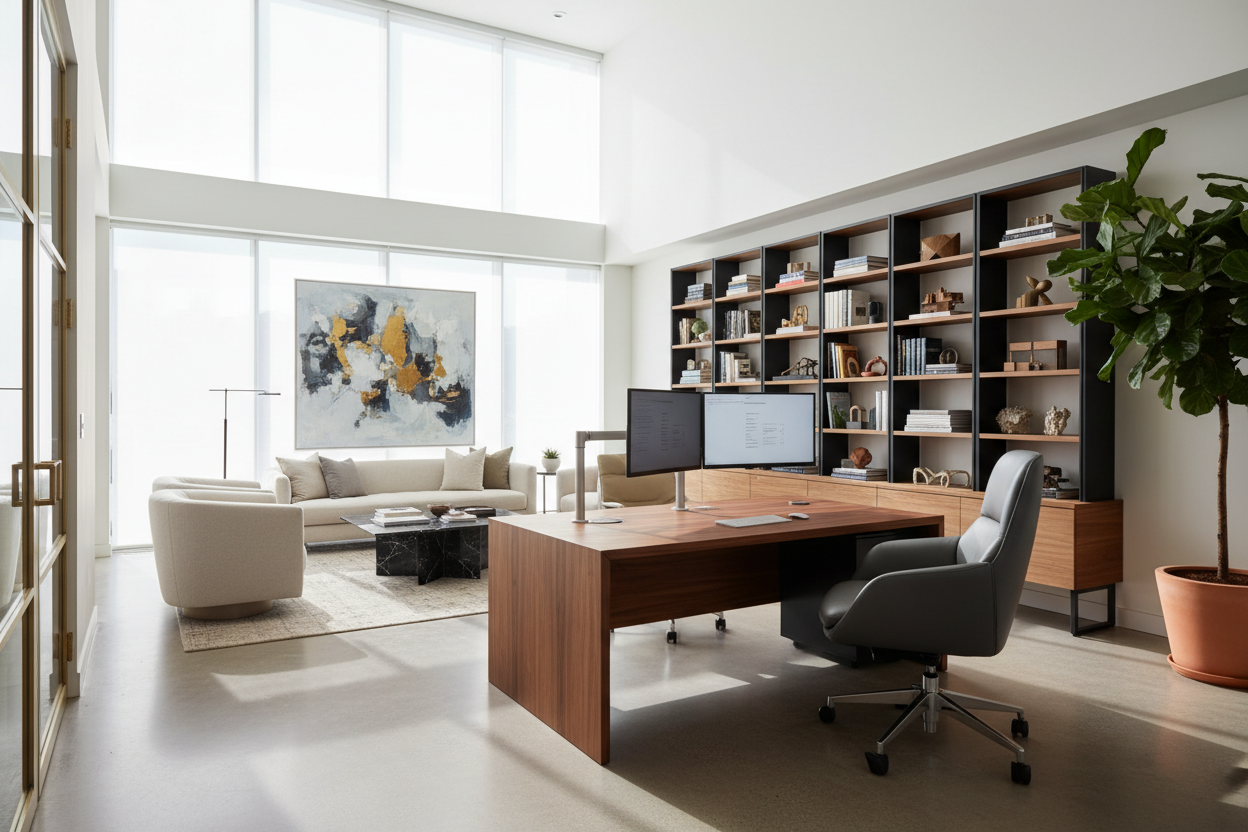
You have likely scrolled through endless feeds of pristine workspaces, wondering why your own setup feels either too sterile or chaotically cluttered. The difference often lies in intention. A true designer office is not merely a collection of expensive furniture; it is a meticulously curated ecosystem where visual drama meets rigorous functionality. As a specialist, I often see homeowners prioritize the silhouette of a chair over its substance, or the look of a desk over its workflow. This guide bridges that gap, helping you curate a workspace that commands respect while inviting deep focus.
Key Features of a High-End Workspace
Before purchasing a single piece, consider these non-negotiable elements that professional office space designers prioritize to ensure longevity and comfort:
- Material Honesty: Prioritize authentic materials like solid walnut, full-grain leather, or brass over synthetic veneers which peel over time.
- Ergonomic Integration: Look for seating that hides adjustable lumbar support within a sleek profile, avoiding the bulky "gaming chair" aesthetic.
- Lighting Layers: Ensure a mix of ambient (overhead), task (focused), and accent lighting to reduce eye strain and build atmosphere.
- Acoustic Control: Incorporate soft textures (rugs, drapery, upholstered panels) to dampen echo and improve focus.
Mastering the Layout and Flow
The most common error I see is pushing the desk directly against a wall. An experienced office space interior designer will almost always position the desk to command the room—often floating in the center or facing the entry. This "power position" not only elevates the aesthetic but changes how you feel while working.
Consider the negative space. A luxury look relies on breathing room. If your footprint is small, opt for a desk with slender legs to maintain visual openness rather than a heavy, blocky credenza that weighs down the room.
Materiality and Texture: The Tactile Experience
When curating an office for designers or creative professionals, texture is paramount. A glass desk might look modern, but it lacks warmth and acoustic absorption. Instead, consider a timber desk with a live edge or a chamfered detail. These elements invite touch and develop a patina over time.
Pair a structured timber desk with a chair upholstered in boucle or velvet. The contrast between the rigid wood and the soft fabric creates a sophisticated tension that defines high-end interiors.
Lighting: The Invisible Design Element
Standard overhead recessed lighting is the enemy of a mood-rich environment. To achieve that gallery-like quality, layer your lighting. Start with a statement pendant or chandelier for general ambiance. Then, invest in a heavy, architectural desk lamp with a high Color Rendering Index (CRI). This ensures that the colors on your screen or papers look true to life—a critical factor for office space designers and creatives alike.
My Personal Take on Designer Office Furniture
I want to share a specific lesson from a project I led last year involving a stunning, matte-black architectural desk. In the showroom, under controlled lighting, it looked like a sculptural masterpiece. However, once installed in the client's home, we realized a frustrating truth: matte black laminate is a magnet for skin oils.
Every time the client rested their wrists to type, it left faint, shiny patches that required constant wiping. It was a beautiful piece, but high-maintenance. Since then, I always advise clients to test the finish for "fingerprint resistance" if they are heavy typists. Now, I lean toward textured wood grains or leather-topped desks for high-traffic zones because they hide the daily wear of work much better than flat, monochromatic finishes. Real luxury should serve you, not give you more chores.
Conclusion
Creating a workspace that rivals professional office designers requires patience and an eye for detail. By investing in authentic materials, respecting the flow of the room, and layering your lighting, you move beyond simple decoration into the realm of true design. Your environment dictates your output; make sure your office is a place that demands your best work.
Frequently Asked Questions
Is it worth hiring office designers for a home workspace?
If you have a challenging room shape or require custom joinery for storage, hiring a professional is invaluable. They can maximize vertical space and solve electrical routing issues that pre-made furniture cannot address.
How do I mix vintage and modern styles in an office?
The 80/20 rule works best here. If your primary furniture (desk and chair) is modern, use 20% vintage accessories—like a mid-century rug or an antique brass lamp—to add soul and history without making the room feel dated.
What is the minimum space needed for a designer office layout?
To float a desk comfortably, you generally need a room width of at least 10 feet. This allows for the desk depth (approx. 30 inches), the chair push-back space (40 inches), and a walkway behind or in front of the desk.


Leave a comment
This site is protected by hCaptcha and the hCaptcha Privacy Policy and Terms of Service apply.