










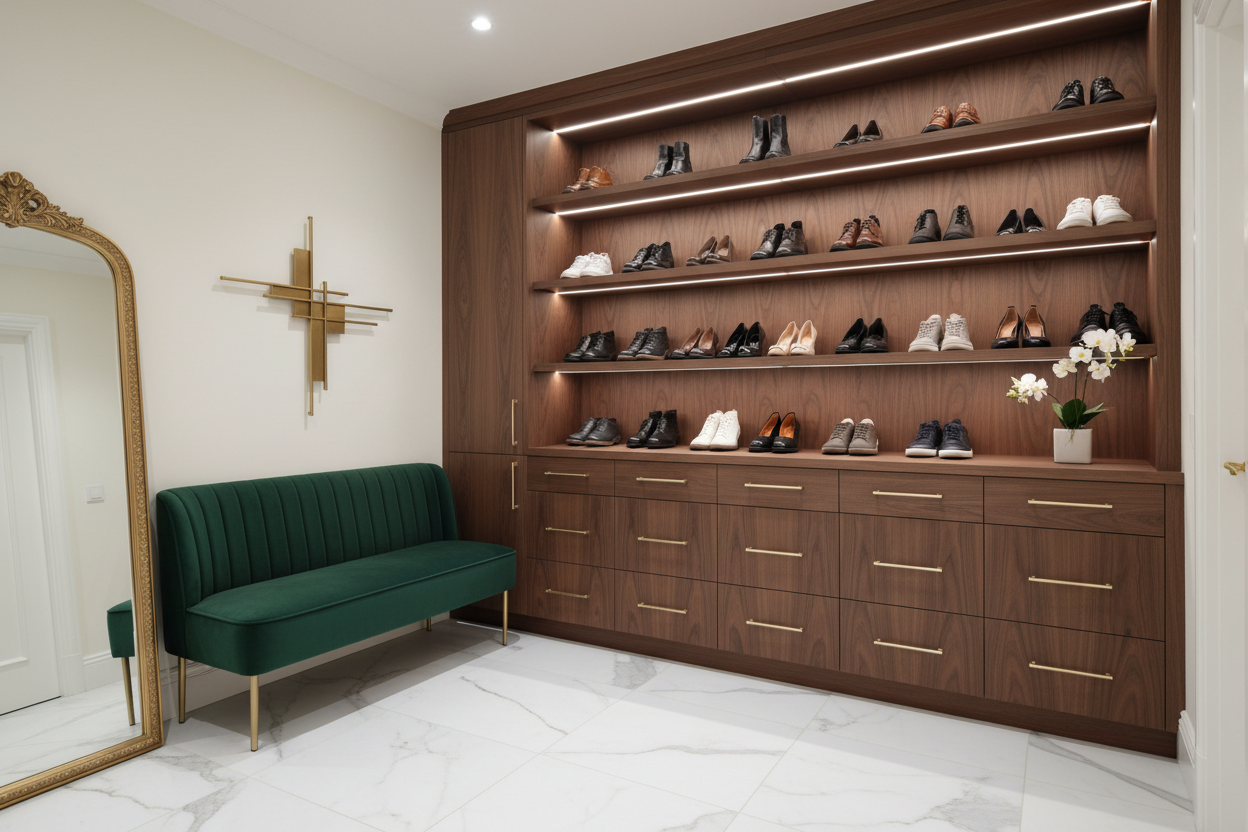
The entryway is the handshake of the home; it introduces your aesthetic before a guest even steps into the living room. Yet, it is often the battleground for the daily drop-zone chaos. As an interior designer, I constantly see clients struggle to balance the need for utility with the desire for a serene, uncluttered welcome. Implementing the right hall shoe storage ideas isn't just about hiding sneakers; it is about reclaiming the architectural flow of your corridor.
Key Features to Look For
Before committing to a purchase or a custom build, evaluate these critical factors to ensure longevity and functionality:
- Depth Profile: Ideally, look for units between 10 to 13 inches deep to maintain clear walkways in narrow corridors.
- Ventilation: Ensure the design includes slats, mesh, or rear cutouts to prevent moisture buildup and odors in leather and fabric footwear.
- Hardware Durability: For tipping cabinets, verify the pivot mechanism is metal, not plastic, to withstand daily repetition.
- Surface Resilience: Prioritize high-pressure laminates or sealed hardwoods that can resist water damage from wet soles.
Assessing Spatial Flow and Ergonomics
In narrow thoroughfares, every inch of floor space counts. When exploring hallway shoe storage ideas, the first rule is to respect the clearance. You generally want to maintain at least 36 inches of walking path. If your hall is tight, standard cabinetry will feel oppressive.
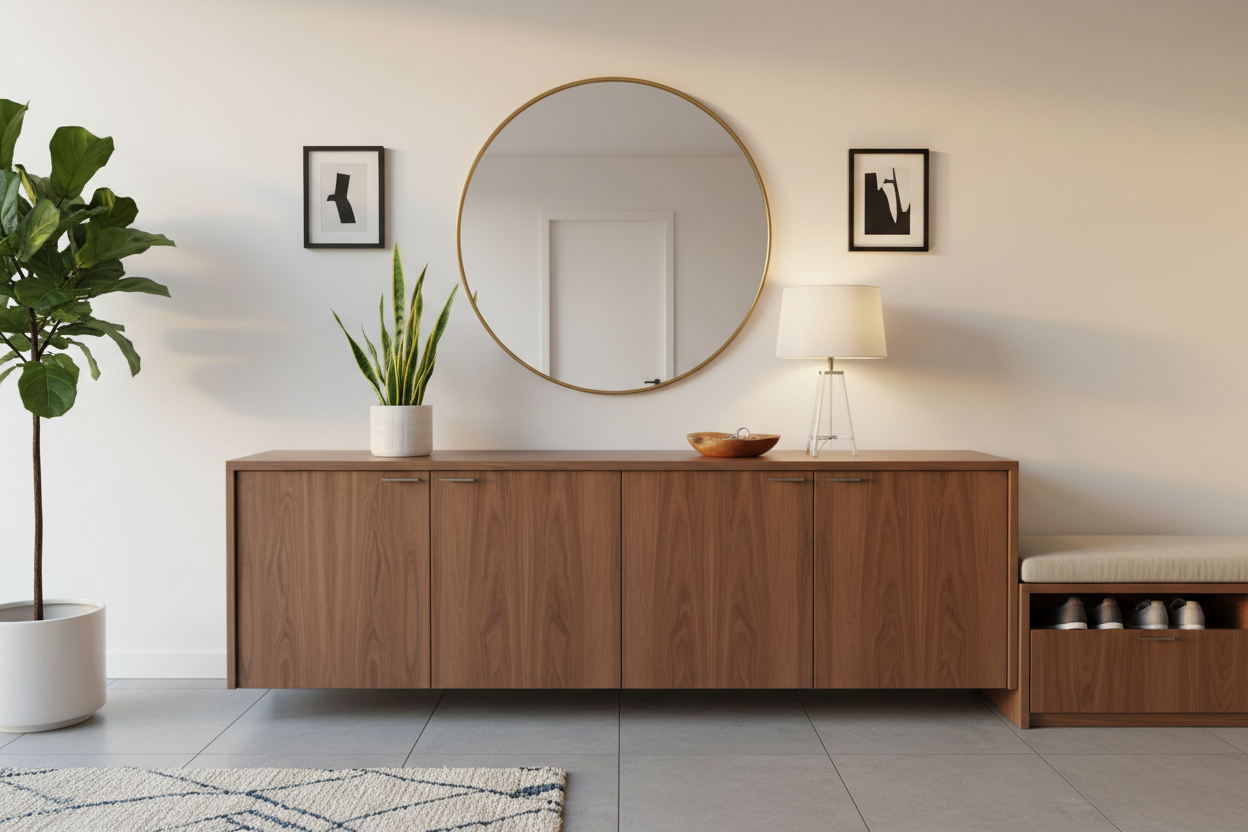
For these scenarios, I often recommend tipping-bucket cabinets. These units utilize vertical height rather than depth, allowing shoes to be stored at an angle. However, pay close attention to the visual weight of the piece. A cabinet that sits flush against the wall with a floating installation (wall-mounted) reveals the floor underneath, tricking the eye into perceiving the room as larger than it is.
Material Selection: Durability Meets Style
Your storage solution will face high traffic, muddy boots, and wet umbrellas. The material choice must be more than just aesthetic.
Solid Wood vs. Veneer
While solid wood (like Oak or Walnut) offers unmatched longevity and can be refinished if scratched, it is susceptible to warping if your entryway experiences drastic temperature shifts from the front door opening. High-quality veneers over marine-grade plywood are often a smarter choice for ideas for shoe storage in hallway environments, as they offer stability and resistance to humidity changes.
Metal and Industrial Finishes
Powder-coated metal units are excellent for modern or industrial aesthetics. They are impervious to water and easy to clean. However, be mindful of the noise factor; metal doors can be clamorous without soft-close dampeners, which disrupts the ambient calm of a home.
Styling and Visual Balance
Shoe storage ideas for hallway designs should not look like utility lockers. Treat the piece as a console table. Style the surface with a structural lamp to add height and a catch-all tray for keys to contain clutter. If the unit is tall, flank it with a runner rug to draw the eye down the length of the hall, emphasizing the linear perspective rather than the bulk of the storage.
Lessons from My Own Projects
I want to share a specific mistake I made early in my career so you don't have to repeat it. I once designed a stunning, floor-to-ceiling bespoke joinery piece for a client's entryway. It was sleek, handle-less, and finished in a beautiful matte lacquer. It looked perfect.
However, I failed to account for adequate ventilation. Within six months, the client called to say their leather boots were developing mildew because the cabinet was too airtight, and damp shoes were being placed inside immediately after rain. We had to retrofit discrete brass grilles into the plinth and the top reveal to create airflow. Now, whenever I advise on hall shoe storage ideas, I insist on breathable back panels or slatted fronts. Also, always measure the largest pair of shoes in the house—standard cabinets often fail to accommodate anything over a men's size 11 without angling them, which wastes space.
Conclusion
Selecting the right furniture for your hall requires a balance of rigorous practicality and sophisticated design. By prioritizing slim profiles, breathable materials, and durable hardware, you can create an entryway that feels curated rather than cluttered. The goal is a space that serves you efficiently while welcoming you home with elegance.
Frequently Asked Questions
What is the ideal depth for a narrow hallway shoe cabinet?
For standard flat storage, you need at least 13-14 inches. However, for narrow hallways, look for "tipping" or angled storage units which can function perfectly with a depth of just 7 to 10 inches.
How do I prevent odors in closed shoe storage?
Choose units with slatted doors or open backs. If you have a solid unit, use charcoal sachets inside the drawers and ensure shoes are completely dry before storing them.
Should I choose a bench or a cabinet for a small hall?
If storage capacity is the priority, a vertical cabinet is superior as it utilizes height. A bench is better suited for larger entryways where the primary need is a seating area for putting on shoes rather than bulk storage.

Leave a comment
This site is protected by hCaptcha and the hCaptcha Privacy Policy and Terms of Service apply.