










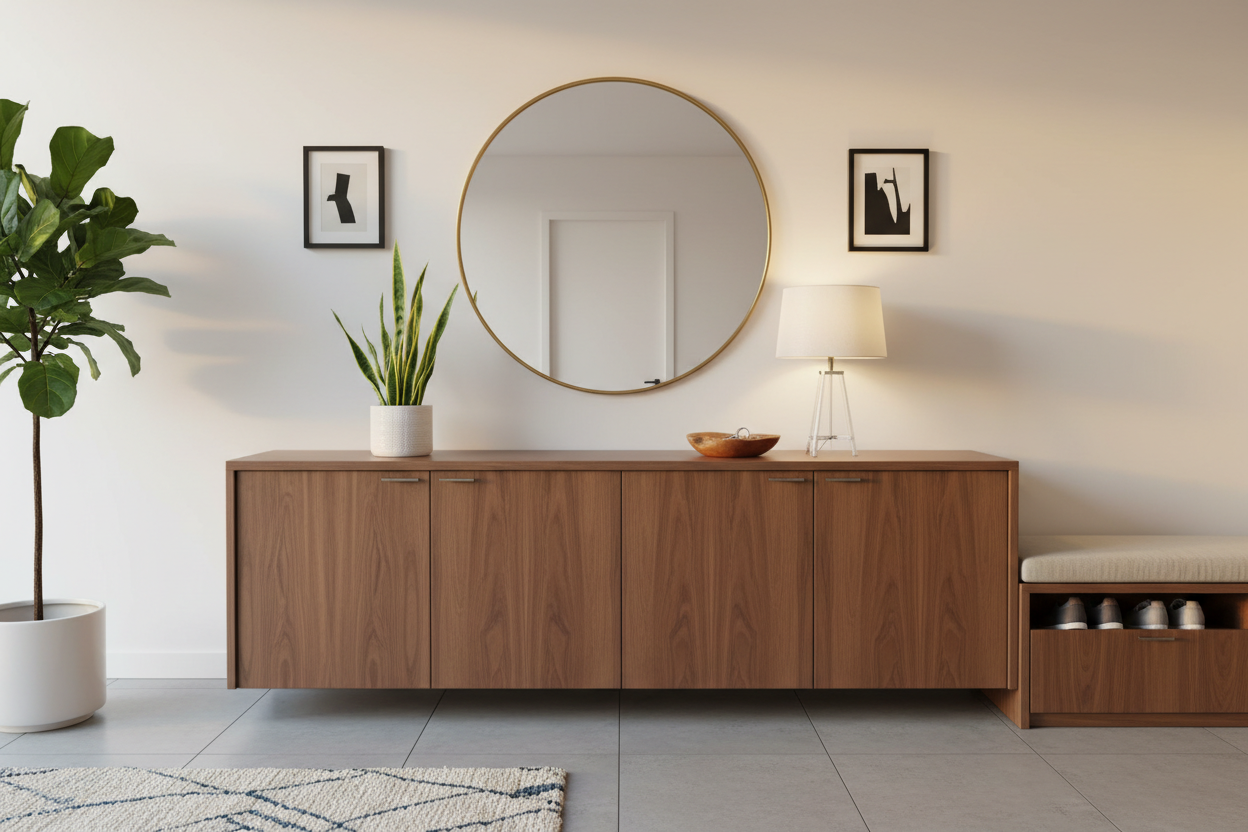
Walking through your front door should feel like a relief, not a reminder of your to-do list. Yet, for many of us, the immediate sight of scattered shoes, piles of mail, and misplaced keys creates instant visual noise. The solution isn't just about being tidier; it is about having the right infrastructure. A well-chosen cabinet in entryway spaces acts as the anchor of your home’s first impression, blending essential storage with style. Whether you have a sprawling foyer or a tight corridor, the right piece of furniture transforms that chaotic drop zone into a curated welcome.
Defining Your Entryway Needs
Before you fall in love with a specific aesthetic, you have to audit what actually lands in your entrance way cabinet. If you have kids, you are likely battling backpacks and sports gear. If you are a pet owner, leashes and treat bags need a home. A simple entryway cabinet might suffice for a solo dweller who just needs a spot for keys and a bag, but a family often requires a robust entryway storage cabinet capable of hiding significant volume.
I learned this lesson the hard way in my first apartment. I bought a sleek, open-shelf console because it looked airy and modern. Within a week, it was just a frame for my clutter. I replaced it with a storage cabinet for entryway use that had solid doors, and the difference was night and day. Being able to close a door on the mess is a psychological game-changer.
Sizing Up the Hallway
Space constraints dictate your options. In a narrow corridor, depth is your enemy. You need a walkway cabinet that is slim enough to allow easy passage but deep enough to hold items. A front door cabinet generally shouldn't protrude more than 12 to 15 inches if the hall is tight. However, if you are blessed with a wide entry hall cabinet area, you can opt for deeper units that can accommodate larger items like boots or bulkier bags.
For those with long, empty walls, a long entryway cabinet can serve a dual purpose: it elongates the room visually while providing distinct zones for different family members. Conversely, if you are working with a tricky corner or a short wall, a vertical entryway cupboard or a tall entryway hutch with storage maximizes vertical space without eating up the floor plan.
Material and Durability
Your entrance cabinets take a beating. They get bumped by groceries, kicked by muddy shoes, and scratched by keys. This is why material selection is critical. A solid wood entryway cabinet is often the best investment for high-traffic zones. Unlike particle board, which might chip or swell with moisture from wet umbrellas, a wood entryway cabinet can be refinished or touched up over time.
Aesthetics play a huge role here too. A dark wood entryway cabinet brings a sense of grounding and warmth, and practically speaking, it hides scuff marks better than white furniture. If you prefer a lighter, airier look, ensure the finish is high-quality and easy to wipe down. Entryway cabinetry built into the wall is another option for a seamless look, but freestanding entrance hall cabinets offer the flexibility to reconfigure the room later.
The Power of Drawers and Doors
The internal configuration of your entryway storage unit determines its usefulness. An entryway cabinet with drawers is non-negotiable for the small stuff. You need a specific place for batteries, sunglasses, and mail. Even a small entryway cabinet with drawer space prevents these items from migrating to the kitchen counter.
For larger items, you want an entryway closed cabinet. Open cubbies require you to be neat constantly; doors grant you the luxury of imperfection. A foyer storage cabinet with adjustable shelves allows you to change the height based on what you are storing, be it tall winter boots or stacks of magazines. If you are looking for a hybrid solution, an entryway storage cabinet with drawers combined with lower cabinets offers the best of both worlds.
Combining Seating and Storage
If space permits, an entryway storage cabinet with bench features is a fantastic multifunctional choice. It provides a designated spot to sit while putting on shoes, which is particularly helpful for guests or children. Often, these units include storage underneath the seat—either as a flip-top or cubbies—making them a highly efficient front entryway storage cabinet.
Styling Your Entryway Cabinet
Once you have the functional entryway organizer cabinet in place, it is time to style it. The surface of your foyer cabinet is the perfect place for a lamp to add welcoming light, a tray for catching keys, and perhaps a mirror above to check your reflection before leaving. Entryway cabinet decor should be minimal so as not to clutter the surface you need for daily use.
For a contemporary look, a modern entryway cabinet with drawers featuring clean lines and handle-less fronts keeps the visual noise down. If you want a conversation piece, a unique entryway cabinet—perhaps a vintage find or a painted piece—can inject personality into the space immediately. The goal is to balance the utility of a front door storage cabinet with the beauty of a well-designed vignette.
Choosing the Right Configuration
When shopping, look for entryway furniture with drawers that operate smoothly. There is nothing more frustrating than a sticky drawer when you are rushing out the door. A foyer cabinet with drawers should have high-quality runners. If you need massive storage capacity, a large entryway storage cabinet or a wall-spanning entrance storage unit might be necessary. These often mimic the look of built-ins but at a fraction of the renovation cost.
Consider the hardware as well. On a front entrance cabinet, knobs and pulls are like jewelry. Swapping out standard hardware for something unique can elevate a basic entry hallway cabinet into something that looks custom. Whether you choose a hallway entryway cabinet that blends into the wall color or a statement piece that stands out, the key is functionality first, style second.
Ultimately, the best entry door cabinet is the one that solves your specific clutter problems. Whether that is a entryway cabinet long enough to hold the whole family's gear, or a petite entrance cabinet for a studio apartment, prioritizing closed storage and durable materials will ensure your entryway remains a welcoming passage rather than an obstacle course.
Frequently Asked Questions
How deep should an entryway cabinet be?
Standard depth for an entryway cabinet is usually between 12 and 18 inches. If you have a narrow hallway, aim for a slim console around 10-12 inches deep to ensure you don't obstruct the walking path while still gaining surface area for keys and mail.
Can I use a dresser as an entryway cabinet?
Absolutely. Using a dresser as a foyer cabinet is a great design hack because it offers deep drawers for maximum storage. Just ensure the scale fits the space; dressers are often deeper than standard console tables, so measure your clearance to the front door carefully.
What is the best way to organize the inside of the cabinet?
Use bins or baskets behind the doors to categorize items like hats, gloves, or pet supplies. For drawers, use dividers to separate keys, sunglasses, and mail to prevent the "junk drawer" effect and keep your entryway storage unit functional.


Leave a comment
This site is protected by hCaptcha and the hCaptcha Privacy Policy and Terms of Service apply.