










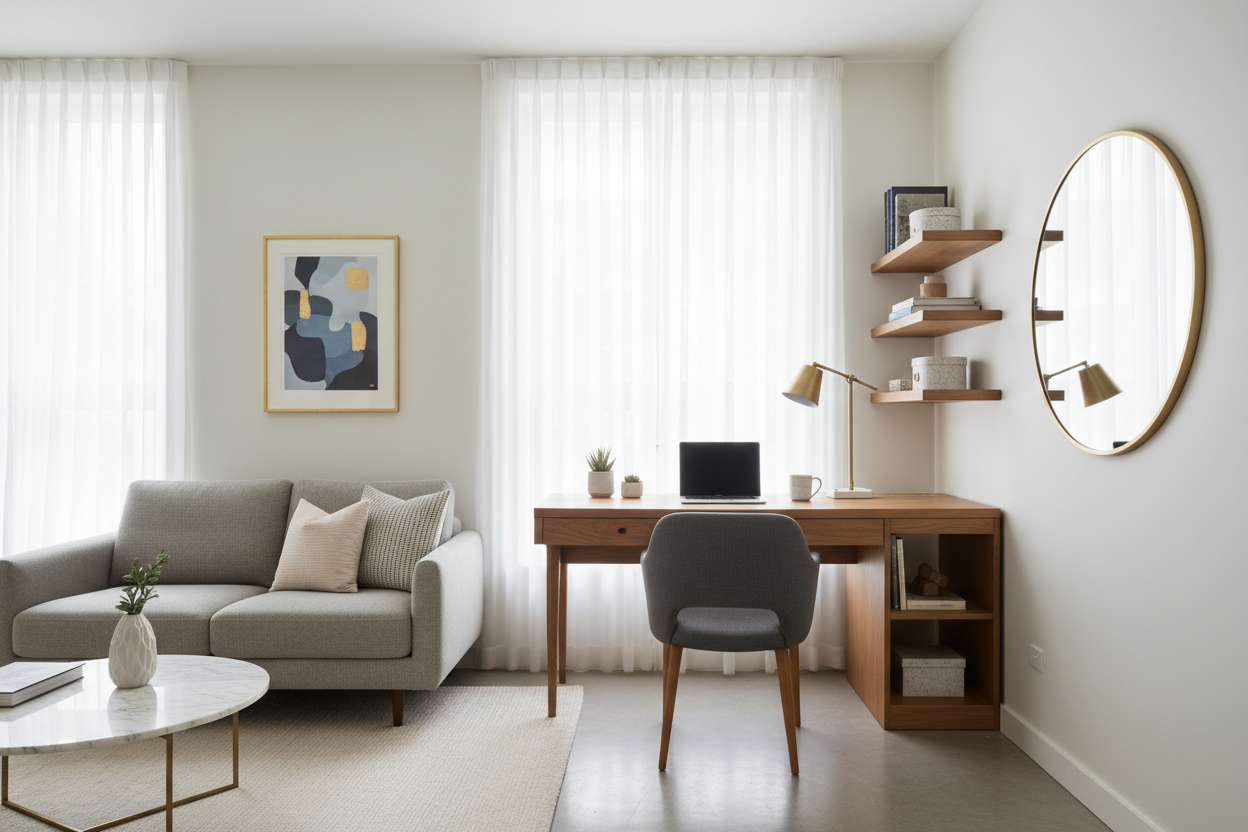
Integrating a workspace into a living environment is one of the most common challenges I face with city-dwelling clients. The goal isn't just to shove a table into a corner; it is to curate a functional, aesthetically pleasing zone that respects your existing interior design. When planning an office in apartment layouts, the balance between ergonomic utility and visual harmony is paramount. You want a space that invites productivity at 9:00 AM but disappears into the background—or stands as a beautiful vignette—by 6:00 PM.
Key Features to Look For
- Scale & Proportion: Ensure the desk depth (minimum 24 inches for monitor use) does not impede traffic flow.
- Material Durability: Opt for high-pressure laminates or sealed solid wood if the surface doubles as a dining area.
- Visual Weight: In small footprints, legs with negative space (open metal frames) feel lighter than heavy pedestal desks.
- Vertical Integration: Look for shelving units with drop-down desks to utilize height rather than floor width.
Defining the Zone: Layout & Space Planning
In open-concept living, the biggest error is a lack of zoning. Without a defined perimeter, work clutter bleeds into relaxation areas. For an office in studio apartment scenarios, consider floating your sofa in the center of the room and placing a console desk directly behind it. This creates a psychological barrier between 'work' and 'lounge' without requiring a physical wall.
The Nook Strategy
If you are hunting for small apartment office space, look for underutilized architectural recesses. A structural column often creates a 'dead' niche perfect for floating shelves and a wall-mounted desk. This approach keeps the footprint clear and maintains the room's airy quality.
Choosing the Right Furniture: Material & Silhouette
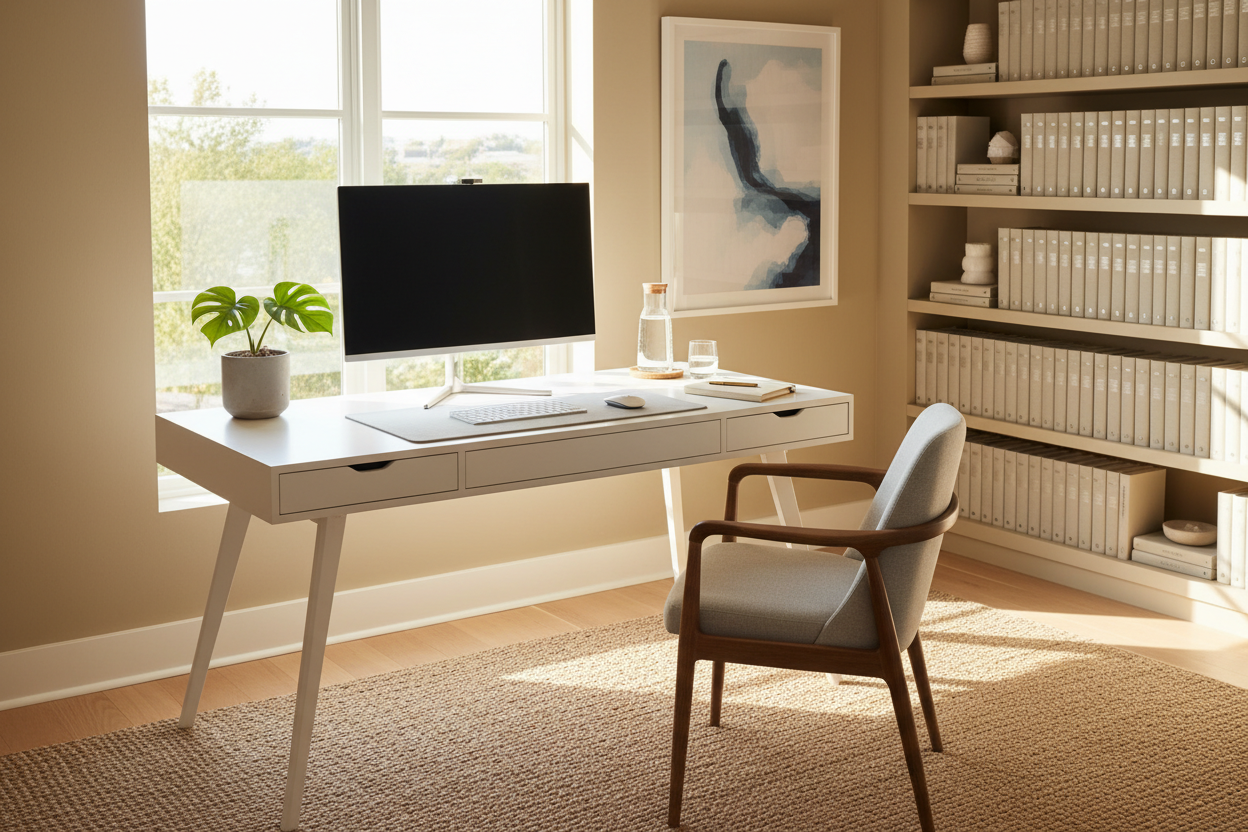
Your apartment desk setup must marry durability with style. As a specialist, I often steer clients toward solid wood or high-grade veneer over cheap particle board. While particle board is budget-friendly, the edges often peel within a year of daily arm friction. Solid wood, like walnut or oak, develops a patina over time and can be refinished.
Ergonomics vs. Aesthetics
Finding home office ideas for small apartments often leads to a conflict between the ugly ergonomic chair and the beautiful accent chair. Do not compromise your spine for style. Instead, look for 'resimercial' furniture—pieces with commercial-grade ergonomic mechanisms hidden beneath residential-style upholstery (like bouclé or leather) rather than standard black mesh.
Curating the Visuals: Lighting and Decor
Apartment office decor should echo the design language of the rest of the home. If your living room is Mid-Century Modern, a stark industrial metal desk will feel jarring. Soften the technology with texture. Use a leather desk pad to define the workspace and dampen the sound of keyboard typing.
Lighting is equally critical. Overhead apartment lighting is rarely sufficient for task work. Layer your lighting with a dedicated architectural task lamp that directs light downward, reducing screen glare and eye strain. Warm light (2700K-3000K) is generally best for residential settings to keep the space feeling cozy rather than clinical.
Lessons from My Own Projects
I want to share a specific mistake from a project I worked on in a tight downtown loft, which changed how I view small apartment home office ideas. I specified a beautiful, clear acrylic 'ghost' chair for a client. The theory was sound: visual transparency makes a small room look bigger. It looked stunning in the photos.
However, three weeks later, the client called me. The acrylic had zero breathability, making it uncomfortable after an hour, and the rigid material offered no lumbar flex. Furthermore, the high-gloss finish became a magnet for fingerprints and dust, looking messy instantly. I learned that in a multi-use space, tactile comfort and maintenance (how the material creates 'visual noise') are just as important as the silhouette. We swapped it for a fabric-upholstered task chair with a low back profile, which hid under the desk when not in use but provided the necessary support.
Conclusion
Creating a dedicated workspace within a limited footprint is an exercise in editing and precision. By selecting materials that age gracefully and prioritizing vertical storage, you can build a command center that enhances, rather than detracts from, your home's design. It is time to reclaim your table and invest in a setup that works as hard as you do.
Frequently Asked Questions
How much space do I really need for a functional desk?
At a minimum, aim for a width of 36 inches and a depth of 20-24 inches. Anything shallower than 20 inches makes it difficult to use a laptop and a notepad simultaneously without feeling cramped.
How can I hide my office equipment in a living room?
Invest in 'secretary desks' or cabinets with retractable doors. These allow you to physically close off the workspace at the end of the day, hiding monitors and cables to instantly restore the room's residential vibe.
What is the best way to handle cable management in a rental?
Since you cannot cut into walls, use paintable cable raceways that run along the baseboard. Additionally, mount a surge protector to the underside of your desk using strong adhesive strips to keep cords off the floor entirely.

Leave a comment
This site is protected by hCaptcha and the hCaptcha Privacy Policy and Terms of Service apply.