










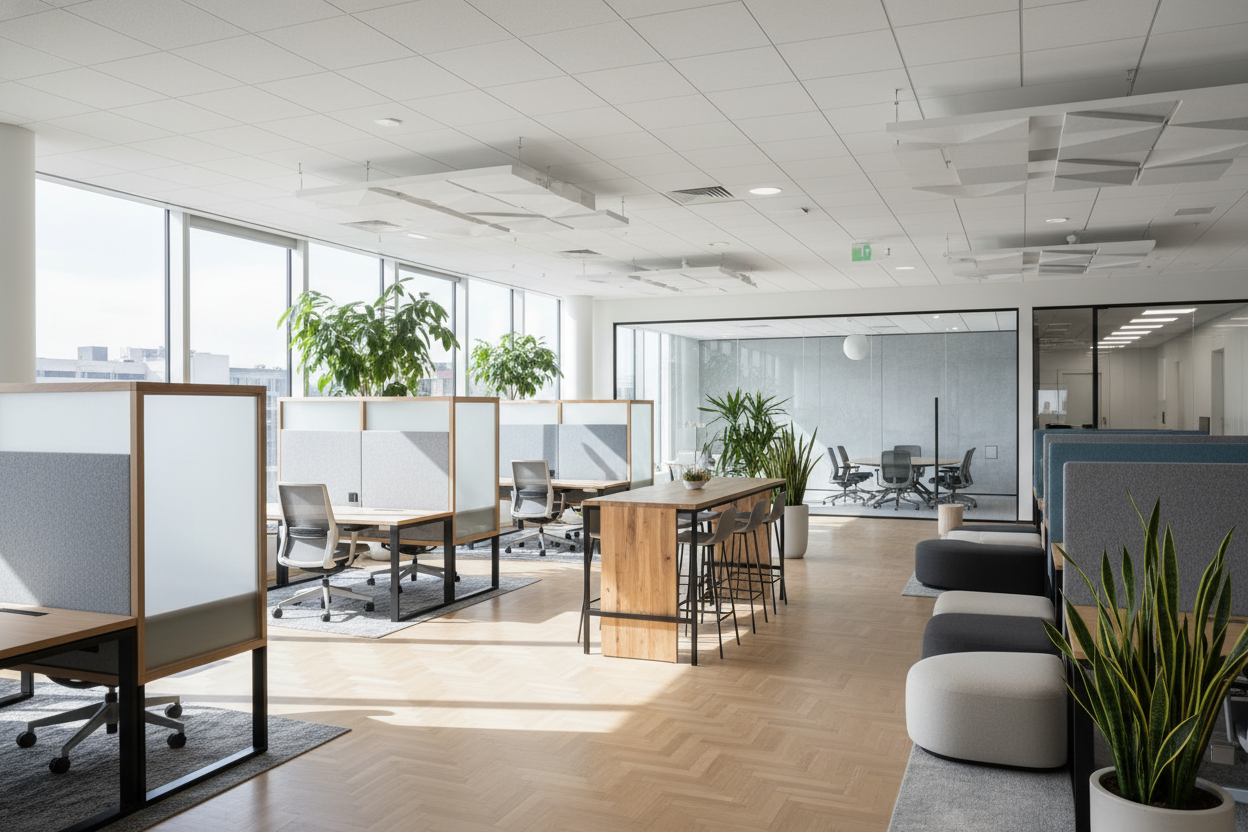
The shift away from cubicles has made open office layouts the standard for modern collaboration, yet they remain one of the most challenging environments to design effectively. The promise of better communication often clashes with the reality of noise and visual distraction. As an interior designer, I see clients struggle to find that sweet spot where aesthetic appeal meets actual productivity. The secret isn't just removing walls; it is about intentional zoning and understanding how sound and movement travel through a void.
Key Features of a High-Performance Layout
- Acoustic Zoning: Utilizing sound-absorbing materials (baffles, rugs, acoustic panels) to dampen noise transfer.
- Visual Privacy Buffers: Strategic placement of tall plants, shelving, or semi-transparent dividers to break sightlines.
- Traffic Flow Management: Designing circulation paths that do not cut directly behind workstations.
- Flexible Furniture Systems: Modular desks and seating that allow for reconfiguration as teams grow or shrink.
- Lighting Layers: Combining ambient overhead lighting with task lighting to reduce eye strain and define zones.
Strategic Zoning and Space Planning
Successful open plan office design relies heavily on the concept of 'neighborhoods.' Rather than a sea of endless desks, break the floor plate into distinct zones based on function. For a modern open space office, you need high-energy collaboration areas separated from deep-focus zones.
When dealing with a small open office design, every square foot counts. Avoid bulky furniture. Instead, opt for benching systems that share legs and integrated cable management. A small open plan office layout benefits immensely from vertical storage acting as room dividers, providing utility without sacrificing the open feel.
Furniture Selection and Ergonomics
Your choice of furniture dictates the success of the open design office. In an open office desk layout, I always recommend sit-stand desks to vary the visual landscape and improve ergonomics. However, the most overlooked element is the 'third space'—soft seating areas away from the desk.
Incorporating open office design ideas like high-backed acoustic sofas creates semi-private enclaves for impromptu meetings. These pieces act as physical barriers that absorb sound, which is critical in open space office interior design where hard surfaces like concrete and glass often dominate.
Materiality and Aesthetics
The materials you choose for your open space office design ideas serve a dual purpose: style and silence. Hardwoods and polished concrete look sleek but reflect sound. To counter this, layer in textures. Felt wall coverings, carpet tiles in work zones, and fabric-wrapped dividers introduce warmth and acoustic control. When exploring open space office decorating ideas, consider biophilic elements. Large potted Ficus or hanging pothos not only purify the air but soften the rigid architectural lines of a standard open office idea.
Visual Balance and De-Cluttering
One major pitfall in office design open concept execution is visual chaos. Without walls to hide mess, cable management becomes an aesthetic imperative, not just a technical one. Ensure your open office floor plan ideas include under-desk baskets and spine systems to route power invisibly. A clean visual plane reduces cognitive load, allowing the design to feel intentional rather than accidental.
My Personal Take on Open Office Layouts
I remember a specific project for a tech startup in a converted warehouse. The client was adamant about a completely open concept office idea—zero partitions, exposed brick, concrete floors. It looked incredible in the renderings. However, two weeks after installation, they called me in a panic. The echo was so bad that phone calls were impossible.
We had to retrofit the space. The lesson I learned wasn't about the furniture itself, but about the ceiling. We installed hanging acoustic felt baffles that mimicked the industrial beams. It completely changed the room's physics. Another detail people rarely mention is the 'monitor creep.' In open layouts, if you don't provide monitor arms, people stack books or boxes to raise screens, and the office starts looking messy immediately. Now, I never specify an open desk system without integrated monitor arms—it keeps the silhouette clean and the posture correct.
Conclusion
Creating a functional open workspace requires a delicate balance of sociology and architecture. By prioritizing acoustics, defining clear zones, and selecting furniture that serves both form and function, you can build a space that fosters collaboration without sacrificing sanity. It is time to elevate your workspace from a simple room with desks to a curated environment that works as hard as you do.
Frequently Asked Questions
How do I maintain privacy in an open office layout?
Privacy in open office layout design is achieved through 'visual shielding.' Use desk dividers, acoustic pods for phone calls, and high-backed furniture to create secluded spots. Privacy screens should be at least 50 inches high to block seated eye contact.
What is the best desk layout for a small open office?
For a small open office design, a 'bench' layout (desks facing each other in rows) is the most space-efficient. It centralizes power and data management. However, ensure you place these perpendicular to windows to reduce glare.
How do I reduce noise in an open plan office?
Address the 'hard' surfaces. Add rugs over concrete, install acoustic ceiling clouds, and use fabric-upholstered chairs. Open office layout ideas should always include a designated 'quiet zone' located far from the kitchen or entryway.

Leave a comment
This site is protected by hCaptcha and the hCaptcha Privacy Policy and Terms of Service apply.