










Designing a lower-level living space presents a unique set of architectural challenges that differ significantly from your main floor. The lighting is often artificial, the ceilings are typically lower, and the humidity levels can fluctuate. However, the most immediate hurdle is almost always logistics. Finding the best sectionals for basements isn't just about selecting a beautiful silhouette; it is about finding a piece that physically navigates the journey downstairs while anchoring the room with sophistication.
Key Features to Look For
- Modular Construction: Essential for maneuvering tight stairwells and narrow hallways.
- Low-Profile Backs: Prevents the furniture from visually cramping rooms with low ceilings.
- Performance Fabrics: High-rub count synthetics (like Crypton or microfiber) resist potential moisture and heavy use.
- Deep Seating: Basements are lounge-centric; prioritize seat depths of 24 inches or more for true relaxation.
- Kiln-Dried Hardwood Frames: Resists warping in environments where temperature and humidity may vary.
Navigating the Access Point: The "Pivot" Factor
Before we discuss aesthetics, we must address the entry. A standard couch that will fit in basement stairwells is a rare find if it comes in a single, large frame. The number one heartbreak I witness in interior design is a client falling in love with a rigid, 90-inch sofa, only to realize it cannot make the turn at the bottom of the stairs.
For this reason, modularity is your best ally. A sectional basement layout relies on individual pieces—corners, armless chairs, and ottomans—that are carried down separately and connected on-site. If you have a tight spiral staircase or a low bulkhead, measure the diagonal depth of the furniture piece (from the top back corner to the bottom front leg). If this measurement exceeds your door width, it won't fit.
Scale and Proportion in Low-Ceiling Rooms
Basements often suffer from "pancake" compression due to HVAC ducting and drop ceilings. Placing a high-back, traditional sofa here will make the ceiling feel even lower. To counteract this, I always recommend low-slung, horizontal profiles.
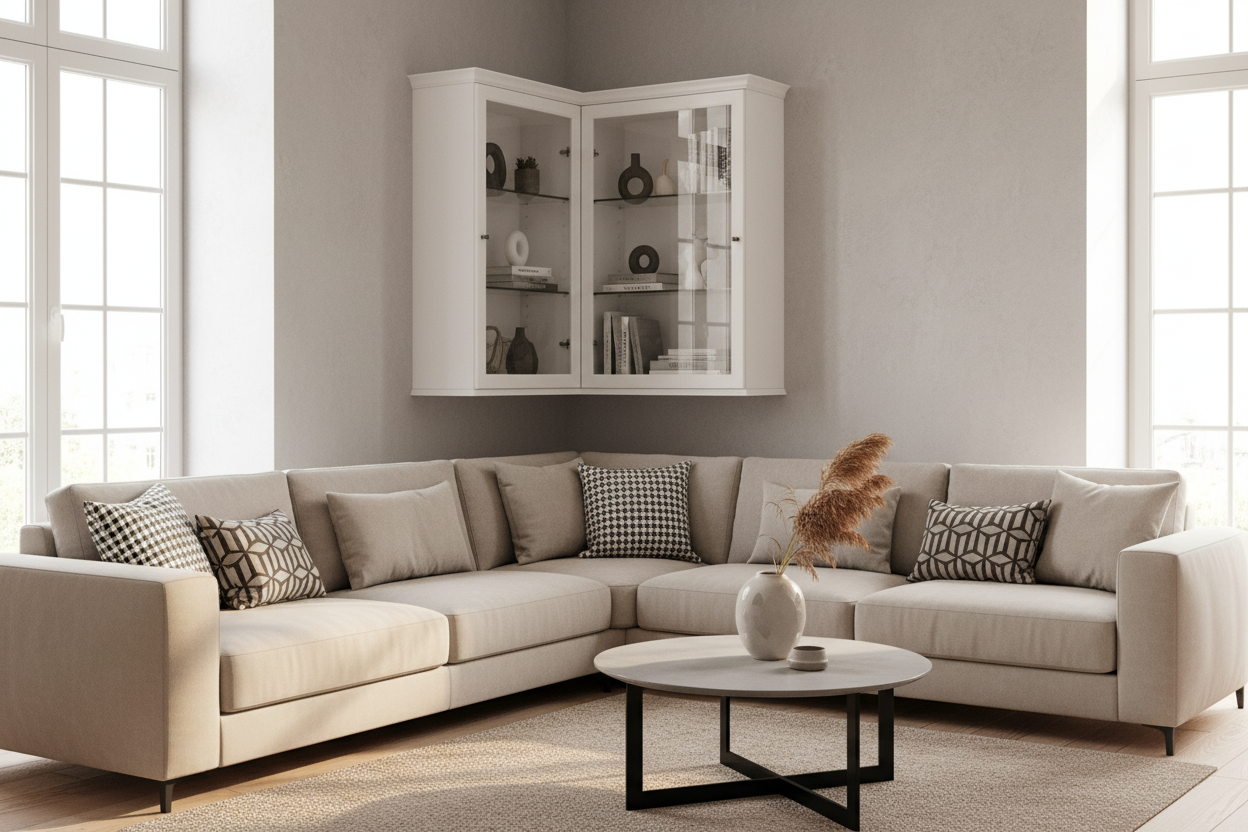
If you are working with a cozy media room, a small sectional for basement viewing should focus on width rather than height. Look for track arms or armless designs, which reduce visual bulk. A small basement sectional doesn't have to feel tiny; if you choose a design with a low back (under 32 inches), you can actually get away with a larger footprint because it doesn't interrupt the vertical sightlines.
Materiality and Light Absorption
Since natural light is often scarce, your fabric choice dictates the mood. A basement sofa set in a dark, matte fabric (like charcoal wool or navy velvet) creates a moody, cinema-like atmosphere, perfect for media rooms. However, if you want the space to feel airy and open, opt for light-reflective textures like a woven chenille in oatmeal or light grey.
Be wary of natural fibers like pure linen or cotton if your basement is prone to dampness, as these can hold moisture and odors. High-performance synthetics are not only durable but also resistant to the mildew issues that sometimes plague subterranean spaces.
Lessons from My Own Projects: The "Modular" Reality
I want to share a specific experience from a renovation I managed in a 1920s bungalow. The clients wanted a massive, luxury lounger for their newly finished basement. We ordered a stunning, single-frame piece. Despite measuring the width of the stairs, we failed to account for the handrail projection and a low bulkhead halfway down.
It was a disaster. We had to remove the door frame, and even then, it wedged tight. We ended up damaging the drywall and the sofa leg. I learned my lesson: always go modular for basements. I replaced that unit with a connector-based sectional. One detail rarely mentioned in product descriptions is the quality of the "alligator clips" or connectors underneath. In that project, the cheaper modular pieces kept sliding apart on the laminate floor. I now insist on using heavy-duty rubber non-slip pads under the legs in addition to the metal connectors to keep the configuration tight.
Conclusion
Transforming a basement from a storage area into a luxury lounge relies heavily on your choice of seating. By prioritizing modular designs for access, selecting performance fabrics for longevity, and respecting the scale of your room, you can create a space that rivals any upstairs living room. Measure twice, check your clearance, and invest in a piece that invites you to sink in and stay awhile.
Frequently Asked Questions
What is the best fabric for a basement sectional?
Performance velvet or tight-weave polyester blends are ideal. They stand up well to humidity changes and are easy to clean. Avoid 100% natural fibers like linen, which can absorb moisture and develop a musty smell over time.
How do I know if a sectional will fit down my stairs?
Measure the narrowest point of your stairwell (width) and the lowest point of overhead clearance (height). Compare this to the "box dimensions" of the sofa, not just the assembled dimensions. If the box is bigger than your clearance, you need a modular sofa that ships in smaller boxes.
Should I get a sleeper sectional for the basement?
If your basement doubles as a guest suite, a sleeper is functional. However, sleeper mechanisms add significant weight, making them harder to move downstairs. A deep, modular sectional often serves just as well for sleeping without the heavy metal mechanics.

Leave a comment
This site is protected by hCaptcha and the hCaptcha Privacy Policy and Terms of Service apply.