










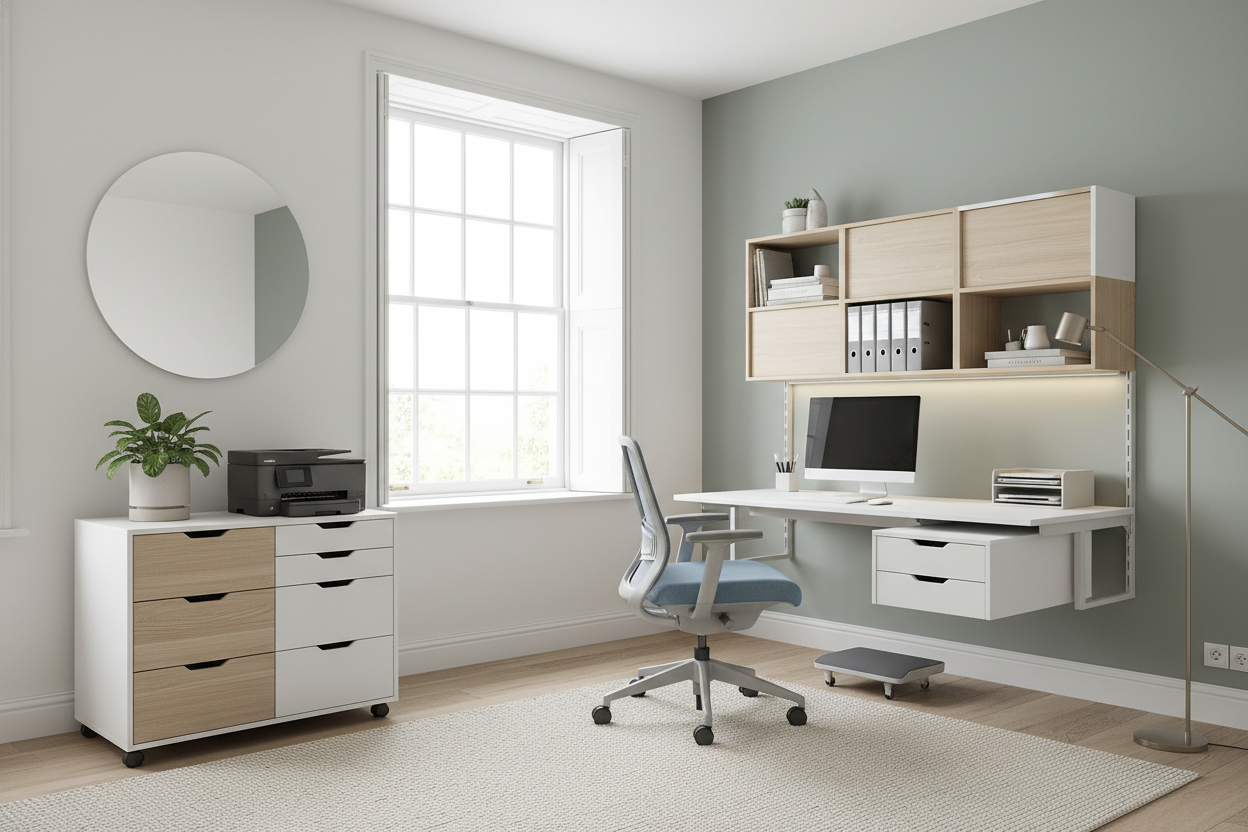
There is a distinct difference between a cozy, focused work environment and a room that feels like it is closing in on you. The challenge with a small office space isn't usually a lack of square footage; it is a lack of strategic visual management. When I consult with clients, the first thing I notice is rarely too much furniture, but rather the wrong scale of furniture. Designing a compact workspace requires a shift in perspective—treating every vertical inch as valuable real estate and understanding how light interacts with mass.
Quick Decision Guide: Optimizing Compact Layouts
- Visual Weight: Opt for furniture with exposed legs or glass/acrylic materials to maintain sightlines and reduce bulk.
- Vertical Utilization: Prioritize floor-to-ceiling shelving over wide, horizontal cabinets to draw the eye upward.
- Scale & Proportion: Ensure your desk depth does not exceed 24-30 inches to preserve circulation paths.
- Lighting: Avoid relying solely on overhead cans; use wall sconces or articulate task lamps to free up desk surface area.
- Material Choice: Reflective surfaces (lacquer, metal, glass) bounce light, making the room feel expansive.
Mastering Scale and Visual Weight
In interior design, "visual weight" refers to how heavy an object looks, not how much it weighs. A solid mahogany pedestal desk has immense visual weight. In a tight room, it acts like a black hole, absorbing all the energy. For office space saving ideas, we want the opposite.
Look for silhouettes that allow light to pass through. A writing desk with slender metal legs or a cantilevered design makes the floor visible underneath, tricking the brain into perceiving the room as larger. If you need storage, choose pieces that are the same color as your walls. This "camouflaging" technique allows bulky filing cabinets to recede into the architecture rather than protruding into your mental space.
Materiality: Durability vs. Aesthetics
When selecting materials for a high-traffic, low-footage area, you are often choosing between warmth and resilience. Solid wood brings character and warmth, which can prevent a small room from feeling sterile. However, in tight quarters, you are more likely to bump into edges.
The Case for High-Pressure Laminate (HPL) and Metal
While I love the grain of walnut, high-quality HPL or Fenix materials are often superior for space saving home office ideas where the desk doubles as a coffee station or dining spot. They resist the inevitable scratches and heat rings that occur when your workspace is condensed. Furthermore, metal shelving units are generally thinner than wood joinery, saving you precious millimeters of width that add up across a wall.
Strategic Layouts and Ergonomics
The biggest error I see is placing the desk strictly in the center of the room or facing a blank wall. In a small footprint, floating the desk perpendicular to a window can maximize natural light without causing glare on your monitor. This creates a "command position" without dominating the floor plan.
Don't ignore the chair. An executive leather high-back chair is often too physically imposing for a small room. Look for mid-back task chairs with a mesh profile. They provide necessary lumbar support without creating a visual barrier in the middle of the room.
Lessons from My Own Projects: The "Floating" Reality
I feel obligated to share a specific lesson from a project I did in a 600-square-foot apartment in Chicago. We were obsessed with the idea of a "floating desk"—essentially a thick slab of oak mounted directly to the wall with no legs—to maximize legroom and aesthetics.
It looked stunning in the photos. However, the reality of living with it was different. First, the installation required opening the drywall to reinforce the studs because the torque of leaning on the front edge of a 24-inch deep shelf is immense. If you are renting, this is a nightmare. Second, and most importantly, wire management became my nemesis. With no table legs to hide cords behind, every HDMI and power cable dangled visibly against the wall. We ended up having to install a separate raceway channel painted to match the wall.
My advice? Unless you are ready for major construction, buy a desk with slim legs that include integrated cable management channels. It saves you the headache while keeping the look airy.
Conclusion
A restricted footprint doesn't mean restricted style. By manipulating visual weight, selecting smarter materials, and prioritizing vertical storage, you can curate a workspace that feels open and conducive to deep work. It is about editing down to the essentials and ensuring every piece earns its place.
Frequently Asked Questions
What is the minimum depth for a functional small desk?
For laptop work, you can get away with 18-20 inches deep. However, if you use an external monitor and keyboard, aim for a minimum of 24 inches to maintain proper focal distance and prevent eye strain.
Should I paint a small office dark or light?
Conventional wisdom says light colors expand space, but a dark, moody charcoal or navy can actually blur the corners of a room, making the boundaries of the space disappear. This creates an "infinite" cozy feeling rather than a cramped one, provided you have good task lighting.
How do I hide a printer in a small office?
Avoid keeping the printer on the desktop. Use a rolling cart tucked under the desk, or dedicate a shelf in a closet. If it must be visible, choose a low-profile model and place it on a lower shelf of a bookcase to keep it out of your direct line of sight.

Leave a comment
This site is protected by hCaptcha and the hCaptcha Privacy Policy and Terms of Service apply.