










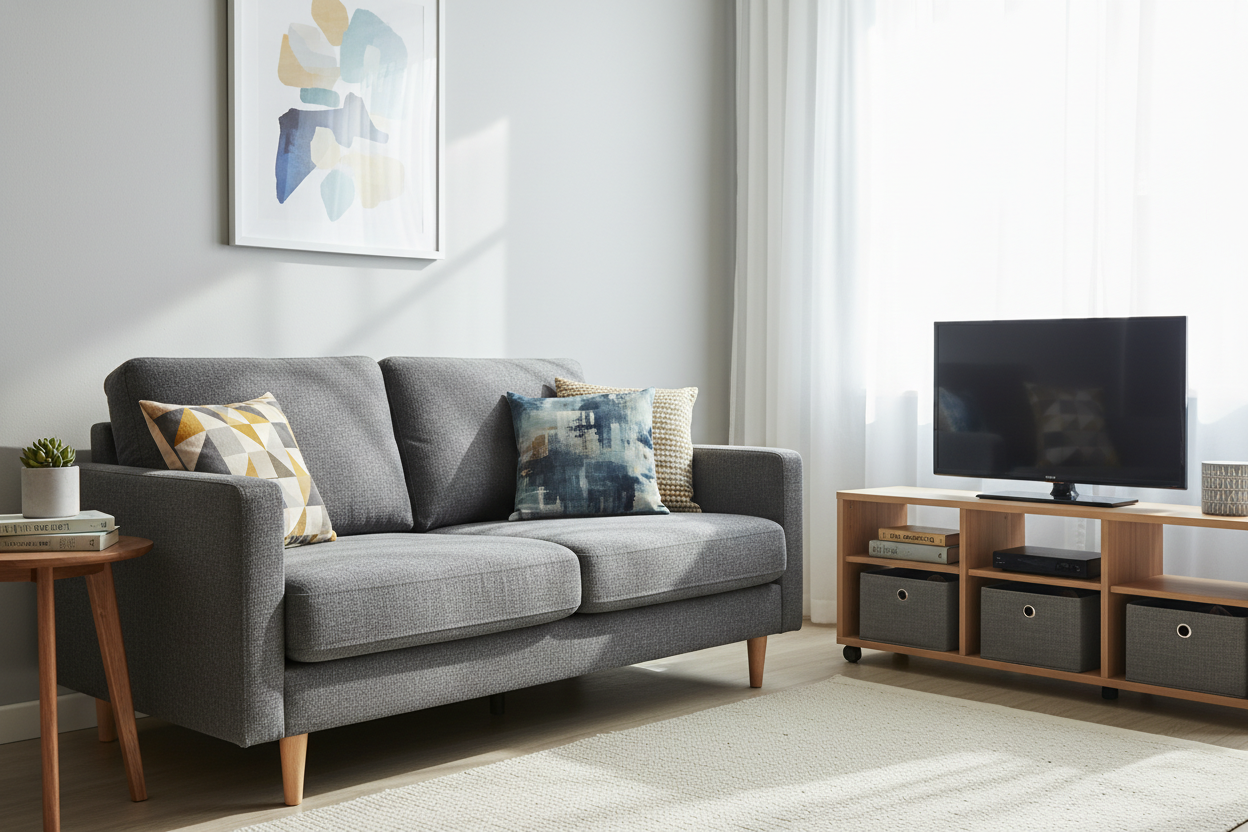
You have secured the lease and measured the walls, but now you face the classic designer's paradox: you need a focal point that anchors your living space without draining your bank account. Finding a stylish, durable, and cheap couch for apartment living is often more challenging than sourcing high-end luxury pieces. In the luxury market, quality is a given; in the budget market, it is a treasure hunt. You are not just looking for a place to sit; you are looking for appropriate scale, decent ergonomics, and a silhouette that doesn't scream "temporary furniture." Let’s navigate the showroom floor together and find a piece that defies its price tag.
Key Features to Look For
- Frame Construction: Look for "kiln-dried hardwood" or reinforced plywood. Avoid particle board which warps in humidity.
- Cushion Density: High-density foam wrapped in Dacron holds its shape. If you can feel the frame through the armrest, walk away.
- Fabric Durability: Check for a "rub count" over 15,000 or look for performance weaves that resist pilling.
- Modularity: A cheap apartment couch should ideally be modular or reversible to adapt to future moves or awkward layouts.
- Leg Height: Taller legs create negative space, making small apartments feel significantly larger.
Assessing Build Quality: Beyond the Price Tag
As a designer, the first thing I do when evaluating budget-friendly furniture is check the "bones." A cheap apartment sofa often compromises on the internal suspension. You want to look for sinuous springs (S-shaped wires) rather than simple webbing. Webbing stretches over time, leading to that unsightly hammock effect where you sink into the middle of the sofa.
The "Knock" Test
When you are shopping—whether in a big-box store or unboxing a delivery—tap the side panels and armrests. If it sounds hollow like a drum, it lacks internal padding and structural reinforcement. A solid thud indicates that the manufacturer has used sufficient framing and foam, which usually translates to a longer lifespan.
Mastering Scale and Visual Weight
In smaller footprints, physical size and visual weight are two different concepts. A heavy, skirted sofa that sits directly on the floor will suffocate a studio or one-bedroom unit.
Instead, opt for a mid-century modern silhouette or a Scandinavian design with tapered legs. By elevating the sofa off the floor, you allow light to pass underneath, extending the sightlines of the flooring. This optical illusion is a standard interior design trick to make a room feel airy. If you are eyeing a sectional, ensure it is reversible. The flexibility to switch the chaise from left to right is invaluable when you inevitably move to a new unit with a different layout.
Fabric Selection for Longevity
The quickest way a budget purchase reveals its price is through fabric failure. Avoid cheap bonded leather at all costs; it will peel within a year. Instead, gravitate towards textured weaves, tweeds, or polyester blends. These fabrics have a tactile depth that mimics more expensive linen or wool but offers significantly higher stain resistance.
Color Coordination
While a bold emerald velvet might look tempting online, lower-end velvets often have a high synthetic shine that looks inexpensive under harsh apartment lighting. Neutral greys, oatmeals, or navy blues in a flat weave are safer bets. They act as a blank canvas, allowing you to elevate the look with high-quality throw pillows and textured throws.
My Personal Take on Cheap Couch for Apartment Living
I learned a hard lesson early in my career when staging a client's first rental. We bought a highly-rated, aesthetically pleasing sofa online for under $400. Visually, it was stunning—sleek lines and a perfect charcoal hue. However, I didn't account for the "box delivery" assembly mechanics.
The backrest relied on two flimsy metal brackets to slide into the base. After three months of daily use, the metal fatigued, and the backrest developed a permanent, shaky wobble every time someone sat down. Furthermore, the seat depth was only 19 inches—far too shallow for actual lounging. Now, when I recommend budget options, I insist on checking the connection hardware. If the backrest just slides in without bolts to secure it, it’s a hard pass for a primary residence. I also tell clients to measure their thigh length; if a sofa doesn't hit the back of your knee comfortably, no amount of money saved is worth the back pain.
Conclusion
You do not need to spend a fortune to achieve a curated, sophisticated home. By prioritizing structural integrity, choosing visually light silhouettes, and selecting forgiving fabrics, you can find a cheap couch for apartment living that looks bespoke. It is about making intentional choices rather than impulsive ones. Measure twice, check the suspension, and style it with confidence.
Frequently Asked Questions
How do I get a cheap sofa into a narrow apartment building?
Always check the "packaged dimensions" before buying. Many budget-friendly sofas now come "flat-packed" in boxes, which is ideal for navigating tight stairwells and elevators. Look for modular designs where the arms and back detach.
What is the best fabric for a cheap apartment couch if I have pets?
Microfiber or tight-weave synthetic polyester are your best defenses. They resist claw snags better than loose weaves and are generally easy to clean with water-based solvents. Avoid chenille or velvet, which act as magnets for pet hair.
How long should I expect a budget sofa to last?
Realistically, a sofa in the $300-$600 range is designed to last 3 to 5 years of regular use. You can extend this lifespan by rotating cushions weekly to prevent uneven foam compression and tightening any assembly bolts every six months.

Leave a comment
This site is protected by hCaptcha and the hCaptcha Privacy Policy and Terms of Service apply.