










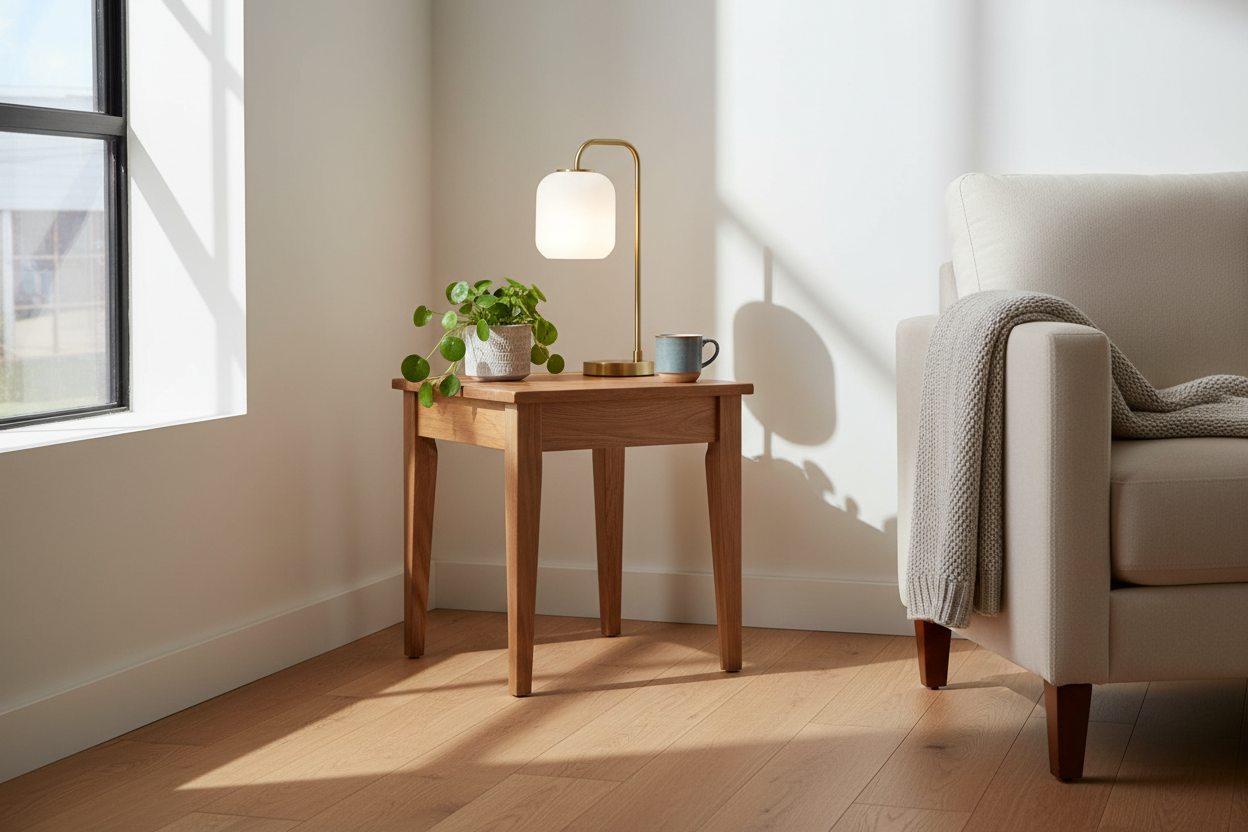
Finding the right surface for a cramped living space often feels like a game of Tetris where the pieces never quite fit. You have a narrow gap between the sofa and the wall, or a tiny bedside nook that won't accommodate a standard nightstand, yet you still need somewhere to rest a coffee mug or a phone. The solution usually lies in sizing down significantly. A well-chosen small wood table adds immediate functionality without visually cluttering the room. By focusing on verticality and slim profiles, you can introduce warmth and utility to even the most awkward square footage.
The Hunt for the Perfect Micro Furniture
I remember moving into my first true studio apartment, which measured a humble 350 square feet. My "bedroom" was just an alcove, and my living area had exactly eight inches of clearance between the arm of my loveseat and the radiator. I spent weeks trying to jam standard end tables into that space, resulting in bruised shins and a cluttered look. I eventually stumbled upon a micro side table—essentially a heavy wooden pedestal with a ten-inch diameter top. It changed the entire flow of the room. Suddenly, I had a dedicated spot for my evening tea that didn't require balancing a mug on the sofa arm, and the natural grain of the wood softened the stark white walls of the rental. That experience taught me that furniture doesn't need to be big to be indispensable.
Defining Your Space Requirements
Before browsing wooden side tables for sale, grab a tape measure. In tight quarters, visual weight matters just as much as physical dimensions. A blocky, solid cabinet might physically fit in a corner, but it will make the room feel smaller. Conversely, a table with long, tapered legs or an open silhouette allows light to pass through, maintaining a sense of airiness.
If you are dealing with a high-traffic area, consider a round table. The lack of sharp corners saves your hips from collisions and generally flows better in small rooms. For specific functionality, like using a laptop while sitting on the couch, C-shaped tables are superior. The base slides under the furniture, bringing the surface closer to you without occupying extra floor space.
The Rustic Appeal of Natural Forms
One of the most popular trends in compact furniture is the use of organic shapes. A wood piece side table, often carved from a single stump or a cross-section of a log, acts as a functional sculpture. These pieces bring the outdoors in, providing a grounding element in modern, tech-heavy homes. Because they are often heavy and solid, they are harder to tip over—a crucial factor if you have pets or energetic children running around.
These natural forms vary wildly in price. You can find high-end designer versions in boutique shops, but if you keep your eyes open at flea markets or estate sales, you might find a little wood side table with incredible character for a fraction of the cost. The imperfections, knots, and live edges are what make these pieces special, turning a simple utility object into a conversation starter.
Navigating Budget and Quality
There is a misconception that solid wood furniture always requires a massive investment. While walnut and oak can be pricey, it is entirely possible to find a cheap small wood table that looks expensive if you know what to look for. Pine and rubberwood are affordable alternatives that, when stained properly, mimic hardwoods effectively. The key is construction quality. Look for joinery that feels stable. A wobbly table is annoying regardless of how little you paid for it.
Second-hand markets are gold mines for this. Older furniture was often built to last, and a scratched surface on a vintage piece can be sanded down and refinished in an afternoon. This approach not only saves money but allows you to customize the finish to match your existing decor perfectly.
Styling Cool Wood Side Tables
Once you have secured your table, the challenge becomes styling it without negating its purpose. Because the surface area is limited on a super small side table, minimalism is mandatory. You generally have room for one or two permanent items—perhaps a small succulent or a slender lamp—leaving the rest of the space open for your drink or book.
Mixing materials creates visual interest. If your table is rough-hewn, rustic wood, pair it with a sleek metal lamp or a glass coaster. If the wood is polished and mid-century modern in style, a ceramic vase with a matte finish provides a nice contrast. Cool wood side tables serve as accents; they should complement the larger furniture pieces rather than compete with them.
The Drink Table Revolution
Designers have recently embraced the concept of the "drink table." These are distinct from standard end tables because they are tiny—often with tops no larger than 8 to 10 inches across. They are tall, slender, and designed strictly to hold a glass. This is the ultimate micro side table solution for floating furniture arrangements where a sofa sits away from the wall. You can place these tiny stands freely around the room, moving them wherever the conversation is happening.
Care and Maintenance
Real wood requires a bit of attention to maintain its look, especially when used as a coaster for hot or cold drinks. Moisture is the enemy. Always use coasters to prevent water rings, which can be difficult to remove from certain finishes. If you have an oil-finished table, you may need to re-apply wood oil once or twice a year to keep the grain looking rich and to prevent the wood from drying out and cracking.
For lacquered or painted surfaces, a damp cloth is usually sufficient for cleaning. Avoid harsh chemical cleaners that can strip the finish. If you opted for a raw wood look, be aware that it will patina over time, darkening with exposure to light and touch. This aging process is natural and adds to the charm of the piece.
Whether you are looking for a pedestal for a plant, a spot for your remote, or just an architectural element to fill a void, the variety of small wooden tables available today is vast. By prioritizing scale and material, you can turn the tightest corner of your home into a functional, stylish vignette.
Frequently Asked Questions
How tall should a side table be relative to the sofa?
Ideally, the surface of your side table should be within two inches of your sofa's arm height. If it is too low, it becomes awkward to reach your drink; if it is too high, you might bump your elbow against it. When in doubt, slightly lower is usually better visually and functionally than significantly higher.
Can I mix different wood tones in the same room?
Yes, mixing wood tones adds depth and prevents a room from looking like a catalog set. A good rule of thumb is to identify the dominant wood tone in the room (like your flooring) and choose a side table that contrasts with it or shares a similar undertone (warm vs. cool) rather than trying to match it exactly.
What is the difference between an end table and a side table?
While the terms are often used interchangeably, end tables are typically designed to sit at the end of a sofa and provide a larger surface area for lamps and decor. Side tables can be smaller, more portable, and placed freely around a room, often serving a singular function like holding a beverage.

Leave a comment
This site is protected by hCaptcha and the hCaptcha Privacy Policy and Terms of Service apply.