










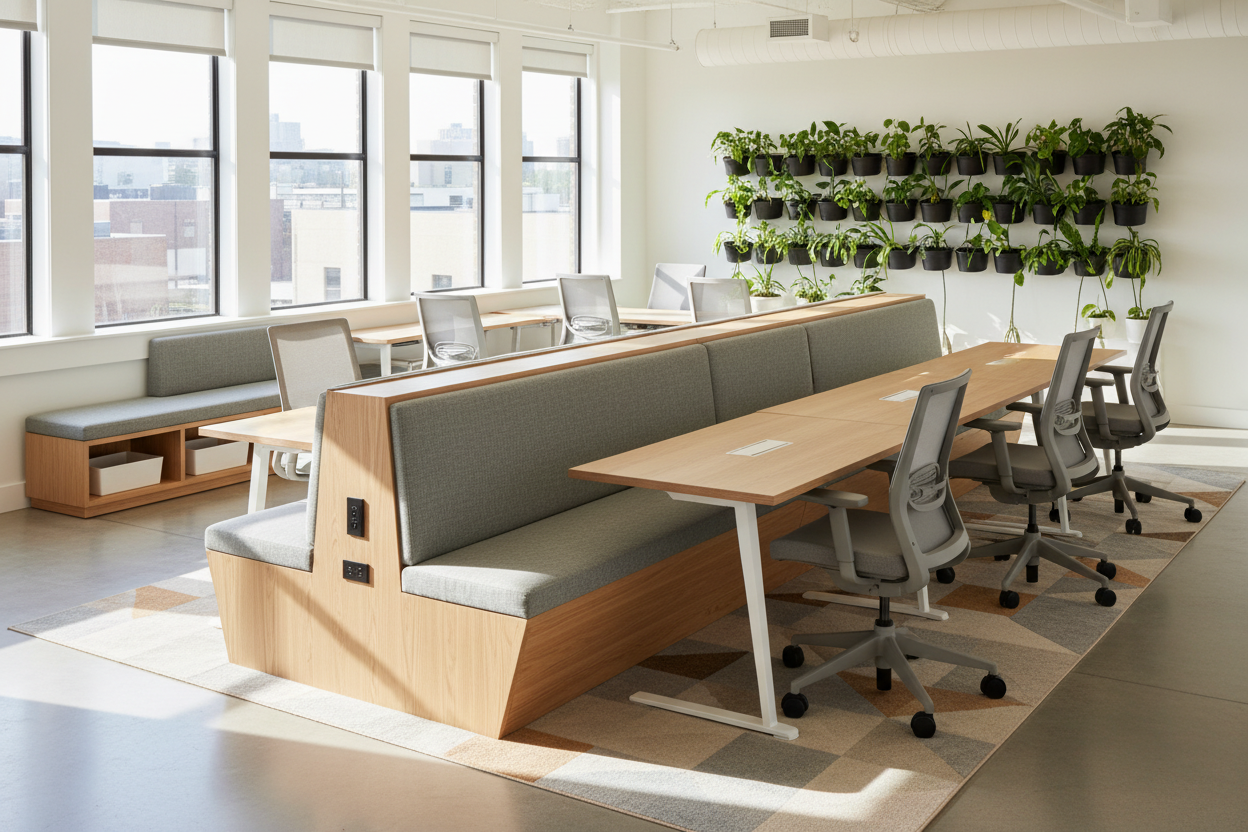
Designing a workspace often involves a rigid checklist: desk, swivel chair, bookshelf. However, the most sophisticated commercial and residential projects I work on share a secret weapon: the bench in office design. This often-overlooked piece is the antidote to the visual clutter of too many legs and levers. It introduces horizontal lines that calm the eye while offering unparalleled versatility. Whether you are outfitting a high-traffic corporate lobby or a compact work-from-home nook, integrating bench seating is a strategic move that balances form with high-impact function.
Key Features to Look For
- Ergonomic Height: Ensure the seat height sits between 17 and 19 inches to align with standard desk or lounge ergonomics.
- Fabric Durability: For high-traffic zones, look for a Wyzenbeek rating of 50,000+ double rubs to prevent premature wear.
- Structural Integrity: Solid hardwood frames (kiln-dried) offer superior longevity compared to particleboard, especially for shared seating.
- Dual-Purpose Design: Prioritize designs with lift-top or drawer mechanisms if floor space is limited.
Defining the Purpose: Reception vs. Workstation
Before selecting a silhouette, we must define the intent. In a corporate setting, reception area benches serve as the initial handshake with your brand. Here, aesthetics often take precedence, but durability is non-negotiable. A sleek, modern office bench in high-grade leather conveys authority and is easy to maintain.
Conversely, if you are looking for a desk bench seat for a collaborative workspace or a home office, comfort becomes the primary metric. A bench seat for desk applications creates a more open, collaborative environment than a wall of high-back chairs, fostering communication.
The Ergonomic Debate: Back vs. Backless
One frequent question I field from clients is regarding the viability of a desk bench chair for full-time work. Here is the reality: for short bursts of administrative work or meetings, a backless office bench seat promotes active sitting and core engagement. It forces you to maintain posture.
However, for 8-hour shifts, I strictly recommend an office bench with back support. A desk bench seat with back functionality provides the necessary lumbar support while maintaining the streamlined look of banquette seating. If you prefer the visual lightness of a backless bench, reserve it for a secondary workstation or a breakout area.
Maximizing Efficiency with Storage
In urban home offices or compact corporate suites, floor space is premium real estate. This is where the office storage bench shines. Unlike bulky filing cabinets, a storage bench for office use hides clutter—be it architectural plans, fabric samples, or electronic peripherals—while providing extra seating for guests.
Small Space Strategy
For tight quarters, consider a small office bench that can tuck away completely. A bench for under desk placement allows you to reclaim floor space when the workday ends. Look for a bench seating office space solution with recessed legs or casters for easy mobility.
Materiality and Visual Weight
The texture you choose dictates the room's atmosphere. A velvet home office bench adds a layer of residential softness to a sterile tech environment, softening the acoustics. For a bench for office lobby areas, I lean towards commercial vinyls or treated wool blends that resist staining while offering a tactile experience. When designing banquette seating office layouts, consider channel tufting to direct the eye upward, making low ceilings feel higher.
Lessons from My Own Projects
I learned the hard way that "commercial grade" doesn't always mean "life-proof." A few years ago, I specified a stunning, cream-colored bouclé office furniture bench for a busy advertising agency's waiting area. It looked architectural and pristine—for exactly two weeks.
The issue wasn't the fabric's strength; it was dye transfer. Clients wearing dark denim sat on the bench, and the indigo dye slowly turned the cream fabric a bruised blue. No amount of cleaning could fully restore it. Now, when I specify a bench office chair or lobby seating, I always test for dye transfer resistance or opt for darker, forgiving tones in high-traffic zones. Additionally, I check the foam density. A soft, "sink-in" feel is great for a living room, but in an office, you want high-density foam that allows people to stand up gracefully, rather than struggling to climb out of a deep seat.
Final Thoughts
Integrating a bench into your workspace is a design choice that speaks to flexibility and modern elegance. Whether it is a bench chair for desk use or expansive reception area benches, the right piece will anchor your room and invite collaboration. Measure twice, prioritize material resilience, and choose a silhouette that complements your workflow.
Frequently Asked Questions
Can a bench replace a standard ergonomic office chair?
Generally, a standard bench is not a direct replacement for an 8-hour ergonomic task chair due to the lack of adjustable lumbar support and armrests. However, an office bench with back support is an excellent alternative for meeting tables, collaborative zones, or for users who switch between standing desks and seated work.
What is the ideal size for a bench under a desk?
To fit a bench for under desk storage or seating, measure the distance between the desk legs and subtract at least 4 inches (2 inches on each side) for clearance. Standard desk height is 30 inches, so the bench seat should be roughly 18 inches high to allow for comfortable legroom.
How do I style a bench in a small home office?
In a small footprint, functionality is key. Opt for an office bench seating with storage capability to hold files or electronics. Place it against a window to create a reading nook, or use a backless version that can slide fully under your work surface to keep the walkway clear.

Leave a comment
This site is protected by hCaptcha and the hCaptcha Privacy Policy and Terms of Service apply.