










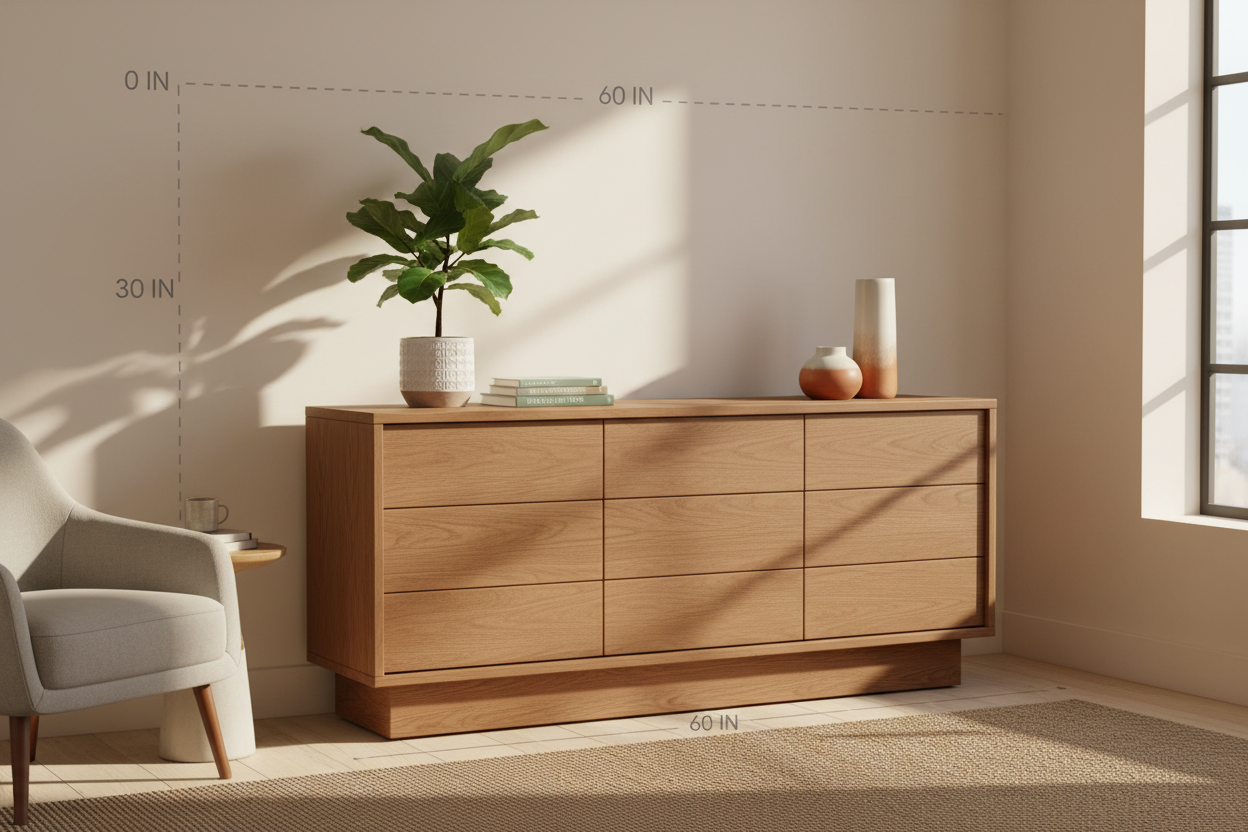
Finding furniture that fits a specific dimension often feels like solving a puzzle where the pieces keep changing shape. When you are hunting for a 5 foot wide storage cabinet, you are usually trying to fill a specific niche—perhaps an alcove in the living room, a designated spot in the garage, or the exact wall space between two windows. This size is particularly versatile; it offers significantly more volume than the standard 3-foot units but doesn't dominate a room quite like the massive 7 or 8-foot wall units. However, landing on the right piece requires looking beyond just the width.
Most people start this search because they have clutter they need to hide immediately. Whether it is a mountain of board games, overflow pantry items, or heavy tools, a 5 foot wide cabinet with doors provides enough surface area to act as a workspace or display area while keeping the chaos behind closed doors. The trick lies in balancing the aesthetic appeal with actual structural integrity, especially when dealing with a piece of furniture this size.
My Experience with the "Almost" 5-Foot Cabinet
A few years ago, I decided to upgrade my home office storage. I had exactly 61 inches of wall space between a corner and a door frame. Naturally, I ordered a beautiful, heavy-duty credenza advertised as a 5 ft wide storage cabinet. On paper, it was perfect. It arrived in three flat-pack boxes that weighed a ton.
After spending an entire Saturday afternoon assembling it, I went to slide it into place. It didn't fit. While the cabinet box was indeed 60 inches, the decorative crown molding on the top lid flared out an extra inch on each side, bringing the total width to 62 inches. I had to remove the door casing just to get it into the room, and it ended up looking wedged in rather than built-in. That experience taught me to always check the "overall dimensions" versus the "case dimensions" and to account for baseboards, molding, and door swings before clicking buy.
Styles and Configurations for Every Room
The beauty of the 60-inch width is that it translates well across different rooms, though the terminology changes. In the dining room, you are looking for a sideboard or buffet. In the living room, it is a media console or credenza. In the garage, it is a workbench or utility locker. Knowing these distinctions helps you widen your search parameters.
The Living Room and Dining Area
When selecting a 5 foot wide cabinet with doors for a communal space, the door mechanism matters as much as the finish. Hinged doors are classic and allow you to see the entire contents of the cabinet at once. However, they require clearance. If your cabinet is facing a coffee table or a dining table, ensure you have at least 24 to 30 inches of walking space when the doors are fully open.
Sliding doors are a fantastic alternative for tighter spaces. They give the unit a mid-century modern feel and eliminate the clearance issue. The trade-off is that you can never see the entire interior at once, which can be annoying if you are trying to retrieve large items like serving platters or electronics.
Garage and Utility Storage
Utility storage is a different beast. A 5 foot wide storage cabinet in a garage context usually implies metal construction and heavy load-bearing capacities. Here, you need to look at shelf weight ratings. A standard particle board shelf might bow under 50 pounds of paint cans or power tools. Look for reinforced steel shelving or solid wood options if you plan to store heavy gear. Also, consider legs versus a flush toe-kick base. Garages often have water on the floor from rain or snow; having a cabinet raised on legs prevents the bottom from wicking up moisture and rusting or rotting.
Material Durability and Weight
A 60-inch span is wide enough that sagging becomes a real concern. If the cabinet has a single shelf spanning the full 5 feet without a center support, gravity will eventually win. Even solid wood will dip over time if the span is unsupported.
When evaluating a 5 ft wide storage cabinet, check the interior construction. Ideally, the unit should have a vertical divider in the center. This not only organizes the space better but provides crucial structural support for the top surface and the shelves. If you are buying a unit to hold a large television or a heavy aquarium, that center support is non-negotiable. For units made of MDF or engineered wood, this is even more critical, as these materials have less tensile strength than plywood or solid timber.
Logistics of Delivery and Assembly
One aspect rarely mentioned in product descriptions is the sheer manageability of a piece this size. A fully assembled 5-foot cabinet is difficult to navigate through standard hallways and tight corners. If you are buying a pre-assembled vintage piece or a high-end showroom model, measure your hallway width and the turning radius of your stairwells.
Flat-pack options solve the delivery issue but introduce the assembly challenge. At 60 inches, the top and bottom panels are long and unwieldy. Assembling this solo is a recipe for broken dowels or a cracked back panel. You need a second pair of hands to hold the side panels upright while you connect the long horizontal pieces. If you are putting it together on the floor, make sure you have enough ceiling height to tip it upright once finished—diagonal height is always taller than vertical height.
Making the Most of the Interior
Once you have your 5 foot wide cabinet with doors in place, optimization is key. These units are often deep, which can lead to the "black hole" effect where items get pushed to the back and forgotten. If you are using it for pantry storage or office supplies, invest in internal bins or pull-out trays. Retrofitting a cabinet with roll-out shelves is a weekend project that doubles the usability of the space.
For media storage, ventilation is the priority. If you plan to keep gaming consoles or receivers inside, you may need to drill holes in the back panel or install a small USB fan to keep air circulating, as electronics can overheat quickly in enclosed spaces.
Frequently Asked Questions
Does a 5-foot cabinet need to be anchored to the wall?
Yes, anchoring is highly recommended for any storage unit of this width, especially if it is tall or heavy. Even low-profile credenzas can tip if multiple heavy drawers or doors are opened simultaneously, shifting the center of gravity forward.
Can I use a 5-foot kitchen cabinet as a TV stand?
Absolutely, and this is a popular design hack. Kitchen base cabinets are generally 24 inches deep and built to support heavy granite countertops, making them incredibly sturdy media consoles, though you may need to add a finished top and side panels for a polished look.
What is the standard depth for a 5-foot storage cabinet?
Depths vary significantly by intended use. Dining buffets and media consoles are typically 16 to 20 inches deep, while garage or utility cabinets are often 24 inches deep to accommodate large totes and tools.

Leave a comment
This site is protected by hCaptcha and the hCaptcha Privacy Policy and Terms of Service apply.