










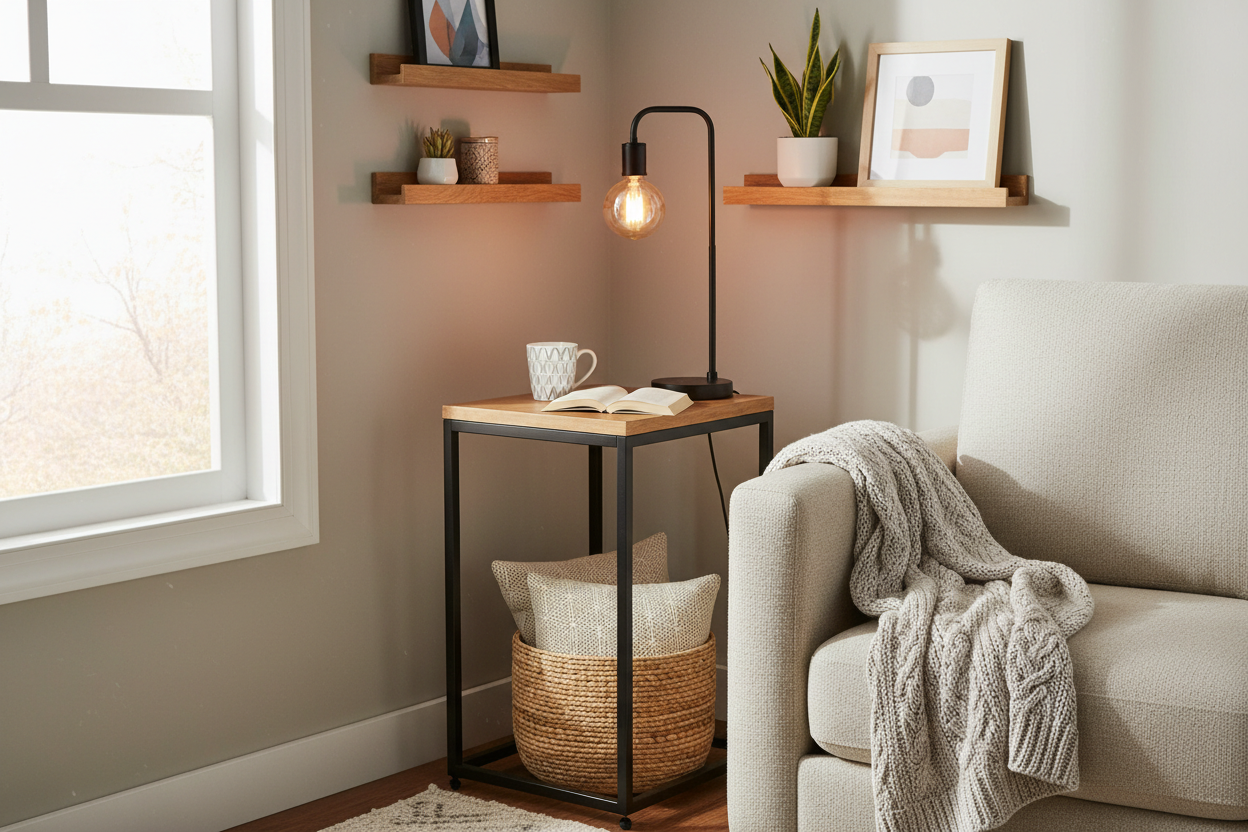
Living in a small apartment taught me something valuable: you don't need to sacrifice style or functionality just because you're short on square footage. When I moved into my 450-square-foot studio last year, I quickly realized that standard furniture simply wouldn't work. My couch sat just inches from the wall, leaving almost no room for a traditional end table. That's when I discovered the world of narrow side tables—pieces specifically designed for tight spaces that still manage to look great and serve their purpose.
The beauty of a super slim end table is that it can slide into spaces you never thought could accommodate furniture. We're talking about those awkward gaps between your sofa and the wall, the narrow strip beside your bed, or that sliver of space in your hallway that's been sitting empty. These pieces typically measure between 6 to 12 inches deep, compared to standard side tables that run 18 to 24 inches.
What Makes a Side Table Actually Narrow
Not all narrow tables are created equal. A thin narrow side table usually refers to depth rather than width or height. You'll find options ranging from extremely narrow side table designs at just 6 inches deep to slightly more substantial pieces around 12 inches. The width can vary considerably—some are compact at 12 inches wide, while others stretch to 24 inches or more to provide additional surface area.
When I was shopping for my own space, I measured everything twice. That gap next to my couch? Exactly 10 inches. This meant I needed something around 8 inches deep to avoid blocking the walkway. I ended up with a skinny narrow side table that's 8 inches deep and 20 inches wide, giving me enough surface space for a lamp, my phone, and a cup of coffee without eating into my living area.
Materials and Styles That Work in Small Spaces
A slim metal end table can be a game-changer for modern or industrial aesthetics. Metal frames tend to look lighter and less bulky than wood, which helps maintain an open feeling in cramped quarters. I've seen gorgeous designs with powder-coated steel frames in matte black or brushed gold that add sophistication without visual weight.
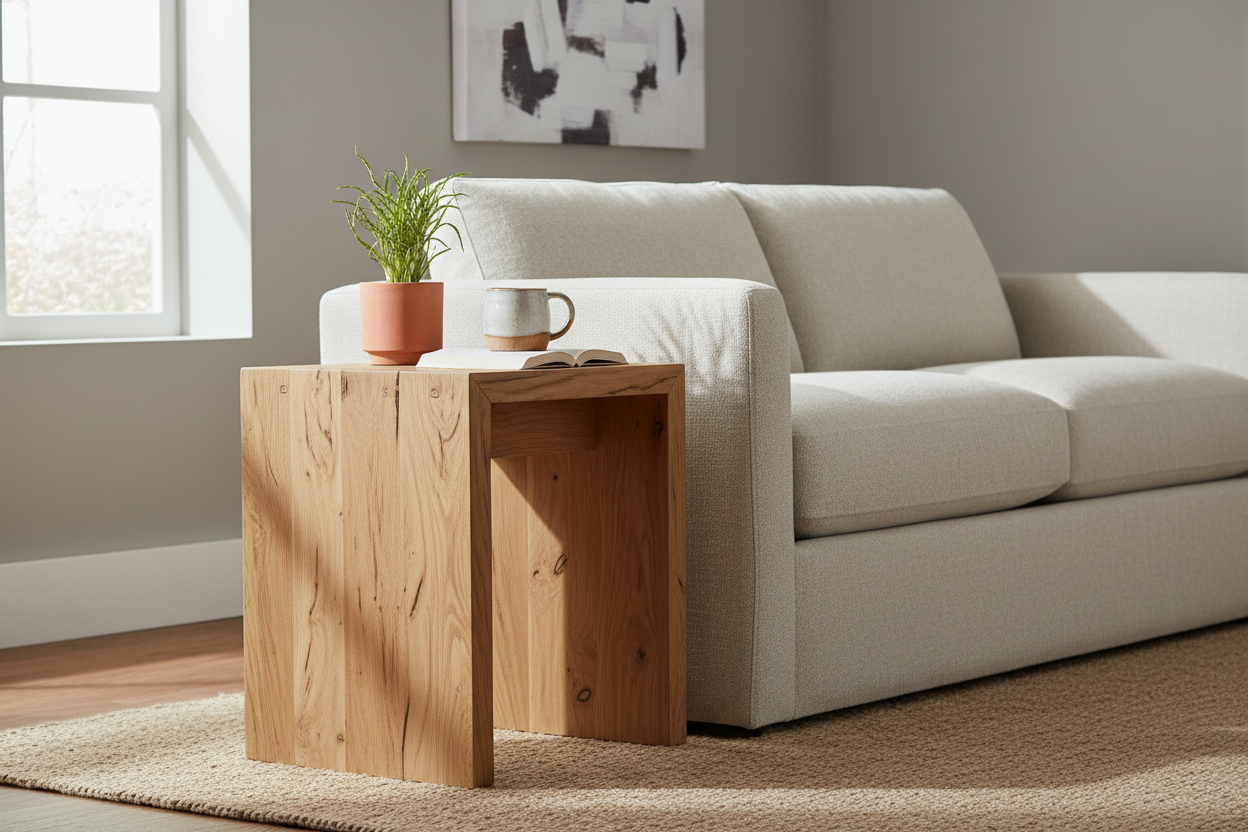
Wood options work beautifully too, especially in lighter finishes. A thin living room table in white oak or light walnut can blend seamlessly with various decor styles. The key is choosing pieces with clean lines and minimal ornamentation—overly decorative furniture tends to overwhelm small spaces.
For those working with really tight corners, a slim round end table might be the answer. The curved edges eliminate sharp corners that you might bump into, and the circular shape can actually make a space feel less cramped than rectangular alternatives. These work particularly well flanking a sofa or beside a reading chair.
Budget-Friendly Options That Don't Look Cheap
You don't need to spend a fortune to find quality skinny living room end tables. I've found excellent cheap narrow side table options at big-box retailers, online marketplaces, and even thrift stores. The trick is knowing what to look for.
Check the construction carefully. Even budget pieces should have stable joints and a solid feel. Wobble is your enemy, especially with narrow tables that have a smaller footprint. Look for models with adjustable feet or levelers—these are lifesavers on uneven floors.
Many affordable narrow end tables for sale use engineered wood or MDF with veneer finishes. These materials get a bad rap, but modern manufacturing has improved quality significantly. A well-made piece using these materials can last for years and look great doing it. Just avoid anything that feels flimsy or has visible gaps in the finish.
Where Narrow Tables Shine
Beyond the obvious living room applications, very small narrow side table designs work wonderfully in bedrooms. I use an ultra narrow end table as a nightstand in my bedroom—it's just wide enough for my phone charger, a small lamp, and a book. The minimal depth means I can fully open my closet door without moving furniture around.
Hallways and entryways are prime real estate for these pieces. A thin tables for living room or hallway can provide a landing spot for keys and mail without creating an obstacle course. Some people even use them in bathrooms for extra storage in tight powder rooms.
The best narrow end tables serve multiple purposes. Look for designs with shelves, drawers, or lower tiers. That vertical space becomes precious when you're working with limited depth. My own table has a lower shelf where I keep magazines and a small basket for remote controls.
Measuring and Placement Tips
Before you buy any extremely narrow side table, measure your space three times. Seriously. Account for baseboards, which typically project 0.5 to 0.75 inches from the wall. Factor in door swings, foot traffic patterns, and any other furniture that might need to move past the table.
Height matters too. For sofa-side placement, you want the table surface to sit at or slightly below the arm height. This usually means 24 to 26 inches tall. Bedside tables work best when the surface aligns roughly with your mattress height, making it easy to reach your phone or water glass in the middle of the night.
Consider what you'll actually place on the table. A very thin end table might look perfect, but if you can't fit your lamp base on it, you'll end up frustrated. I learned this the hard way with my first purchase—the table was beautiful but too narrow for my existing lamp. I had to buy a new lamp with a smaller footprint, which added unexpected cost to my budget.
Shopping Smart for Quality and Value
When browsing cheap narrow end table listings online, read the reviews carefully. Look for comments about stability, ease of assembly, and whether the piece looks like the photos. Pay attention to weight capacity specifications—a table that can't support your lamp and a few books isn't much use.
Compare prices across multiple retailers. I've found identical tables listed at vastly different prices depending on the seller. Set up price alerts if you're not in a rush; many retailers run sales throughout the year.
Don't overlook local furniture stores and consignment shops. I found my current table at a local shop going out of business—a solid wood piece originally priced at $200 that I snagged for $60. The hunt took patience, but the savings and quality made it worthwhile.
Making Your Narrow Table Work Harder
Once you have your skinny living room end tables in place, maximize their functionality. Use the vertical space above by mounting a small shelf or hanging artwork. This draws the eye upward and makes the room feel taller.
Choose accessories carefully. A single statement piece—like a unique lamp or small plant—often looks better than cluttering the surface with multiple items. Remember, the whole point of choosing a narrow table was to save space and maintain openness.
Lighting can transform a simple table into a focal point. A slim table with a beautiful lamp creates ambiance while serving a practical purpose. I use a cordless LED lamp on mine, which eliminates the need to position the table near an outlet.
The right narrow side table can solve your space problems without compromising on style or breaking your budget. Whether you need a super slim end table for a tight apartment or just want to maximize your living space, there are excellent options available at every price point. Take your time measuring, comparing, and choosing a piece that fits both your space and your life.
Frequently Asked Questions
How narrow is too narrow for a functional side table?
Tables narrower than 6 inches become challenging to use practically. At that depth, you can really only place small items like a phone or coaster. For most people, 8-10 inches deep provides the sweet spot between space-saving and functionality, allowing room for a lamp, drink, and a book or two.
Can I use a narrow side table as a nightstand?
Absolutely. Many people successfully use narrow tables as nightstands, especially in small bedrooms. Just make sure the table is tall enough to reach comfortably from bed (usually 24-28 inches) and wide enough to hold your essentials like a lamp, phone, and alarm clock.
What's the difference between cheap and affordable narrow tables?
Affordable tables offer good value for money with decent construction and materials, while cheap tables cut corners on quality. An affordable table might use engineered wood but have solid joinery and a durable finish. A cheap table might wobble, have thin veneers that peel, or arrive damaged due to poor packaging.


Leave a comment
This site is protected by hCaptcha and the hCaptcha Privacy Policy and Terms of Service apply.