










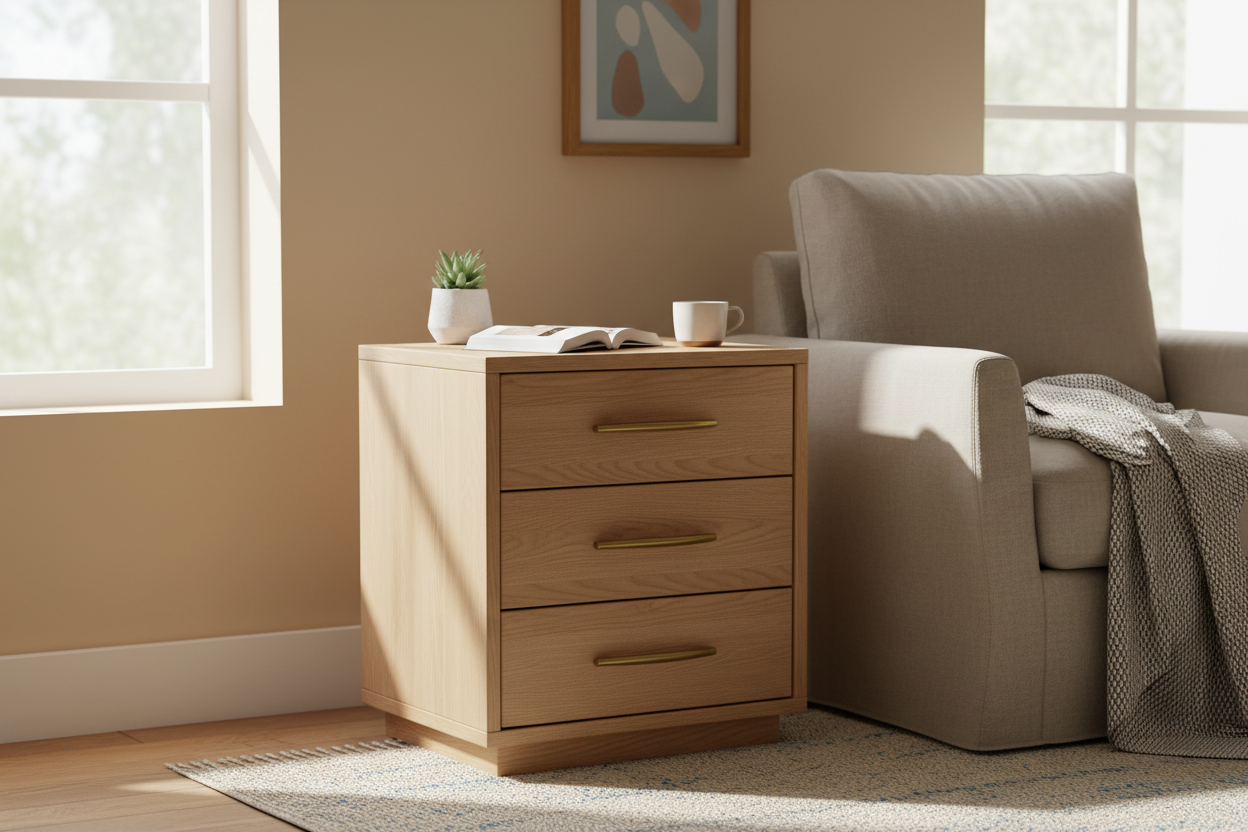
Looking for a compact furniture piece that combines surface space with hidden storage? A little table with drawers might be exactly what your living room, bedroom, or hallway needs. These versatile pieces solve the eternal problem of where to stash remote controls, reading glasses, chargers, and all those small items that tend to clutter our spaces.
The beauty of these tables lies in their dual functionality. You get a surface for your lamp, coffee cup, or decorative items, plus concealed compartments for everything you'd rather keep out of sight. Whether you call it a side table, end table, or nightstand, the concept remains the same: maximum utility in minimal square footage.
Why Drawer Storage Matters More Than You Think
I learned this lesson the hard way after moving into my first apartment. I bought a sleek, modern side table without drawers because it looked fantastic in the showroom. Within a week, it became a messy pile of mail, keys, and random odds and ends. The surface was constantly cluttered, and I had nowhere to tuck things away when guests arrived.
An end table with two drawers changed everything. The top drawer became my catch-all for everyday items I needed within arm's reach—phone chargers, lip balm, a notepad. The bottom drawer housed less frequently used items like extra batteries, scissors, and takeout menus. Suddenly, my living space felt organized without requiring any extra floor space.
Budget-Friendly Options That Don't Look Cheap
Finding a side table with drawers cheap doesn't mean sacrificing style or quality. The key is knowing where to look and what materials offer the best value. Engineered wood with a quality veneer can look remarkably similar to solid wood at a fraction of the cost. Many manufacturers now offer attractive finishes that mimic expensive materials convincingly.
Big-box retailers and online marketplaces have dramatically expanded their affordable furniture lines in recent years. You can find well-constructed pieces in the $50-$150 range that will serve you well for years. Pay attention to drawer glides—even budget pieces should have smooth-operating drawers that won't stick or fall off their tracks after a few months of use.
Materials and Construction to Consider
Solid wood remains the gold standard for durability, but it comes with a higher price tag. Pine and rubberwood offer more affordable solid wood options. Medium-density fiberboard (MDF) with a laminate or veneer finish provides excellent value and can be surprisingly sturdy when properly constructed.
Check the joinery on any table you're considering. Dovetail or mortise-and-tenon joints indicate quality construction, while simple butt joints with staples suggest a piece that might not last. Even in budget furniture, look for corner bracing and reinforcement.
The Chest of Drawers Alternative
An end table chest of drawers offers a different approach to the same storage challenge. These pieces typically feature three or more smaller drawers stacked vertically, providing compartmentalized storage in a compact footprint. This style works particularly well in bedrooms, where you might want to separate jewelry, accessories, and personal items into different drawers.
The vertical orientation makes these tables slightly taller than traditional end tables, which can be advantageous next to a high bed or sofa. The multiple drawers also encourage better organization—you're more likely to sort items into categories when you have dedicated spaces for them.
Sizing Your Space Correctly
Before falling in love with any particular piece, measure your available space carefully. A side end table with drawer should sit comfortably next to your sofa or bed without blocking walkways or feeling cramped. The standard height for an end table is 24-28 inches, roughly level with the arm of an average sofa.
Width and depth matter too. In tight spaces, a table that's 12-15 inches deep can provide adequate surface area without jutting into the room. Wider spaces can accommodate tables up to 24 inches deep, which offer more substantial drawer storage.
Proportion and Visual Balance
Your table should complement your existing furniture without overwhelming it. A massive end table next to a delicate loveseat looks awkward, just as a tiny table beside an oversized sectional seems lost. Aim for visual harmony—the table should feel like it belongs with your other pieces.
The Lamp Table Consideration
A small lamp table with drawer serves a specific purpose: holding a light source while providing minimal storage. These tables are typically narrower and lighter in construction than standard end tables, making them ideal for hallways, entryways, or behind sofas.
The drawer on a lamp table might be shallow, designed primarily for small items like keys, sunglasses, or mail. Don't expect to store bulky items here. The table's main job is supporting your lamp at the right height for reading or ambient lighting.
When choosing a lamp table, consider the lamp you'll place on it. The table should be wide enough to provide a stable base—your lamp's base should not extend beyond the table's edges. A good rule is that the lamp base should take up no more than two-thirds of the table's width.
Style Versatility Across Different Rooms
These compact tables adapt to virtually any room in your home. In the living room, they flank sofas and chairs, holding drinks and providing convenient storage. In bedrooms, they become nightstands with space for bedside essentials. In home offices, they can serve as printer stands or auxiliary work surfaces.
Entryways benefit from a narrow table with a drawer for corralling keys and mail. Hallways can accommodate a small table that breaks up long walls while offering a spot for decorative items and hidden storage. Even bathrooms sometimes incorporate small tables for towel storage and toiletries.
Matching Your Decor Style
Modern tables feature clean lines, minimal ornamentation, and often incorporate metal or glass elements. Traditional styles lean toward carved details, turned legs, and rich wood finishes. Farmhouse and rustic designs embrace distressed finishes and simpler construction that highlights natural wood grain.
Mid-century modern pieces, which remain popular, typically feature tapered legs, warm wood tones, and simple geometric forms. Industrial styles combine metal frames with wood surfaces, often incorporating visible hardware as a design element.
Maintenance and Longevity
Proper care extends the life of any furniture piece. Dust regularly with a soft cloth to prevent buildup in drawer tracks and on surfaces. Use coasters to protect finishes from water rings and heat damage. Tighten any loose hardware periodically—drawer pulls and knobs can work themselves loose with regular use.
For wood finishes, avoid harsh chemical cleaners that can damage protective coatings. A slightly damp cloth handles most cleaning needs. If your table has a painted or lacquered finish, be gentle—these surfaces can scratch more easily than natural wood with a clear finish.
Drawer organization helps too. Overloading drawers stresses the glides and can cause them to bind or break. If a drawer becomes difficult to open, check for obstructions and ensure items inside aren't preventing it from closing completely.
Making the Final Decision
Your perfect table balances aesthetics, functionality, and budget. Start by identifying your primary need: do you need maximum storage, a specific style match, or the lowest possible price point? This helps narrow your options considerably.
Read reviews when shopping online, paying attention to comments about assembly difficulty, actual versus advertised dimensions, and durability over time. A table with hundreds of positive reviews offers more confidence than an untested newcomer, even if the price is slightly higher.
Remember that this is a piece you'll interact with daily. A table that frustrates you every time you use it—because the drawers stick, the finish scratches easily, or it wobbles—becomes a source of ongoing annoyance. Sometimes spending an extra $30-50 for better quality pays dividends in satisfaction and longevity.
Common Questions About Small Tables with Drawers
What's the difference between an end table and a side table?
The terms are often used interchangeably, but traditionally, end tables sit at the ends of sofas while side tables can be placed anywhere alongside furniture. Functionally, they serve the same purpose and come in similar sizes and styles.
How many drawers do I really need in a small table?
One drawer handles basic needs for most people—remotes, reading glasses, and small everyday items. Two drawers allow better organization by separating frequently used items from occasional-use items. More than two drawers in a compact table often means very small drawer spaces that limit what you can store.
Can I use a nightstand as an end table in my living room?
Absolutely. Nightstands and end tables are essentially the same furniture category with different names based on location. A piece marketed as a nightstand works perfectly beside a sofa, and vice versa. Focus on the dimensions and style rather than the label.

Leave a comment
This site is protected by hCaptcha and the hCaptcha Privacy Policy and Terms of Service apply.