










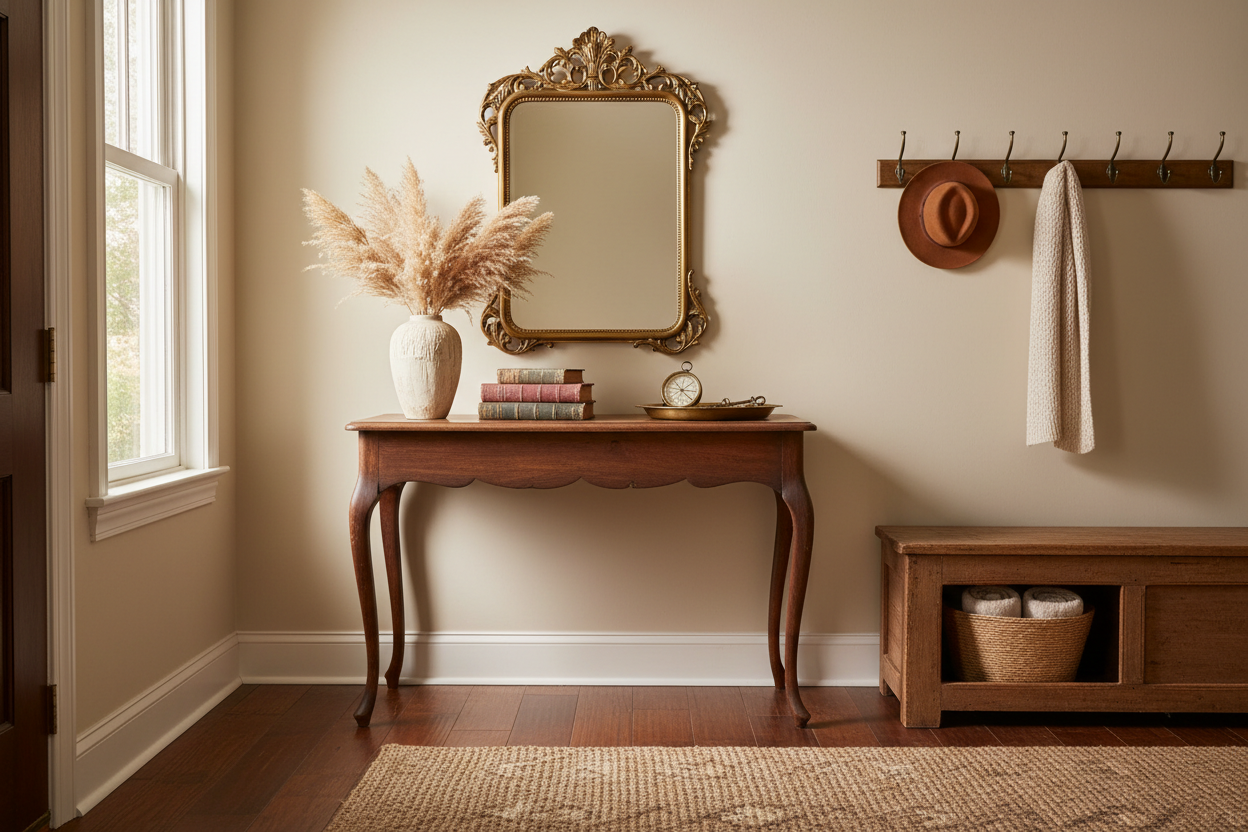
Your home begins the moment the door swings open. While modern design often prioritizes sleek minimalism, a vintage entryway offers something far more compelling: character. Using vintage entryway furniture isn't just about filling a space with old things; it is about setting a tone of warmth and history immediately upon arrival. Whether you live in a sprawling farmhouse or a compact city apartment, incorporating pieces from the past grounds your home and offers a tactile welcome that mass-produced furniture simply cannot replicate.
Choosing the right pieces requires a balance of aesthetics and rugged utility. The foyer is a high-traffic zone. It sees muddy boots, wet umbrellas, and heavy grocery bags. Therefore, the vintage items you select need to be as durable as they are beautiful. You are looking for solid wood, heavy iron, and craftsmanship that has already survived a few decades of daily use.
The Hunt for the Perfect Anchor Piece
Every foyer needs a focal point. In the world of vintage entryway furniture, this is usually a console table, a hall tree, or a sturdy bench. This anchor piece dictates the flow of the space. If you have the square footage, a Victorian or Edwardian hall tree is the gold standard. These towering pieces often combine a mirror, coat hooks, a bench, and umbrella storage into one architectural unit. They are incredibly practical, but they demand vertical height.
I recall my first attempt at furnishing a narrow hallway in a rented duplex. I found a battered mid-century telephone table at a local estate sale. It was quirky, featuring a small attached seat and a tiny drawer meant for a phone book. At first glance, it seemed useless for modern needs. However, that little seat became the perfect spot to tie shoelaces, and the drawer was the ideal size for hiding keys and sunglasses. It taught me that vintage furniture doesn't have to be used exactly as intended; it just needs to serve your current lifestyle.
For narrower spaces, look for a slender console table. A 19th-century farmhouse table with a shallow depth can serve as a drop zone for mail without encroaching on the walkway. Look for woods like oak or walnut, which tend to hide dings and scratches better than softer pines. The beauty of these older tables lies in their patina. A water ring or a scratch on a brand-new veneer table looks like damage; on a vintage piece, it looks like history.
Seating with Soul
If your entryway allows, seating is a luxury that transforms a hallway into a room. A church pew is a classic choice for a vintage entryway. Pews are generally shallow but long, making them excellent for lining a wall. They provide ample space for putting on shoes or dropping bags. However, they can be uncomfortable for long periods, so layering them with textiles is key. A few grain sack pillows or a sheepskin throw can soften the harsh lines of the wood and add texture.
Alternatively, theater seats are a fantastic conversation starter. They fold up when not in use, saving precious floor space, and often come in banks of two or three. The cast iron sides and velvet upholstery bring a touch of industrial glamour that works surprisingly well in eclectic homes.
Mixing Eras and Textures
One common pitfall is creating a space that feels like a period set rather than a functioning home. To avoid this, mix your eras. A heavy, dark wood antique chest looks significantly lighter and more modern when paired with a 1970s brass mirror or a colorful Turkish runner rug. The contrast prevents the space from feeling stuffy.
Lighting plays a massive role here. A vintage entryway often suffers from poor natural light. Replacing a standard builder-grade flush mount with a vintage milk glass pendant or an Art Deco fixture can change the entire atmosphere. If hardwiring isn't an option, a tall vintage floor lamp tucked into a corner adds a warm glow that overhead lights can't match.
Don't ignore the walls. An entryway is the perfect place for a gallery wall of mismatched vintage frames. You might display black-and-white family photos, botanical prints, or even empty frames with interesting shapes. The key is cohesion through variety—keeping the color palette similar while varying the textures.
Practical Storage Solutions
Vintage decor must work for a living. Storage is usually the biggest challenge in an entryway. If your anchor piece doesn't have drawers, you need to get creative. Old wooden crates, wire lockers baskets, or galvanized buckets can be slid under benches or tables to hold shoes and scarves.
For coats and hats, consider bypassing the standard closet. A wall-mounted accordion rack is a staple of vintage design that expands to fit your wall space perfectly. For something more substantial, look for an antique rail with cast iron hooks. These can hold significantly more weight than modern adhesive hooks, making them perfect for heavy winter coats and bags.
Ceramics also play a functional role. A large stoneware crock, originally used for pickling, makes an indestructible umbrella stand. A delicate china saucer on the console table is perfect for catching loose change. These small touches reinforce the vintage aesthetic while solving modern clutter problems.
Restoration and Care
Bringing vintage entryway furniture into your home often requires a bit of maintenance. However, there is a fine line between cleaning and ruining value. Generally, you want to preserve the finish that has developed over time. Avoid stripping wood unless the finish is completely compromised. Instead, a good cleaning with oil soap followed by a coat of high-quality wax is often enough to revive a dull piece.
If you find a piece with upholstery, such as a gossip bench or a side chair, don't be afraid to reupholster. Fabric rarely ages as well as wood. Swapping out a musty, torn seat cover for a durable modern fabric in a vintage-inspired print can save the piece and make it usable for daily life. This is one area where modern materials—like stain-resistant performance velvets—can be a savior for high-traffic areas.
Ultimately, a vintage entryway sets a precedent. It tells guests that this home values quality, history, and a bit of eccentricity. It slows down the transition from the chaotic outside world to your private sanctuary, offering a moment to pause and appreciate the craftsmanship of a bygone era.
Frequently Asked Questions
How do I mix different wood tones in a vintage entryway?
The trick is to ensure the wood tones have a similar undertone, either warm (red/orange) or cool (ash/gray). Alternatively, create high contrast, such as pairing very dark walnut with light oak, which looks intentional rather than mismatched. A rug can also help bridge the gap between different wood finishes.
What should I do if my vintage drawers smell musty?
Old furniture often traps odors. Clean the interior with a vinegar and water solution, then let it dry completely in the sun. If the smell persists, placing a bowl of baking soda, activated charcoal, or even kitty litter inside the closed drawer for a few days usually absorbs the remaining odors.
Is vintage furniture durable enough for a high-traffic foyer?
Generally, yes. Furniture made before the 1970s is often constructed from solid wood rather than particleboard, making it more resistant to moisture and impact. However, you should protect surfaces with wax or a glass top if they will be exposed to frequent water or heavy keys.

Leave a comment
This site is protected by hCaptcha and the hCaptcha Privacy Policy and Terms of Service apply.