










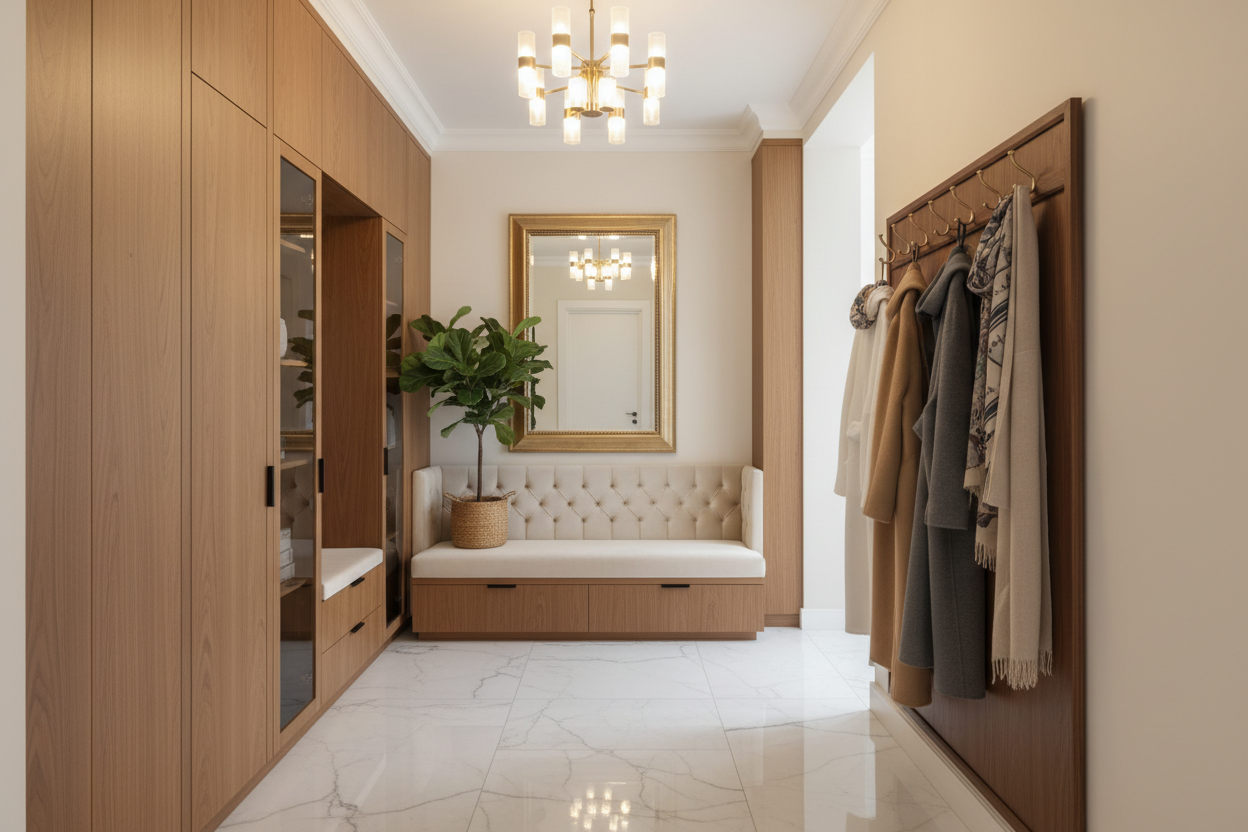
There is nothing quite as jarring as opening your front door to a chaotic pile of outerwear. The entryway sets the tonal expectation for the rest of the home; it is the handshake of your interior architecture. Yet, many homeowners treat it as an afterthought, prioritizing utility over aesthetics until the visual clutter becomes unbearable. The challenge lies in integrating hallway coat storage that respects the architectural limitations of a corridor while providing enough volume for daily life.
Key Features to Look For
- Depth & Clearance: Ensure a minimum of 36 inches of walkway clearance remains after installation to prevent the "tunnel effect."
- Ventilation: Closed cabinetry must have breathable joinery or mesh inserts to prevent damp wool coats from developing mildew.
- Visual Weight: In narrow spaces, opt for floating units or legs with height to expose floor space, making the area feel larger.
- Hardware Durability: Look for solid brass or PVD-coated hooks capable of holding heavy winter weight without bending.
Mastering Proportion and Flow
In my years designing foyers, the most frequent error I see is ignoring scale. A bulky, floor-to-ceiling armoire in a narrow Victorian terrace hallway will immediately oppress the space. You must balance storage volume with visual breathing room.
The Shallow Depth Dilemma
Standard wardrobes are 24 inches deep. Most hallways cannot accommodate this. If your width is restricted, you need hallway storage for coats that utilizes forward-facing rails or pull-out valet rods. This reduces the required depth to as little as 14-16 inches. While this limits capacity slightly, it preserves the ergonomics of the passage, ensuring you aren't brushing your shoulder against cabinetry every time you walk by.
Materiality and Texture
Because the hallway is a high-traffic zone, materials must be unforgivingly durable yet tactile. Veneers are often a poor choice here if they are low quality, as they chip easily when struck by bags or umbrellas.
Solid Wood vs. High-Pressure Laminate
For a luxury finish that withstands abuse, solid hardwoods like white oak or walnut are superior. They age beautifully and can be refinished. However, if you are designing a mudroom-style hallway for a family with young children, high-pressure laminate (HPL) offers incredible resistance to scratches and moisture without the maintenance of wood.
Balancing Open vs. Closed Storage
Aesthetically, there is a tension between the convenience of open hooks and the serenity of closed doors. Open storage is practical for guests and daily use, but it creates visual noise. A sophisticated approach is a hybrid model: a slender closed cabinet for off-season coats and bulky parkas, paired with a curated row of architectural hooks for the coat currently in rotation. This maintains a clean silhouette while acknowledging the reality of daily habits.
Lessons from My Own Projects
I learned the hard way about the importance of "backing materials" during a renovation in a London townhouse. I designed a stunning open hallway coat storage niche featuring a grasscloth wallpaper back panel. It looked editorial-ready on installation day.
However, I failed to account for the client's wet trench coats in November. Within three months, the texture of the grasscloth had absorbed moisture from the damp fabric, leading to water stains and peeling edges. It was a costly callback. Now, I strictly advise clients: if you want wallpaper behind your coat hooks, we must install a glass shield or use vinyl wallcoverings. It’s these unglamorous details—moisture management and abrasion resistance—that determine whether a design lasts six months or six years.
Conclusion
Your hallway does not have to be a holding cell for clutter. By selecting the right proportions and durable materials, you can create a storage solution that feels like bespoke furniture rather than a utility rack. Treat your entryway with the same design rigor as your living room, and the result will be a home that greets you with calm.
Frequently Asked Questions
What is the minimum depth for a coat cupboard?
For a standard hanging rail where coats hang sideways, you need at least 22–24 inches (55–60cm). If you are using a pull-out rail where coats face forward, you can work with depths as shallow as 14 inches (35cm).
Should I incorporate a bench into my coat storage?
Only if space permits without obstructing traffic flow. A bench encourages people to sit and remove shoes, keeping dirt out of the house, but if it forces you to squeeze sideways to get past, it is not worth the ergonomic cost.
How do I stop my open coat rack from looking messy?
Edit ruthlessly. Open storage should be for the "coat of the day" and guest use only. Limit the number of hooks to prevent overcrowding; once hooks are double-stacked, the design intent is lost to clutter.

Leave a comment
This site is protected by hCaptcha and the hCaptcha Privacy Policy and Terms of Service apply.