










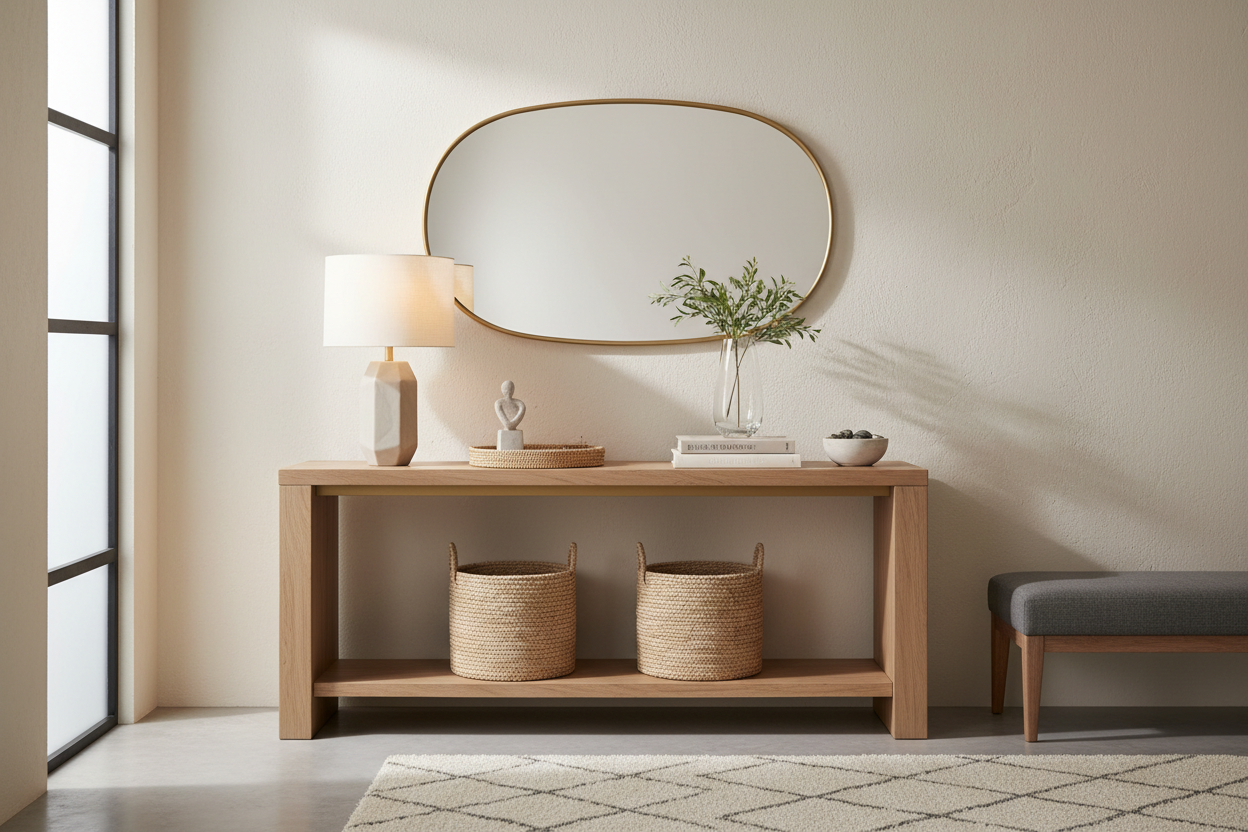
Your home’s entryway is the architectural equivalent of a handshake. It sets the tone for the rest of the house, signaling to guests whether they are entering a space of relaxed chaos, minimalist calm, or traditional warmth. At the center of this pivotal space sits the console table. More than just a piece of furniture, a well-chosen console table entrance setup anchors the area, providing both a visual focal point and a critical landing strip for the daily debris of life—keys, mail, and sunglasses.
Choosing the right piece involves a delicate balance between form and function. You want something that speaks to your style but doesn't block the flow of traffic. I learned this lesson the hard way in my first apartment. I fell in love with a heavy, ornate oak chest that I intended to use as a hall table. It was stunning, but it was also twenty inches deep in a hallway that was only thirty-six inches wide. Every time I came home with groceries, I had to turn sideways to shimmy past it. I bruised my hip on that beautiful mistake more times than I can count before I finally replaced it with a slimmer, open-leg design. That experience taught me that clearance is king.
Mastering the Dimensions
Before you even look at finishes or styles, you have to get the tape measure out. The standard height for console tables for entryway spaces ranges between 30 and 36 inches. This height is comfortable for dropping keys without bending over and usually aligns well with the back of a sofa if you ever decide to move the piece to the living room. Width is variable, but depth is where people get into trouble.
For a standard corridor, look for a table in hallway areas that is no deeper than 12 to 15 inches. If you have a grand, open foyer, you can afford a deeper, rounder table, but in a tight vestibule table scenario, every inch counts. You generally want to maintain at least 36 inches of walking path. If your table eats into that, the space will feel cramped and claustrophobic regardless of how beautiful the styling is.
Function Meets Aesthetics
Once you have your measurements, consider what you actually need the table to do. For some, the console entry is purely decorative—a place to display a vase of fresh hydrangeas and a lamp. For most of us, however, it serves a utilitarian purpose. If your household is prone to clutter, look for entryway foyer tables that feature drawers or a lower shelf. Drawers are magical for hiding unsightly necessities like dog leashes, spare change, and unread mail.
If you opt for an open design without drawers, baskets are your best friend. Placing two large, textured baskets on the floor underneath a front entrance console table adds visual weight to the bottom of the vignette (preventing it from looking top-heavy) and provides a designated drop zone for shoes or bags. This keeps the floor clear and maintains that airy, organized feel that everyone craves when walking through the front door.
The Art of Styling the Surface
A bare table is a missed opportunity. Styling a front door console table requires playing with height, layers, and light. A foolproof formula often used by interior designers involves a large anchor piece, lighting, and a stack of books or a tray.
Start with the wall above the table. A large mirror is a classic choice for a console entrance because it reflects light, making a typically dark hallway feel larger and brighter. Alternatively, a large piece of art can inject immediate personality. The anchor piece should generally be about two-thirds the width of the table to maintain balance.
Next, add lighting. A tall, slender lamp on one side adds necessary height and a warm glow in the evenings. If your table is long, you might use two matching lamps for symmetry. If space is tight, wall sconces installed on either side of the mirror free up valuable surface area on your foyer tables for entryway use.
Finally, bridge the gap. You don't want a lamp on one side and nothing on the other. Balance the lamp with a grouping of objects on the opposite side—perhaps a stack of art books topped with a small sculptural object, or a ceramic bowl for keys. The goal is to create a landscape that guides the eye across the piece.
Material Matters
The material of your table dictates the mood. Lucite or glass tables are excellent for small spaces because they take up zero visual weight; they disappear into the room, making the hall feel wider. A rustic wood console adds warmth and texture, perfect for farmhouses or transitional homes. Metal and stone combinations lean more modern or industrial. Ensure the material is durable enough for high traffic. A delicate, untreated wood surface might stain if someone sets down a wet umbrella or a coffee cup, so consider a glass top or a sealed finish for a high-traffic drop zone.
Immediate Updates vs. Custom Orders
Sometimes, the urge to organize strikes suddenly. You might have guests arriving this weekend and you realize your entrance is a disaster zone. In these moments, you aren't looking for a six-week shipping window; you are looking for an entryway table pickup today solution. Many home decor retailers and local furniture outlets maintain stock of standard sizes.
If you are in a rush, focus on versatility. A simple black metal or mid-tone wood table is a safe bet that matches almost any decor. You can always upgrade the hardware or paint it later, but securing that functional surface immediately can transform the usability of your home overnight. However, if you have a uniquely shaped alcove, waiting for a custom piece that fits the architecture perfectly is usually worth the delay.
Lighting the Way
Never underestimate the power of ambient light in a hallway. While overhead lights are functional, they can be harsh. A lamp on your console provides a welcoming glow that softens the transition from the dark outdoors to the interior. If you don't have an outlet nearby, consider rechargeable light bulbs or battery-operated lamps. This allows you to float a table in hallway spaces that lack electrical infrastructure without having ugly cords snake across the floor.
Your entrance sets the stage. Whether you have a sprawling foyer or a tiny patch of wall behind the door, the right table creates a moment of pause. It organizes your life and welcomes you home, proving that even a small strip of furniture can make a massive impact.
Frequently Asked Questions
How do I choose the right size mirror for my console table?
A good rule of thumb is to choose a mirror that is roughly two-thirds to three-quarters the width of the table. If the mirror is wider than the table, the arrangement can look top-heavy and unbalanced. Ensure the mirror is hung so that the center is at eye level, or slightly lower if it connects visually with the objects on the table.
What should I put under an open console table?
Open space underneath a table can make the area look unfinished. Fill the void with a pair of matching ottomans for extra seating, large woven baskets for storage, or a large ceramic planter. This grounds the furniture piece and prevents it from looking like it is floating aimlessly against the wall.
Can I use a desk as a console table?
Absolutely, provided the depth works for your hallway. Many writing desks have similar proportions to console tables but offer the added benefit of deeper drawers for storage. Just be mindful of the depth; standard desks are often 20-24 inches deep, which might be too intrusive for a narrow corridor.

Leave a comment
This site is protected by hCaptcha and the hCaptcha Privacy Policy and Terms of Service apply.