










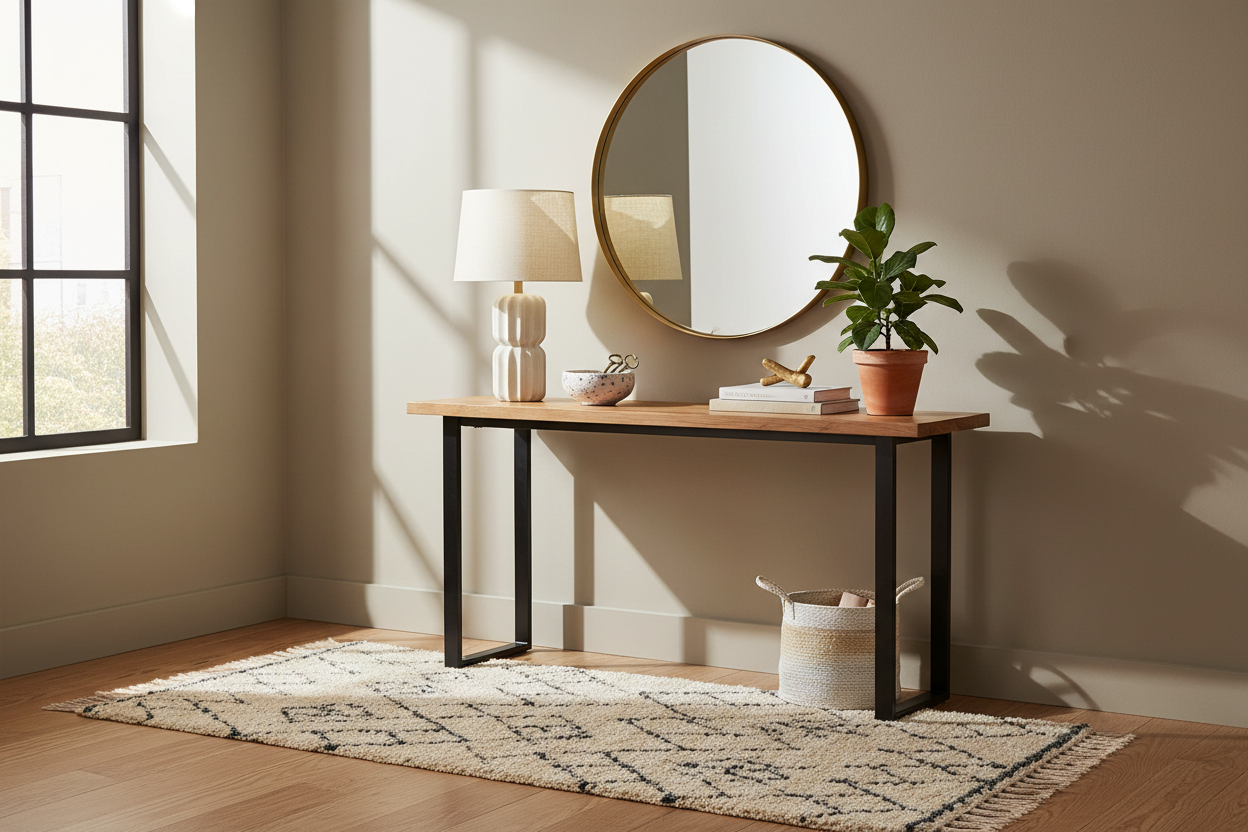
Your home’s entrance sets the tone for the entire living space. It is the first thing guests see and the last thing you look at before leaving for the day. At the center of this pivotal space sits the console table entryway piece—a furniture staple that balances functionality with pure aesthetic appeal. While it might seem like just a surface for keys and mail, the right table anchors the area, providing a visual focal point that bridges the gap between the outdoors and your personal sanctuary. Selecting the best option requires balancing the architectural limitations of your hall with your storage needs.
Defining the Purpose of Your Foyer Table
Before browsing catalogs or wandering through furniture showrooms, determine exactly what you need this furniture to do. For some, entrance tables are purely decorative. They exist to hold a vase of fresh hydrangeas, a table lamp, and perhaps a framed photo. For others, particularly busy families, entry tables for foyer spaces serve as critical command centers. They need drawers to hide clutter, a bottom shelf for shoe baskets, and a surface durable enough to handle the daily toss of car keys and sunglasses.
If your hallway is narrow, you cannot afford a bulky piece that impedes traffic flow. A slim profile is non-negotiable here. Conversely, if you have a grand, open foyer with high ceilings, a dainty table will look lost. The scale of the furniture must match the scale of the room. This is where understanding the visual weight of materials comes into play. A heavy oak table grounds a large space, while a glass and metal frame keeps a small area feeling open and airy.
Sizing and Scale: The 3-Foot Rule
One of the most common mistakes homeowners make is buying furniture that doesn't fit the wall. You generally want to leave about 6 to 12 inches of wall space on either side of the table to let the piece breathe. For smaller apartments or tight landings, a 3 foot console table is often the gold standard. At 36 inches wide, it provides enough surface area to be useful without dominating the walkway.
I learned this lesson the hard way during a renovation project a few years ago. I fell in love with a vintage mahogany sideboard that was 60 inches wide. I was convinced it would add gravity to the entrance. Once I wrestled it into the hallway, however, the front door couldn't open fully without hitting the corner of the table. It created a bottleneck that frustrated everyone who walked in. I swapped it out for a 3 ft entryway table with a slender metal frame, and the difference was immediate. The flow of traffic resumed, and the space actually looked bigger because the floor was visible beneath the table.
Height is equally important. Most consoles stand between 30 and 36 inches high. This aligns with the back of most sofas, which is why you often see a crossover between a sofa entryway table and a standard hall console. If you plan to hang a mirror or artwork above the table, the height of the console dictates where that art should sit. A lower table allows for a taller mirror, which can dramatically reflect light and expand the perceived size of a cramped hallway.
Versatility: The Hallway Sofa Table
Furniture terminology can be fluid. What is sold as a sofa table entryway piece is essentially a long, narrow table designed to sit against the back of a couch. However, these are often identical in dimension to a console for hallway use. The main difference historically was that sofa tables were finished on all four sides since they might float in the middle of a room, while some older consoles were unfinished on the back because they were destined for a wall.
Modern design has largely erased this distinction. A hallway sofa table works beautifully in an entrance because it tends to be slightly longer and narrower than traditional cabinets. If you have a long corridor leading from the front door into the main living area, these elongated tables fill the horizontal void perfectly without encroaching on the walking path. They guide the eye forward, drawing guests into the heart of the home.
Material Selection and Vibe
The material you choose dictates the mood. Rustic wood creates warmth and hides dust well, making it ideal for high-traffic zones. Lucite or glass tables disappear visually, which is a clever trick for maintaining a minimalist look in a studio apartment. Metal finishes, whether brushed brass or matte black, add a layer of sophistication and pair well with side console tables used in adjacent rooms.
Consider the durability of the top surface. If you know you will be dropping heavy keys or wet umbrellas near this spot, a delicate lacquered finish might chip or warp. Stone, marble, or distressed wood are far more forgiving. A marble top, in particular, adds a touch of luxury and is cool to the touch, contrasting nicely with warm wood floors.
Styling Your Entryway Console
Once the table is in place, styling is what brings it to life. The goal is balance. If you have a large lamp on the left, you don't necessarily need a matching lamp on the right. Instead, balance the visual weight with a stack of books or a sculptural bowl on the other side. This asymmetry feels more modern and curated than rigid symmetry.
Lighting is crucial. An entryway often lacks natural light, especially in apartments. A table lamp provides a welcoming glow that overhead lights simply cannot replicate. If surface space is limited on your 3 foot console table, consider installing sconces on the wall above it instead. This frees up the tabletop for a catch-all tray or a vase.
Don't forget the space underneath. If your table has open legs, the floor space beneath is prime real estate. A pair of textured baskets or ottomans tucked under the table adds weight to the bottom of the vignette, grounding the look. Practically speaking, this is the perfect hiding spot for shoes, dog leashes, or reusable grocery bags, keeping the actual tabletop clear of debris.
The Final Touch
Your entryway is a transitional zone. It shouldn't feel cluttered, but it shouldn't feel barren either. Whether you opt for a substantial sofa entryway table with drawers or a minimalist floating shelf, the piece should serve the reality of your life. It is the landing pad for your arrival and the launchpad for your departure. By measuring carefully and choosing materials that withstand daily use, you ensure this small slice of square footage works as hard as the rest of your home.
Frequently Asked Questions
How much space do I need to walk past an entryway table?
You should aim to maintain at least 36 inches of clearance between the edge of the table and the opposite wall or any other obstacle. This allows for comfortable traffic flow, ensuring two people can pass or someone can carry grocery bags without bumping into furniture.
Can I use a desk as a console table?
Yes, a narrow desk can double as a console, especially in wider hallways. However, standard desks are often deeper (around 24-30 inches) than dedicated console tables (12-18 inches), so you must ensure it doesn't protrude too far into the walkway.
How high should I hang a mirror above the console?
A general rule of thumb is to hang the mirror 6 to 8 inches above the highest point of the table surface or the items displayed on it. This connects the mirror to the table visually, creating a cohesive unit rather than two floating objects.


Leave a comment
This site is protected by hCaptcha and the hCaptcha Privacy Policy and Terms of Service apply.