










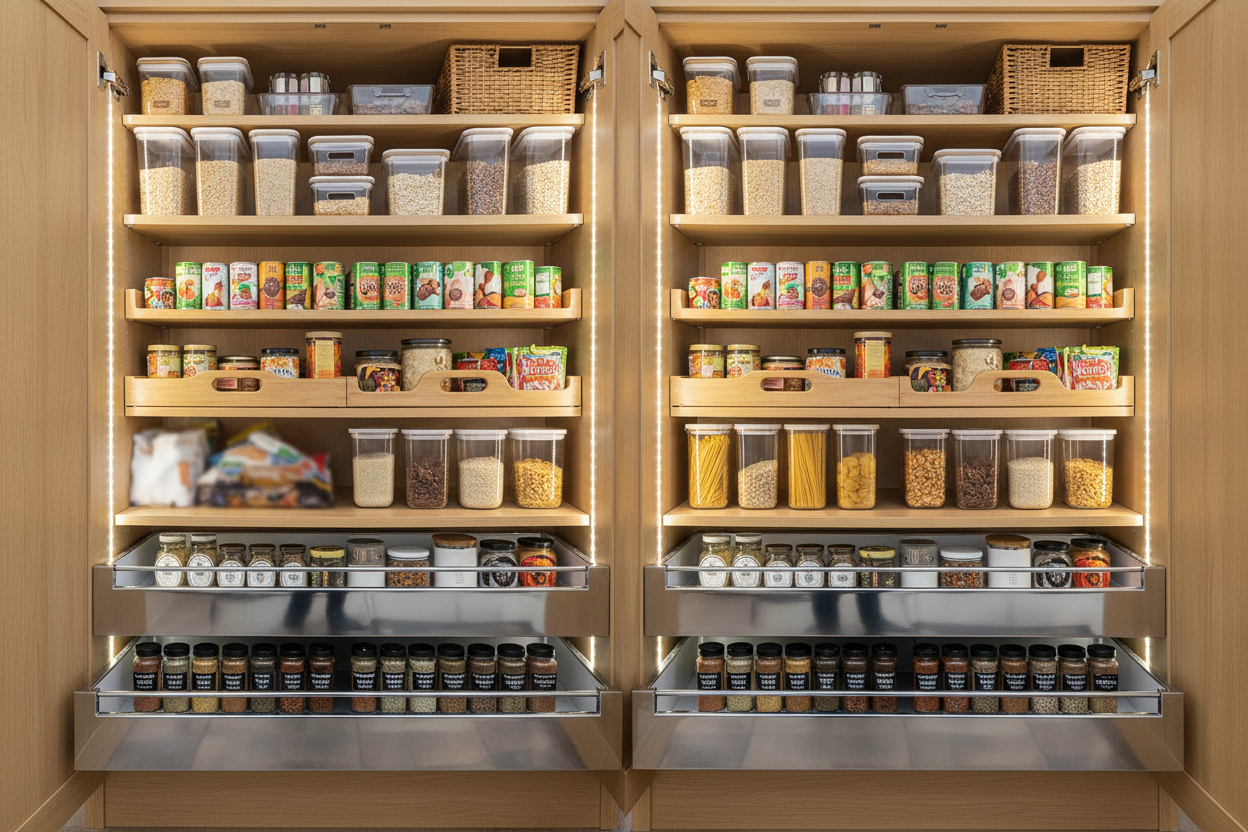
We have all experienced that distinct moment of frustration when opening a cupboard door only to have a stack of Tupperware or a tower of soup cans topple out. The chaos usually stems not from a lack of space, but from how that space is divided. The standard kitchen cabinet shelf provided by manufacturers is often positioned right in the middle, leaving a massive, unusable air gap above your plates or dry goods. Maximizing your storage capability isn't about buying a bigger house; it is about rethinking the shelf and cabinet relationship to make every cubic inch count.
The Geometry of Kitchen Storage
When you look at a standard kitchen cupboard with shelves, you are essentially looking at a box with a single horizontal divider. This default setup is rarely efficient. I realized this years ago when I moved into a home with beautiful oak cabinetry that was functionally useless. The shelves for kitchen cabinet interiors were fixed in place, meaning I couldn't fit a cereal box on the bottom, and the top shelf had twelve inches of wasted space above the coffee mugs. Optimizing a shelf in kitchen cabinet spaces requires looking at verticality.
By adjusting the height of existing kitchen cabinet shelves or adding new layers, you can increase storage capacity by nearly 50%. This is particularly true for a base cabinet shelf, where items often get pushed to the back and forgotten. If you have deep shelves and cabinets, the back half of the shelf is often a graveyard for expired spices unless you implement a better system.
Choosing Materials for Internal Shelving
Not all cabinet shelving is created equal. When you decide to add a shelf for inside cabinet use, the material you choose dictates the longevity of the upgrade. Many modern kitchen cabinets and shelving units use particle board covered in melamine. While easy to clean, these shelves for cabinets are prone to sagging under the weight of heavy stoneware or canned goods.
For a robust shelf for cupboard applications, plywood with a wood veneer edge banding is superior. It resists bowing and handles moisture changes better than particle board. If you are looking for a more industrial or airy look, wire cabinet racking allows for airflow, which is excellent for pantry dry goods, though less ideal for small items that might tip over between the wires. When sourcing shelves for inside kitchen cabinets, always check the thickness; a 3/4-inch shelf is the gold standard for spans wider than 24 inches.
A Personal Project: The Sagging Shelf Repair
I once tackled a project involving a large pantry unit that was essentially a tall cupboard with shelves inside. The previous owners had overloaded the internal shelves for kitchen cupboards with heavy kitchen appliances. The result was a dramatic bow in the wood that made everything slide toward the center. It wasn't just ugly; it was dangerous.
I removed the warped inside cabinet shelves and replaced them with reinforced plywood. However, the game-changer was adding a vertical support strut in the middle of the shelves cabinet structure. This simple addition turned a flimsy storage space into something resembling heavy-duty kitchen lockers. It taught me that a shelf for cabinet kitchen use must be supported correctly, not just placed on four weak pegs. If you are dealing with a wide kitchen shelf and cabinet setup, always consider center support.
Optimizing the Interior Layout
Once the structure is sound, you need to decide how to arrange the shelves for inside cabinet spaces. A popular modern approach is to ditch the static shelf entirely in favor of pull-out systems. A rack inside cabinet installations allows you to pull the contents out to you, eliminating the need to dig around in the dark. If full pull-outs are out of budget, simple risers placed on an existing shelf in cabinet can double your stacking area for small items like saucers or spice jars.
For those sticking with traditional flat storage, adjustable shelves kitchen cupboards are essential. Drill new peg holes if your kitchen cabinet and shelves lack the adjustment points you need. This allows you to position a shelf for inside cupboard use exactly two inches above your tallest glass, reclaiming the space above it for another layer.
Installation: Adding a New Shelf
Adding a new shelf for inside kitchen cabinet storage is one of the easiest DIY tasks. Start by measuring the depth and width of the interior. Note that the front opening of cupboard shelves is often slightly narrower than the interior width due to the face frame. You have to tilt the shelves for cupboards to get them inside.
If you are cutting your own shelving for inside cupboard upgrades, cut the board about 1/8th of an inch smaller than the tightest measurement to allow for easy movement. Use metal shelf pins rather than plastic ones; they are cheap insurance against a shelf collapse. When dealing with kitchen cabinet inside shelving shelving that actually fits is the difference between a clean look and a scratched cabinet interior.
Specialized Storage Solutions
Beyond standard boards, consider specific utility. A kitchen shelving unit with doors might benefit from a vertical divider for baking sheets rather than a horizontal in cabinet shelf. This is often called a tray divider. For kitchen cabinet interior shelves located near the stove, consider lining them with easy-to-clean vinyl, as these areas attract grease and dust more than a shelf cabinet for kitchen china would.
Another overlooked area is the kitchen cabinet inside shelf under the sink. Because of the plumbing trap, a full shelf rarely fits. Here, utilizing U-shaped shelves to put inside cabinet plumbing areas or modular stacking bins creates in cabinet storage shelves where there was previously just a chaotic void. It turns the dark cavern under the sink into usable real estate.
Final Thoughts on Cabinet Organization
Whether you are installing a high-end shelf cabinet for kitchen renovation or simply cutting a piece of plywood to add one more layer to your rental apartment's pantry, the goal is the same: reduce air gaps. Kitchen shelves for cabinets should be dynamic, changing as your needs change. By upgrading your inside cupboard shelves, you stop stacking cans precariously and start using your kitchen the way it was intended.
Frequently Asked Questions
How much weight can a standard kitchen cabinet shelf hold?
A standard 3/4-inch particle board shelf can typically hold between 40 to 50 pounds before it begins to sag significantly. However, upgrading to plywood or solid wood can increase this capacity to 75 pounds or more, depending on the span width and the quality of the shelf pins used.
What is the best depth for shelves inside kitchen cupboards?
For base cabinets, a shelf depth of 12 to 14 inches (half-depth) is often preferred for the upper level to allow visibility of items on the bottom floor. For upper wall cabinets, the shelf should be nearly the full depth of the cabinet (usually 11 inches) to maximize storage space for plates and glasses.
Can I add adjustable shelves to a cabinet that has fixed shelves?
Yes, but it requires removing the fixed shelf, which may be nailed or glued into the cabinet sides. Once removed, you can use a shelf pin jig to drill holes into the side panels, allowing you to install adjustable supports and new shelving boards at your desired heights.


Leave a comment
This site is protected by hCaptcha and the hCaptcha Privacy Policy and Terms of Service apply.