










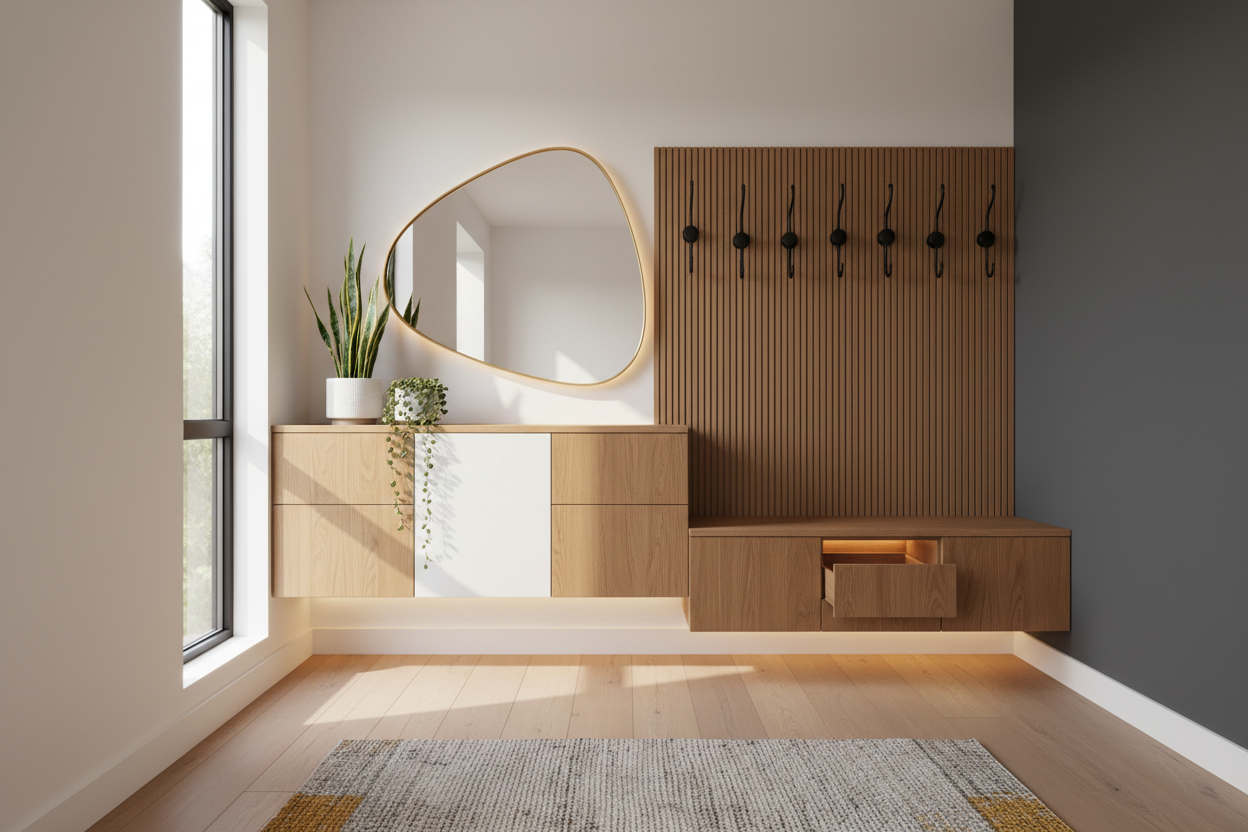
Your home’s entrance sets the tone for everything that follows. It is the transition zone between the chaotic outside world and your personal sanctuary. Yet, for many of us, this space becomes a dumping ground for mail, keys, and an ever-growing pile of shoes. The solution isn't just cleaning up; it is about integrating smart design. A modern entryway cabinet does more than hide clutter—it acts as an anchor piece that defines the aesthetic of your home while solving practical storage headaches.
Choosing the right piece requires balancing available floor space with storage needs. Unlike heavy, traditional hutches, modern design prioritizes clean lines, floating elements, and maximizing vertical space. Whether you are working with a sprawling foyer or a cramped apartment hallway, the right furniture transforms a pass-through area into a functional design statement.
My Battle with the "Shoe Mountain"
I learned the value of proper hallway furniture the hard way. In my previous apartment, the front door opened directly into a narrow corridor that was barely three feet wide. There was no coat closet, and within weeks of moving in, the floor became an obstacle course of sneakers and winter boots. I initially tried a simple open rack, but visually, it just elevated the mess rather than hiding it. The game-changer was finding a high-gloss, wall-mounted unit that was only ten inches deep. It featured tilting drawers specifically designed for shoes. Suddenly, the floor was clear, the light reflected off the cabinet making the space look bigger, and I had a surface for a catch-all tray. That experience taught me that modern entryway storage isn't just about capacity; it is about reclaiming your square footage.
Defining the Modern Aesthetic
When we talk about modern entryway furniture, we are generally moving away from ornate carvings and bulky footprints. The focus shifts toward minimalism, mixed materials, and functionality that feels seamless. You will often see pieces combining natural wood grains with matte black metal accents, or high-gloss lacquers that bounce light around a dark corridor.
The silhouette is crucial. Contemporary designs often feature legs that lift the bulk of the cabinet off the floor, or they mount directly to the wall. This visual gap created beneath the furniture tricks the eye into perceiving the room as more spacious—a critical trick for tight entryways. If you want to keep the entryway cabinet modern and airy, avoid anything that sits flush against the floor unless it has a mirrored finish.
Choosing the Right Configuration for Your Space
Not all cabinets serve the same purpose. Before buying, assess exactly what you are dropping at the door. If your primary issue is paper clutter and small items, a console table with shallow drawers might suffice. However, for most households, shoes are the main culprit. Here, the "tipping bucket" style cabinet is superior. These units are remarkably slim—sometimes as shallow as seven inches—because the shoes are stored vertically. They hug the wall tightly, leaving the walkway clear.
For larger spaces, you might look at modern foyer furniture that combines seating with storage. A bench with a sliding door cabinet underneath offers a place to sit while putting on shoes, keeping the visual noise to a minimum. If you have the luxury of width, a sideboard or a credenza can serve as a substantial focal point, offering deep shelves for bags and seasonal gear.
The Role of the Modern Entryway Organizer
The exterior of the cabinet handles the aesthetics, but the interior dictates the function. A true modern entryway organizer system often exists inside the furniture. Look for adjustable shelving. Boots require different clearance than loafers, and fixed shelves often result in wasted vertical space or crushed footwear.
If your chosen piece lacks internal organization, you can retrofit it. Clear acrylic bins inside drawers prevent keys and sunglasses from sliding around. For cabinets with deep shelves, pull-out baskets are essential to prevent items from getting lost in the back. The goal is to ensure that dropping your keys or putting away your bag is a one-handed operation. If it takes too much effort to open and store, the clutter will end up on top of the cabinet rather than inside it.
Materials and Durability
Entryways are high-traffic zones. Your furniture will face wet umbrellas, muddy bags, and the occasional hip bump. While solid wood is beautiful, it can be susceptible to water rings if you aren't careful. Engineered woods with high-quality veneers or laminates are often more practical for modern entryway cabinets because they resist scratching and moisture better than softwoods like pine.
Metal creates a distinct industrial modern vibe and is virtually indestructible, though it can feel cold. A popular compromise is a wood body with a stone or glass top. A marble top, for instance, adds a touch of luxury and is impervious to water damage from a wet raincoat or umbrella, making it a smart investment for the long haul.
Styling Your Entryway Station
Once the storage is sorted, the styling brings the look together. The surface of your cabinet is a prime display area, but restraint is key. A large round mirror placed above the cabinet serves two purposes: it allows for a last-minute outfit check and reflects light to brighten the area. Flank the mirror with a sconce or a tall, slender table lamp to add warmth.
Add organic elements to soften the hard lines of modern entryway cabinets. A simple ceramic vase with dried branches or a small succulent tray can make the space feel lived-in rather than sterile. Remember the rule of three: group decor items in odd numbers for a visually pleasing arrangement. A stack of art books, a tray for keys, and a sculptural object usually strike the perfect balance.
Making the Investment
Upgrading your foyer is one of the most impactful changes you can make to your home's interior. You interact with this space every single day. By selecting sleek, modern entryway storage that fits your specific spatial constraints, you reduce daily stress and create a welcoming atmosphere for guests. Whether you opt for a floating shelf system, a slim shoe tipper, or a substantial credenza, the right piece sets a standard of order and style that resonates throughout the rest of the house.
Frequently Asked Questions
How deep should an entryway cabinet be for a narrow hallway?
For tight hallways, aim for a depth between 10 to 13 inches. Cabinets designed specifically for shoe storage often utilize tilting drawers to minimize depth while still accommodating adult-sized footwear, keeping the walkway unobstructed.
Is it better to have a floating cabinet or one with legs?
Floating cabinets are generally better for very small spaces as they free up floor space, creating an illusion of a larger room and making it easier to clean underneath. However, cabinets with legs are easier to install and can support heavier loads, making them suitable for storing denser items like books or heavy tools.
How do I protect the top of my entryway cabinet from scratches?
Use a dedicated catch-all tray or bowl for keys and coins to prevent metal from scraping the surface directly. Alternatively, you can have a piece of custom-cut glass or a stone slab placed on top, which adds a layer of protection and elevates the aesthetic.

Leave a comment
This site is protected by hCaptcha and the hCaptcha Privacy Policy and Terms of Service apply.