










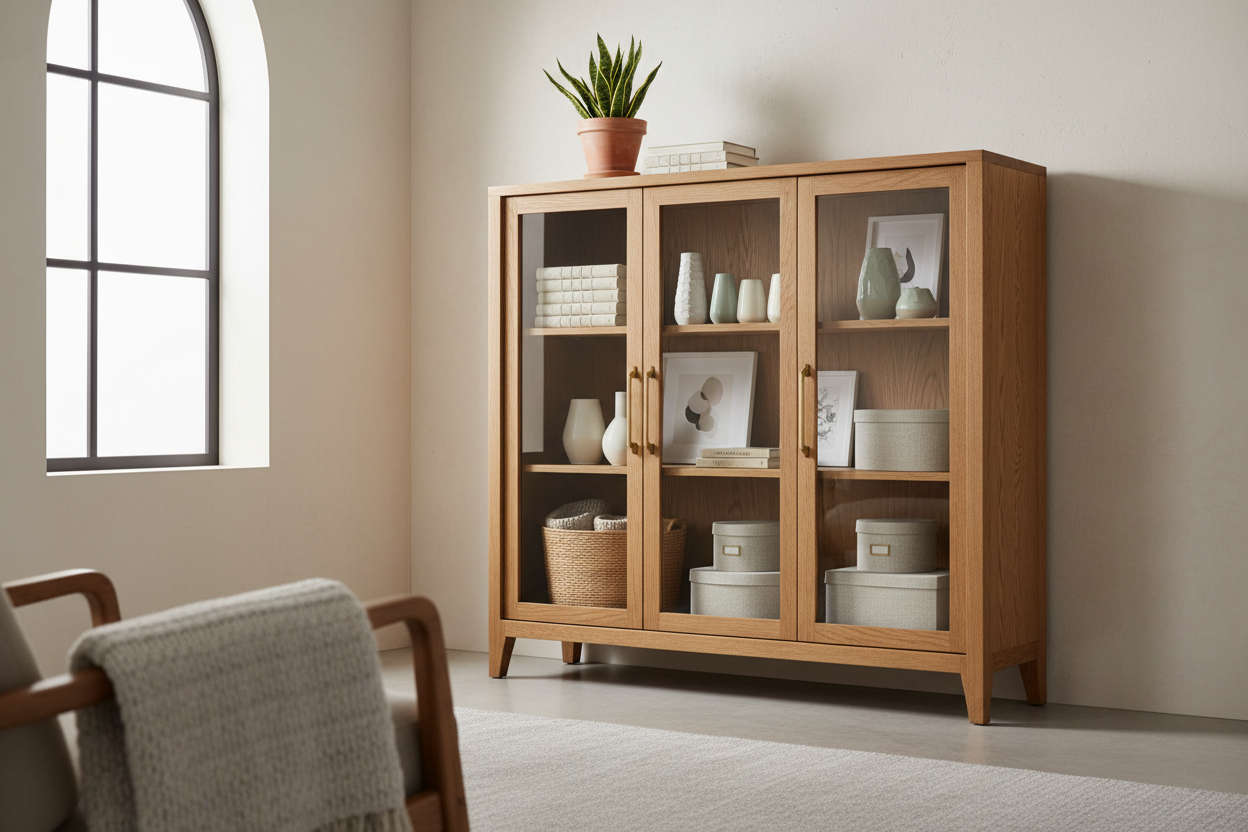
Finding the balance between a clean, minimalist aesthetic and the reality of owning things is a constant struggle in interior design. We all have items we need but don't necessarily want to see—stacks of mail, overflowing craft supplies, or that slow cooker used three times a year. The most effective solution isn't just throwing things away; it is investing in furniture that works double duty. Decorative storage cabinets with doors offer the perfect remedy by treating storage as a focal point rather than an afterthought. Unlike open shelving, which demands constant curation to look tidy, a cabinet with doors allows you to close the latch on the chaos and enjoy a polished room instantly.
The Unexpected Hero of Kitchen Design
Kitchens are notorious for accumulating gadgets and dry goods that overwhelm standard cabinetry. If you have a blank wall or an awkward corner, introducing a freestanding piece can dramatically shift the room's dynamic. Decorative kitchen storage cabinets bridge the gap between built-in architecture and movable furniture. They add character that standard rows of upper and lower cabinets often lack, breaking up the monotony of a fitted kitchen.
I learned this lesson the hard way in my previous home, a bungalow with a kitchen the size of a postage stamp. I had exhausted every inch of drawer space and my counters were disappearing under boxes of cereal and mixing bowls. I hunted down a vintage pine sideboard to place on a wall just outside the kitchen threshold. It wasn't technically "kitchen" furniture, but it became the most valuable player in the house. The deep shelves swallowed up the small appliances and pantry overflow, while the top surface became a dedicated coffee station. That single piece of furniture relieved the pressure on the main cooking area and made the whole house feel larger.
Choosing the Right Piece for Culinary Spaces
When selecting decorative storage cabinets for kitchen use, durability and proportion are paramount. You need a piece that can withstand traffic and potential spills. If the cabinet is going to house heavy items like cast iron cookware or stacks of ceramic plates, check the weight rating of the internal shelving. Flimsy particle board shelves will bow over time.
Consider the flow of traffic. In a galley kitchen or a tight dining nook, sliding doors are often superior to swinging doors because they don't block the walkway when open. For larger eat-in kitchens, a tall hutch or a buffet with swinging doors can act as a statement piece, anchoring the dining table and providing vertical storage that draws the eye upward.
The Warmth of Natural Materials
Material selection defines the vibe of the room. While painted finishes in navy or sage are trendy, decorative wood storage cabinets bring a timeless warmth that grounds a space. Wood grain introduces texture and organic patterns that prevent a room from feeling sterile. A rich walnut credenza creates a mid-century modern look, while raw or whitewashed oak leans into farmhouse or coastal aesthetics.
Wood also forgives a lot of sins. A scratch on a high-gloss lacquered cabinet is a tragedy; a scratch on a distressed wood cabinet is just "patina." If you are placing the unit in a high-traffic area like an entryway or a family room, solid wood or high-quality wood veneer is a smart investment for longevity.
Glass vs. Solid Doors
The door style dictates how you use the cabinet. Solid doors are the ultimate clutter hiders. They are perfect for board games, linens, or paperwork—things that are necessary but visually noisy. However, if you have a collection of beautiful serveware or books, glass-front doors offer protection from dust while still allowing you to display your treasures. A hybrid approach often works best: a tall cabinet with glass doors on the upper half for display and solid doors on the bottom for concealment gives you the best of both worlds.
Styling Your Cabinet
Once you have the cabinet in place, the surface becomes a design opportunity. Treat the top of a console or sideboard as a vignette. Start with lighting; a pair of table lamps or a single statement lamp adds height and ambiance. Layer in artwork by leaning a framed print against the wall or hanging a mirror above the unit to reflect light and make the room feel deeper.
Don't overcrowd the surface. Leave some negative space so the beautiful wood or finish of the cabinet can shine through. A simple tray to corral keys or remotes, a stack of coffee table books, and a vase with fresh greenery are usually enough to make the piece look intentional and styled.
Versatility Beyond the Kitchen
While these pieces shine in culinary spaces, their utility extends throughout the home. In a bathroom, a small cabinet can hold extra towels and toiletries, replacing flimsy wire racks. In a home office, a credenza hides the printer and files, making the room feel less corporate and more residential. The goal is to view storage not as plastic bins to be hidden in a closet, but as beautiful furniture that contributes to the room's architecture while silently doing the heavy lifting of organization.
Frequently Asked Questions
How deep should a storage cabinet be for a narrow hallway?
For narrow spaces like hallways or entryways, look for cabinets that are between 12 to 15 inches deep. This depth is sufficient to store shoes, books, or vases without encroaching too much on the walking path. Anything deeper than 18 inches may make the corridor feel cramped.
Can I mix wood tones if I buy a wooden storage cabinet?
Absolutely. You do not need to match your cabinet perfectly to your floors or dining table. The trick is to keep the undertones consistent (warm with warm, cool with cool) or go for high contrast, such as placing a dark walnut cabinet on light oak floors. This creates a layered, curated look rather than a "furniture showroom" appearance.
What is the best way to organize the inside of a deep cabinet?
Deep cabinets can become black holes where items get lost in the back. Use baskets, bins, or shelf risers to compartmentalize the space. Pull-out organizers or lazy Susans are also excellent for making items in the back accessible without having to unload the entire shelf.

Leave a comment
This site is protected by hCaptcha and the hCaptcha Privacy Policy and Terms of Service apply.