










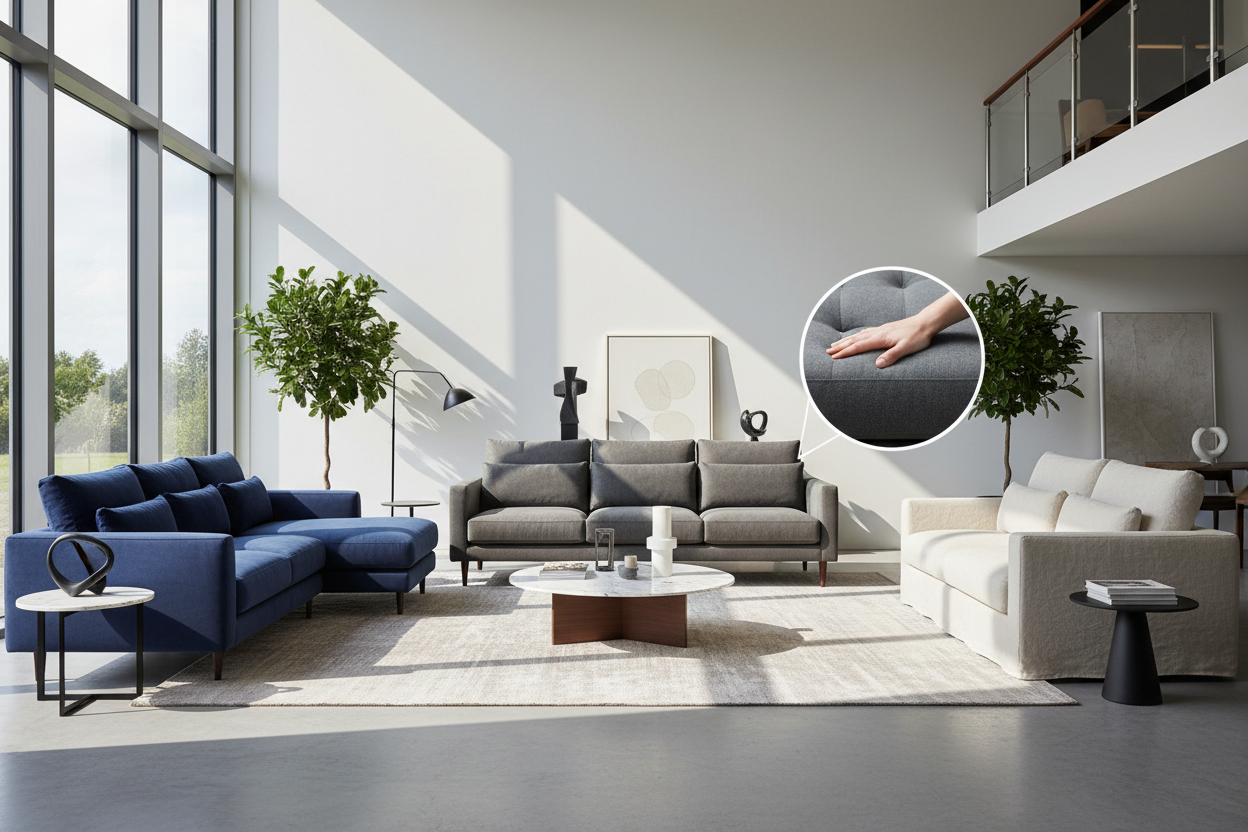
The living room is the gravitational center of a residence, and the sofa is its anchor. It is rarely just a place to sit; it is where we decompress, entertain, and occasionally work. As an interior designer, I often see clients rush this purchase, prioritizing a trendy color over structural integrity. Selecting the right home furnishings sofas requires looking past the showroom styling to understand what lies beneath the upholstery.
Quick Decision Guide: What Matters Most
If you are browsing home store sofas and feeling overwhelmed, focus on these four critical specifications to gauge quality immediately:
- Frame Construction: Look for kiln-dried hardwood (maple, oak) rather than particleboard or soft pine to prevent warping.
- Suspension System: 8-way hand-tied springs are the gold standard for longevity, though high-quality sinuous springs are acceptable for a modern, low-profile couch in home settings.
- Cushion Fill: High-resiliency (HR) foam wrapped in down provides the best balance of structure and comfort; pure foam can feel stiff, while pure down requires constant fluffing.
- Joint Joinery: Ensure the frame uses dowels, screws, and corner blocks (glued and screwed) rather than staples alone.
Analyzing the Silhouette and Scale
When curating home furniture, the couch must speak the same language as the architecture. A common error is buying a sofa that is physically too large or visually too heavy for the room. For a "floating" layout where the furniture sits away from the walls, a sofa with a lower back and finished rear profile is essential.
Conversely, sofas at home furniture setups that are pushed against a wall can afford a higher back and deeper seat depth. Pay attention to the "visual weight." A tuxedo-style sofa (arms and back at the same height) creates a structured, formal look, while a loose-back Lawson style offers a relaxed, inviting vibe suitable for a casual household sofa.
Material Selection: Durability Meets Design
The fabric is the interface between the user and the furniture. When selecting a couch and home decor scheme, consider the "rub count" (double rubs). For a high-traffic family room, aim for 50,000+ double rubs.
Performance Fabrics vs. Natural Fibers
While a linen home decor sofa offers a breathtaking, organic texture, it has zero stain resistance and wrinkles the moment you look at it. For clients with children or pets, I almost exclusively specify performance velvets or crypton fabrics. These mimic the hand-feel of natural fibers but allow you to wipe away spills. If you are looking at house couches that need to survive claws and paws, avoid loose weaves like bouclé, which can snag easily.
Space Planning and Ergonomics
Ergonomics are often overlooked in favor of aesthetics. A deep sofa in home theaters (over 40 inches) is perfect for lounging but terrible for conversation, as it forces guests to slouch. Standard depth sits between 36 and 38 inches.
Furthermore, consider the traffic flow. There should be at least 18 inches between the sofa couch home layout and the coffee table, and a minimum of 30 inches of walking path around the perimeter. If you are tight on square footage, look for at home sofas with "tight backs" (no loose cushions) and narrow track arms to maximize seating width without increasing the overall footprint.
My Personal Take on Home Furnishings Sofas
I learned a hard lesson early in my career regarding sofas for house projects with tight entryways. I once specified a stunning, single-frame 96-inch velvet sofa for a client's second-floor apartment. We focused entirely on how the home decor couch would look in the room, obsessing over the color and the leg finish.
On delivery day, the sofa physically fit through the door, but it couldn't make the turn in the hallway. We had to hire a specialized furniture medic to disassemble the frame on the sidewalk and rebuild it inside the living room. It cost an extra $600 and nearly gave me a heart attack.
Since then, my rule is simple: If the access is tricky, I always opt for modular house sofas or designs with removable legs. Also, a detail often missed is the "decking"—the fabric under the seat cushions. I once bought a budget couch home piece for my own basement, and the decking was a cheap black polyester that showed every time the cushions shifted. Now, I always check that the main fabric continues at least 4 inches onto the deck (called a "self-deck"). It’s a small detail that screams quality.
Conclusion
Investing in the right sofa is about more than filling a space; it is about defining how you live. By prioritizing a kiln-dried frame, appropriate suspension, and performance textiles, you ensure your purchase remains a staple of your interior design for years to come. Don't just fill a room; curate it.
Frequently Asked Questions
How do I know if a sofa will fit through my door?
Measure the height and width of all doorways and hallways. Compare this to the sofa's diagonal depth (the measurement from the top back of the frame to the bottom front). If the diagonal depth is less than the door width, it should pivot through.
What is the best cushion fill for avoiding sagging?
For sofas house usage that retains shape, look for a high-density foam core (at least 1.8 lbs density) wrapped in a layer of Dacron or a down-feather blend. Avoid 100% down cushions unless you are prepared to fluff them daily.
Can I mix different styles of sofas in one room?
Yes. A common design trick for at home couches is to pair a modern, clean-lined sofa with vintage or traditional armchairs. The contrast creates a curated, collected-over-time aesthetic rather than a "catalog" look.



Leave a comment
This site is protected by hCaptcha and the hCaptcha Privacy Policy and Terms of Service apply.