










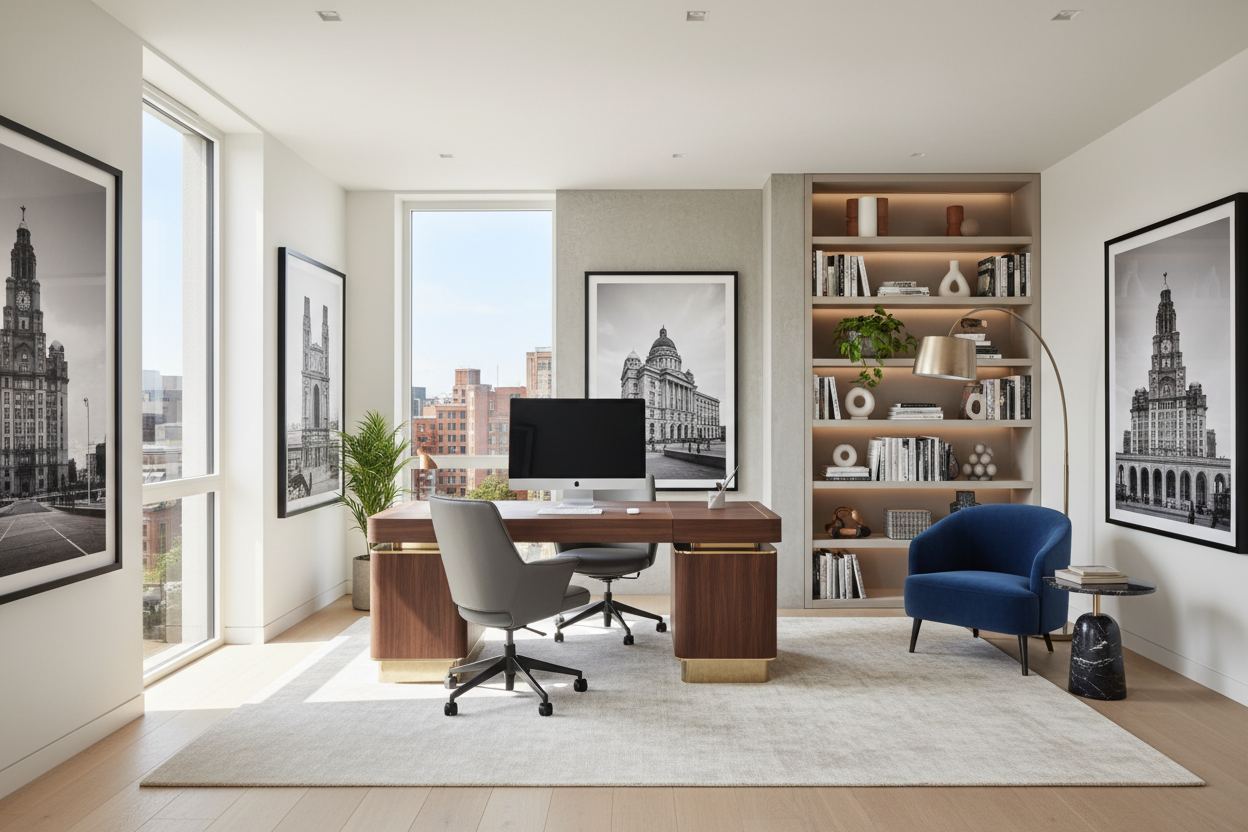
When clients approach me to redesign their workspaces, they often cite the efficiency and sleek lines of commercial hubs as their primary inspiration. There is a growing trend to replicate the authoritative, structured feel of major administrative centers—specifically the brutalist-meets-modern functionalism found in Liverpool's business district. You don't need a home office l3 9pp contact number to get in touch with high-end commercial design; you can replicate the professional aura of Liverpool’s government buildings right in your own study. By blending industrial durability with residential comfort, we can create a space that commands respect and enhances productivity.
Key Features of the Capital Aesthetic
- Material Integrity: Prioritize high-pressure laminates (HPL) or solid oak with matte finishes to resist glare and wear.
- Ergonomic Silhouettes: Look for seating with synchro-tilt mechanisms and lumbar support, mimicking 24-hour control room standards.
- Lighting Temperature: Aim for 4000K (cool white) task lighting to maintain alertness, balanced with warm ambient floor lamps.
- Acoustic Control: Incorporate PET felt panels or heavy drapery to dampen sound, essential for a professional audio environment.
- Cable Management: Integrated grommets and spine vertebrae are non-negotiable for that clean, wire-free 'corporate' look.
Architectural Inspiration: The Capital Building
To achieve this look, we must analyze the source. When we look at the architectural integrity of the capital new hall place liverpool l3 9pp, we see a marriage of function and form. The building utilizes robust materials that convey permanence and stability. In your own home, avoid flimsy particle board. Instead, opt for a 'floating' desk design anchored to a wall or a heavy-set executive desk that mimics the grounding presence of New Hall Place. The goal is to create a focal point that feels immovable and significant.
Spatial Planning and Flow
Give your workspace the prestige of a home office capital building liverpool address by utilizing industrial space planning techniques. In commercial design, 'circulation paths' are critical—you should never have to squeeze past furniture. Ensure there is at least 900mm of clearance behind your desk chair. This not only prevents claustrophobia but allows for the free movement required during long work sessions. Visual balance is equally important; if you have a heavy desk, counterbalance it with a tall, slender shelving unit or a large piece of abstract art.
Lighting: The Unsung Hero of Productivity
Much like the lighting schemes found in the capital building liverpool home office, your personal space requires zoning. Overhead lighting should never be your sole source of illumination, as it creates harsh shadows on the work surface. I recommend an articulated task lamp with a high CRI (Color Rendering Index) of 90+. This ensures that color swatches, documents, and screens look crisp and accurate, reducing eye strain over an eight-hour day. Layer this with dimmable ambient lighting to transition the room from 'work mode' to 'evening mode' seamlessly.
My Personal Take on home office l3 9pp contact number
In my years sourcing furniture for high-stakes home offices, I’ve learned that the "commercial look" often comes with a hidden drawback: texture. I once designed a space heavily inspired by the Liverpool commercial district, using cool greys and glass. While it looked stunning in photos, the client called me a week later complaining about the "coldness" of the desk surface against their wrists.
The lesson? While we want the look of a corporate hub, we need the touch of a home. I now always insist on leather desk pads or soft-touch linoleum surfaces for desktops. It bridges the gap between the visual authority of a government building and the tactile comfort needed for a residential setting. Also, never underestimate the frustration of fingerprints on high-gloss finishes—matte is always the superior choice for a working desk.
Conclusion
Transforming your room isn't just about buying furniture; it's about adopting a mindset of professionalism. By borrowing the architectural language of The Capital Building—strength, order, and clarity—you can build a home office that is not just a place to sit, but a tool for success.
Frequently Asked Questions
How do I soften the industrial look of a commercial-style office?
Introduce organic textures. A wool rug, a leather chair, or a large indoor plant (like a Ficus Lyrata) can break up the rigid lines of metal and glass without compromising the professional aesthetic.
What is the ideal desk depth for a professional setup?
For a setup that accommodates multiple monitors and documents, aim for a depth of at least 80cm (31 inches). This provides enough focal depth to reduce eye strain, mimicking commercial workstation standards.
Is a commercial-grade chair worth the investment for a home office?
Absolutely. Commercial chairs are rated for 8+ hours of continuous use and often come with 10-12 year warranties. Residential chairs are typically rated for only 4 hours and degrade much faster.

Leave a comment
This site is protected by hCaptcha and the hCaptcha Privacy Policy and Terms of Service apply.