










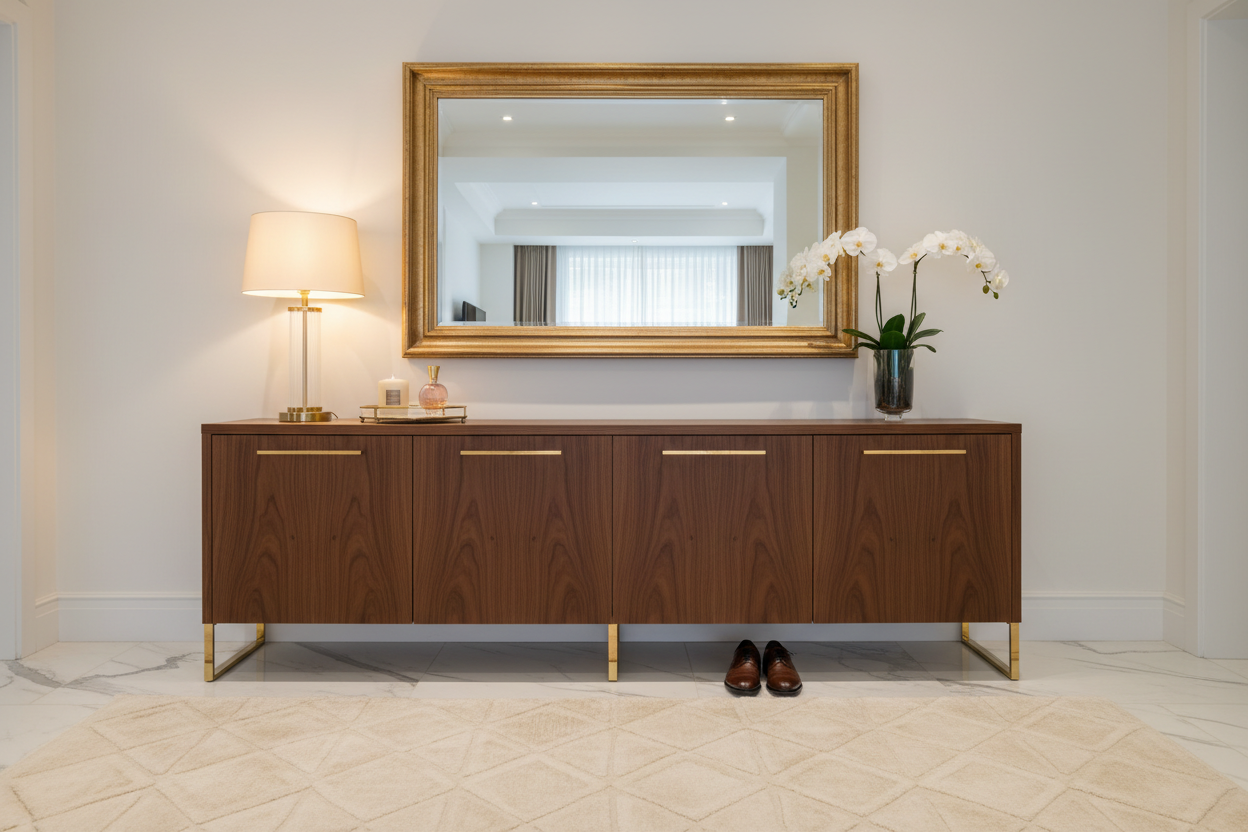
The foyer is the handshake of your home; it sets the expectations for everything that follows. Yet, in my years of consulting, I have seen countless beautifully architectural spaces ruined by a pile of sneakers kicked against the baseboards. The solution is not just a basket or a mat—it is a dedicated entryway shoe cabinet. This piece of furniture is the workhorse of the front hall, bridging the gap between high-traffic utility and sophisticated design. Let’s explore how to select a piece that manages clutter without sacrificing your home's aesthetic integrity.
Key Features to Look For
Before committing to a purchase, review this checklist to ensure your selection balances form and function. This summary will help you filter through the endless options of shoe cabinets for entryway use:
- Ventilation: Look for slatted doors or discreet back-panel cutouts to prevent moisture buildup and odors.
- Depth & Mechanism: Choose tipping buckets for narrow hallways (under 10 inches deep) or standard shelving for larger foyers to accommodate boots.
- Material Resilience: Prioritize laminates or sealed woods that can withstand wet soles and mud without warping.
- Hardware Quality: Ensure hinges are soft-close and handles are substantial enough for daily, heavy-handed use.
Selecting the Right Silhouette and Material
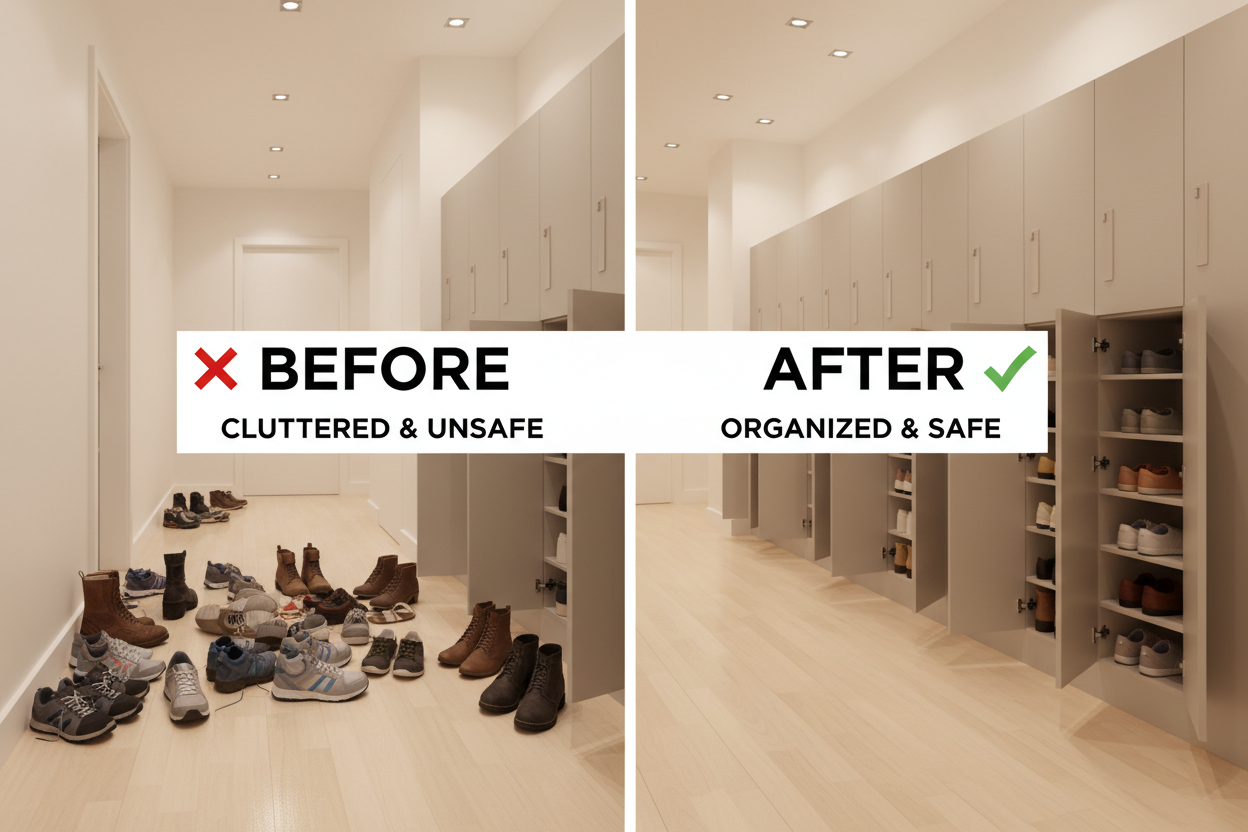
When curating entryway furniture, shoes are often the most difficult item to conceal because of their bulk. The silhouette you choose dictates the flow of the room. For tight urban apartments, I almost always recommend a vertical, wall-mounted shoe storage entryway cabinet. By lifting the unit off the floor, you create a sense of visual airiness that makes the hallway appear wider.
Materiality and Texture
A shoe cabinet for entryway placement takes a beating. While a high-gloss lacquer finish looks stunning in a showroom, it is unforgiving in a high-traffic zone. I advise clients to lean towards textured wood veneers or matte finishes. These surfaces are excellent at camouflaging the inevitable scuffs and fingerprints. If you crave a luxury touch, look for an entrance shoe cabinet with a stone or glass top, which provides a durable surface for dropping keys and mail without scratching the wood.
Ergonomics: The Tipping Bucket vs. Shelving
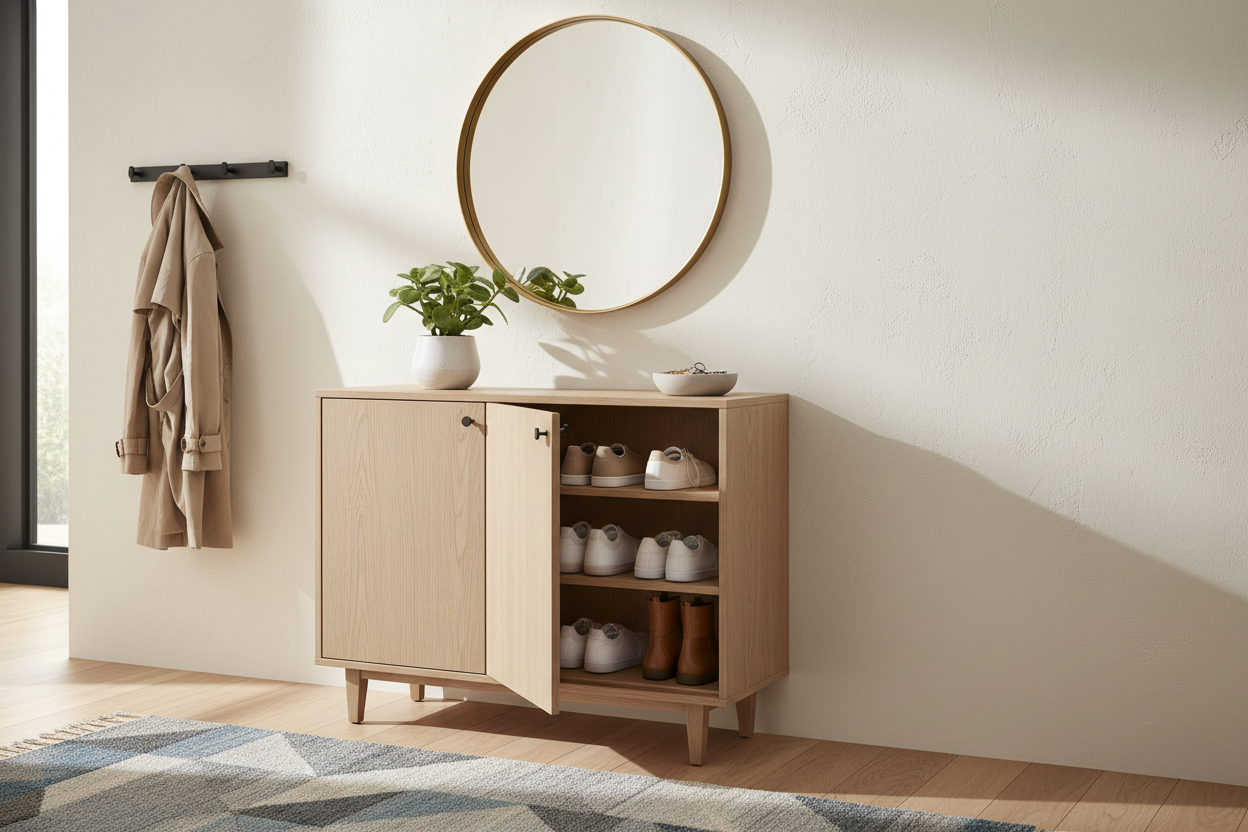
The internal mechanism is where the design meets the road. A standard shoe entrance cabinet with doors and shelves offers versatility; you can adjust shelf heights to fit tall boots or high-top sneakers. However, these require a deeper footprint (usually 14-16 inches).
Conversely, the tipping bucket style (often found in a slim shoe rack entryway cabinet) utilizes a pivot mechanism. These are fantastic space savers, often protruding less than 10 inches from the wall. The trade-off is capacity and fit; men's shoes larger than a size 11 often struggle to fit into standard tipping buckets without being angled awkwardly.
Styling the Vignette
Once the functional piece is in place, we must integrate it into the design scheme. Treat the top of your entryway furniture shoes storage as a console table. Anchor the space with a large mirror or artwork hung six to eight inches above the cabinet. This draws the eye up, away from the floor. Add a ceramic bowl for keys and a table lamp to provide warm, ambient lighting. This turns a utilitarian storage unit into a deliberate focal point.
Lessons from My Own Projects
I want to share a specific mistake I made early in my career so you don't have to. I once specified a stunning, push-to-open, matte black shoe cabinet for a client with three young children. It looked architectural and sleek in the photos.
Three months later, I visited for a follow-up. The "push-to-open" mechanisms were jammed because the kids were kicking the drawers to open them rather than using their hands. Furthermore, the matte black finish showed every single greasy finger mark and dust speck. We ended up replacing it with a mid-tone oak unit with robust, brass pull handles. The lesson? In a high-traffic zone, hardware is your friend. Handles protect the finish from hands, and textured wood grains are much more forgiving of real life than flat, solid colors.
Conclusion
Investing in the right storage transforms your morning routine and your home's first impression. By prioritizing durable materials, appropriate sizing, and thoughtful styling, your cabinet becomes more than just a place to hide boots—it becomes an essential element of your home's design language.
Frequently Asked Questions
How do I prevent odors in a closed shoe cabinet?
Ventilation is key. If your cabinet doesn't have a slatted design, ensure the back panel has ventilation holes. I also recommend placing small sachets of activated charcoal or cedar blocks inside the drawers to absorb moisture and neutralize smells naturally.
Will large mens' shoes fit in a slim tipping cabinet?
This is a common issue. Standard tipping cabinets often accommodate up to a US men's size 10 or 11 comfortably. For larger sizes, you must measure the internal diagonal depth of the drawer or opt for a straight-shelf cabinet design instead.
How deep should a shoe cabinet be for a narrow hallway?
For a narrow corridor, aim for a depth between 7 to 10 inches. This profile is slim enough to maintain a comfortable walking path (clearance) while still providing adequate storage for standard footwear.

Leave a comment
This site is protected by hCaptcha and the hCaptcha Privacy Policy and Terms of Service apply.