










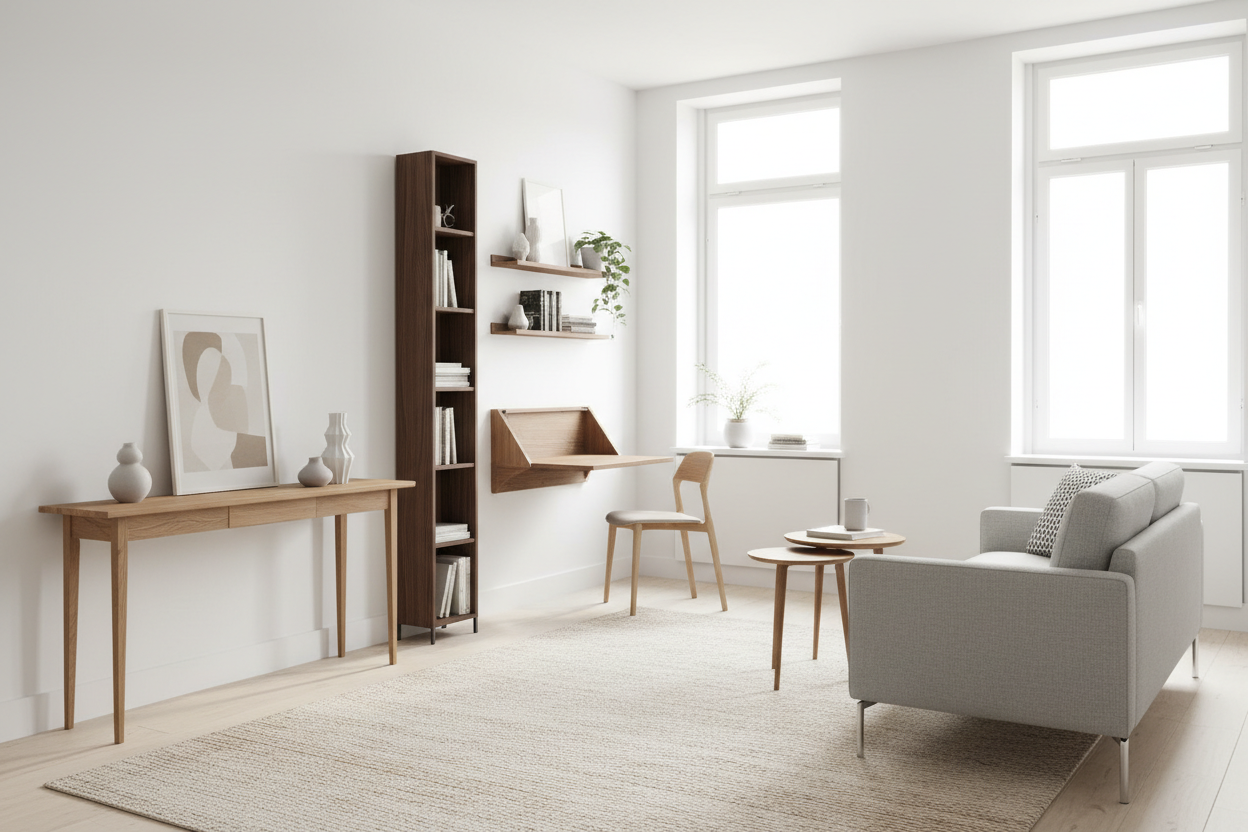
Living in a compact apartment taught me something valuable: regular furniture doesn't work when you're measuring spaces in inches rather than feet. I spent months stubbing my toes on bulky furniture legs and squeezing past oversized pieces that seemed to shrink my already limited square footage. The turning point came when I discovered that slim side tables could transform cramped corners into functional, stylish spaces without the constant navigation obstacle course.
A slim side table typically measures between 8 to 12 inches in depth, making it perfect for tight spaces where traditional tables would overwhelm the room. These narrow pieces slip effortlessly beside sofas, beds, or armchairs, providing surface space for lamps, drinks, or books without jutting into walkways. The beauty lies in their ability to be present without being intrusive—exactly what small space living demands.
Understanding the Different Types of Space-Saving Tables
The terminology can get confusing when shopping for compact furniture. A thin accent table generally refers to any decorative table with a reduced profile, which might include console tables, end tables, or display pieces. These serve both practical and aesthetic purposes, often featuring interesting designs that draw the eye upward rather than outward.
Meanwhile, a side table slim in design focuses specifically on functionality beside seating areas. I've found these particularly useful in my living room, where a 10-inch deep table holds my reading lamp and coffee mug without blocking the pathway to my bookshelf. The narrow footprint means I can actually walk through my apartment without turning sideways.
The Corner Solution Nobody Talks About
Corners are the forgotten real estate of small homes. A skinny corner table takes advantage of these awkward angles that usually collect dust and nothing else. These triangular or wedge-shaped pieces fit snugly into corners, creating usable surface area from previously wasted space.
I placed one in my entryway corner last year, and it completely changed how I use that area. The table holds my keys, mail, and a small plant, turning a dead zone into an organized drop spot. The slim profile means it doesn't interfere with opening the door fully—a detail that matters more than you'd think in tight quarters.
Material Choices That Make a Difference
Metal frames with glass or wood tops tend to work best for maintaining that airy feeling. The transparency of glass or the visual lightness of thin metal legs prevents these pieces from adding visual weight to a room. Solid wood options can work too, but choosing lighter finishes helps maintain an open atmosphere.
My personal favorite is a combination of black metal legs with a light oak top. The contrast adds visual interest while the narrow 9-inch depth keeps it from dominating my bedroom. The metal frame also provides surprising stability despite the slim construction—something I initially worried about when shopping for these pieces.
Practical Considerations Beyond Measurements
Height matters as much as depth when selecting these tables. Standard side tables range from 22 to 30 inches tall, but you'll want to match the height to your seating. A table that's too low or too high becomes awkward to use, defeating the purpose of having it there in the first place.
Storage is another factor worth considering. Some slim designs incorporate a small drawer or lower shelf, doubling their functionality without increasing their footprint significantly. I've seen clever designs with magazine racks built into the sides or pull-out trays that extend when needed and tuck away when not in use.
Styling Without Overwhelming
The temptation with any new furniture piece is to immediately cover it with decorative items. With narrow tables, restraint becomes crucial. One or two carefully chosen items—perhaps a small lamp and a single decorative object—work better than cluttering the limited surface area.
I learned this the hard way after initially cramming my thin accent table with a lamp, books, a plant, and various trinkets. The table looked overwhelmed, and nothing on it was easily accessible. Scaling back to just a lamp and one rotating decorative piece made the whole setup more functional and visually appealing.
Where These Tables Work Best
Bedrooms benefit enormously from slim nightstands, especially when you're working with a queen or king bed in a modest-sized room. The narrow profile provides the essentials—a spot for your phone, water glass, and reading material—without making the room feel cramped.
Hallways and entryways represent another ideal location. A narrow console table along a hallway wall creates a display area and catch-all spot without impeding traffic flow. I've used a 10-inch deep table in my hallway for two years, and guests regularly comment on how it makes the space feel intentional rather than like an afterthought corridor.
Living rooms with challenging layouts often have that one awkward spot where a regular table won't fit. Behind a sofa that's not quite against the wall, beside a recliner in a corner, or in that narrow gap between furniture pieces—these are all opportunities for a side table slim enough to squeeze in.
Shopping Smart for Quality
Not all slim tables are created equal. The reduced dimensions mean structural integrity becomes more important, not less. Look for solid joinery, stable bases, and weight limits that match your intended use. A wobbly table is annoying at any size, but a narrow one seems to amplify the instability.
Reading reviews helps identify which brands prioritize stability in their slim designs. I've found that pieces marketed specifically for small spaces tend to be better engineered than regular furniture that's simply been scaled down. The designers of space-saving furniture understand the unique challenges and typically build in solutions.
Price Points and Value
Expect to pay anywhere from $50 to $300 depending on materials and construction quality. The mid-range options around $100-150 often provide the best balance of durability and design. Ultra-cheap options may save money initially but often require replacement within a year or two.
I've owned both ends of the spectrum. The $40 table I bought first wobbled from day one and fell apart within eight months. The $130 replacement has been rock-solid for over three years. Sometimes the math works out better when you invest a bit more upfront.
Making the Most of Your Purchase
Once you've selected the right piece, placement becomes key. Measure not just the table's dimensions but also the space around it. You'll want at least 24-30 inches of clearance for comfortable walking paths. In really tight spots, even 18 inches can work if it's not a high-traffic area.
Consider the table's purpose before committing to a location. A reading nook needs different table features than an entryway catch-all spot. Matching form to function ensures you'll actually use the piece rather than working around it.
Lighting also plays a role in how these tables function in your space. A skinny corner table in a dim corner might need a small lamp to make it truly useful. The table then becomes both a lighting solution and a functional surface, maximizing its value in your home.

Leave a comment
This site is protected by hCaptcha and the hCaptcha Privacy Policy and Terms of Service apply.