










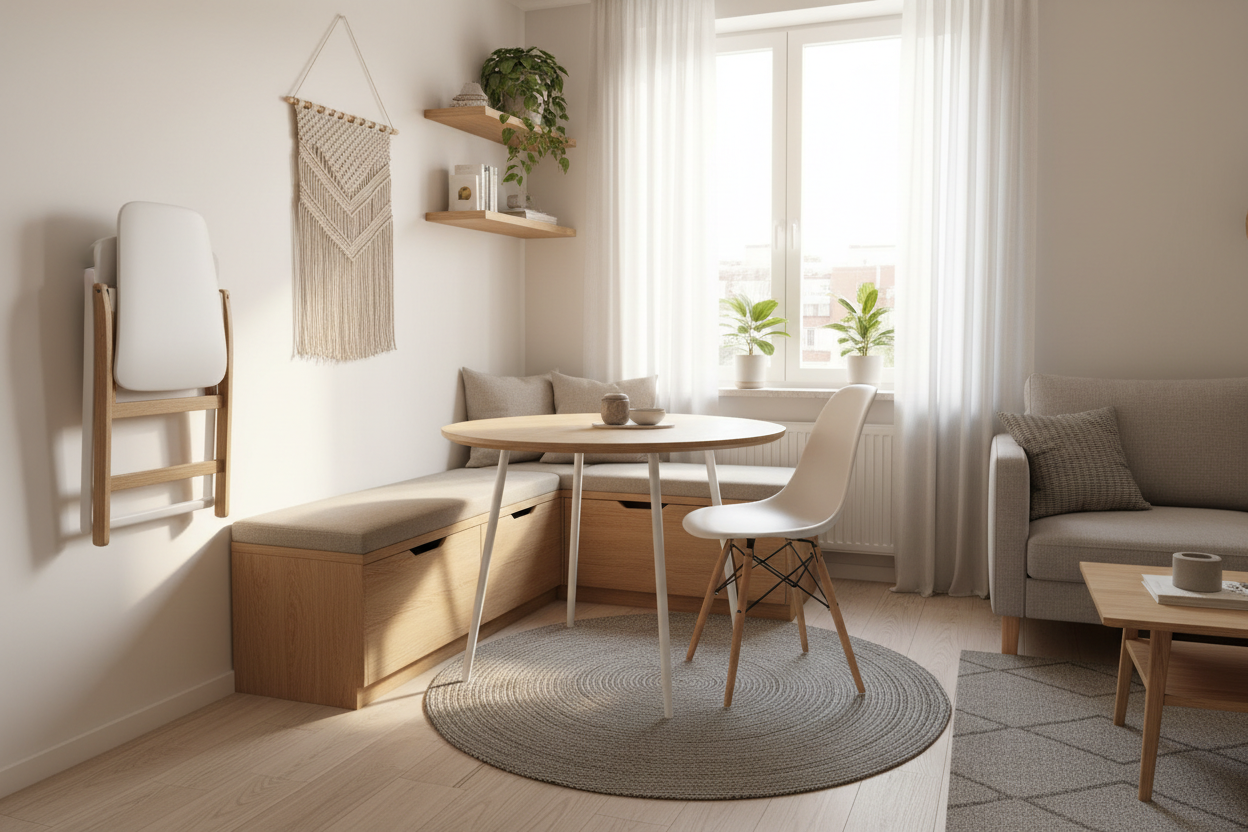
Living in a compact apartment or home doesn't mean sacrificing the joy of shared meals and meaningful conversations around a proper dining table. After years of helping friends furnish their city apartments and downsizing my own living space, I've learned that finding the right small dining table sets requires balancing functionality, style, and spatial awareness. The good news? Today's furniture market offers more innovative solutions than ever before for those of us working with limited square footage.
Understanding Your Space Before You Shop
Before browsing small space dining room sets, take accurate measurements of your available area. This might seem obvious, but I've witnessed countless purchases that ended in disappointment simply because someone eyeballed their space. Measure the length and width of your dining area, but also consider the clearance space needed around the table—typically 36 inches on each side where chairs will be pulled out. In tighter spaces, you can reduce this to 24 inches, though it becomes less comfortable for regular use.
Consider the room's traffic flow. Your small space small dining table set shouldn't create an obstacle course between your kitchen and living area. Think about how people move through the space during meal preparation, serving, and cleanup. A well-placed compact dining set can actually improve flow rather than hinder it.
Size and Shape: Making Strategic Choices
Round tables deserve serious consideration for small spaces. They eliminate sharp corners that can bruise shins and reduce usable floor space. A 36-inch round table comfortably seats four people and creates a more intimate dining experience. However, if your space is narrow, a rectangular or square table might fit better against a wall or in a corner.
Drop-leaf and extendable tables represent some of the smartest solutions in table and chair set for small space categories. These versatile pieces function as compact two-person tables for daily use but expand to accommodate guests when needed. I remember hosting a dinner party in my 500-square-foot apartment using a drop-leaf table that normally sat flush against the wall—it was a game-changer for my entertaining capabilities.
Chair Styles That Save Space
The chairs you select matter just as much as the table itself. When evaluating kitchen table with chairs for small spaces, look for armless designs that tuck completely under the table. This simple feature can save 6-12 inches per side, making a significant difference in tight quarters.
Stackable chairs offer flexibility for those who entertain occasionally. Store extra chairs in a closet and bring them out only when needed. Alternatively, consider benches for one or both sides of the table. A bench can seat more people than individual chairs in the same linear space and slides completely under the table when not in use.
Transparent or light-colored chairs create visual spaciousness even when they occupy physical space. Acrylic chairs, while not everyone's aesthetic preference, genuinely make a room feel larger because they don't block sightlines.
Material Considerations for Compact Living
When selecting table sets for small spaces, material choice affects both aesthetics and practicality. Glass tabletops create an airy, open feeling and make rooms appear larger than solid wood surfaces. However, they require frequent cleaning and show every fingerprint and water spot.
Wood tables bring warmth and durability, with lighter finishes like oak, maple, or whitewashed pine contributing to a sense of openness. Darker woods can feel heavy in small rooms but work well if you're creating a cozy, intimate atmosphere.
Metal and mixed-material sets often feature slimmer profiles than all-wood construction, maximizing seating capacity while minimizing visual bulk. Look for tables with narrow legs rather than chunky pedestals or trestle bases.
Multi-Functional Design Solutions
The best small dining table sets for compact homes often serve multiple purposes. Counter-height tables can double as workspace or food preparation areas in studio apartments. Some designs incorporate storage shelves or drawers beneath the tabletop—perfect for storing placemats, napkins, or even cookbooks.
Wall-mounted drop-down tables represent the ultimate space-saving solution, though they require permanent installation and aren't suitable for renters. These fold flat against the wall when not in use, completely freeing up floor space.
Style Without Compromise
Small doesn't mean boring. Today's compact dining sets come in every style imaginable, from mid-century modern to farmhouse chic, industrial to Scandinavian minimalist. The key is choosing a style that complements your existing décor while maintaining the visual lightness that small spaces demand.
Avoid overly ornate designs with excessive detailing, which can make compact furniture feel cluttered. Clean lines and simple silhouettes work best in tight quarters. That said, don't be afraid of color or personality—a boldly colored set can become a focal point that draws the eye upward, making ceilings feel higher.
Practical Shopping Tips
Always check the assembled dimensions, not just the table surface measurements. Some sets look compact in showrooms but have wide-spreading legs that consume more floor space than anticipated. Read customer reviews specifically mentioning small apartments or condos—these provide real-world insights about how pieces function in limited spaces.
Consider purchasing floor models or display pieces, which are often discounted and allow you to see exactly what you're getting. If buying online, verify the return policy before ordering. What looks perfect in photos might overwhelm your actual space.
Test the stability of any set before purchasing. Lightweight construction helps with moving and rearranging, but the table should feel solid when you lean on it or when someone bumps into it during normal use.
Making It Work in Your Home
Once you've selected your small space dining room set, placement makes all the difference. In studio apartments, position the table to create a visual boundary between living and dining zones. In narrow spaces, place the table lengthwise along the longest wall rather than in the center of the room.
Use area rugs to define the dining space, but ensure the rug is large enough that chairs remain on it even when pulled out. This prevents the annoying catching that happens when chair legs transition between surfaces.
Overhead lighting can make or break a small dining area. A pendant light hung at the proper height (30-36 inches above the table surface) draws the eye upward and creates ambiance without consuming floor or surface space.
Remember that living with less space often means living more intentionally. The right dining set becomes more than furniture—it becomes the heart of your home, where meals are shared, conversations flow, and memories are made, regardless of square footage.


Leave a comment
This site is protected by hCaptcha and the hCaptcha Privacy Policy and Terms of Service apply.