










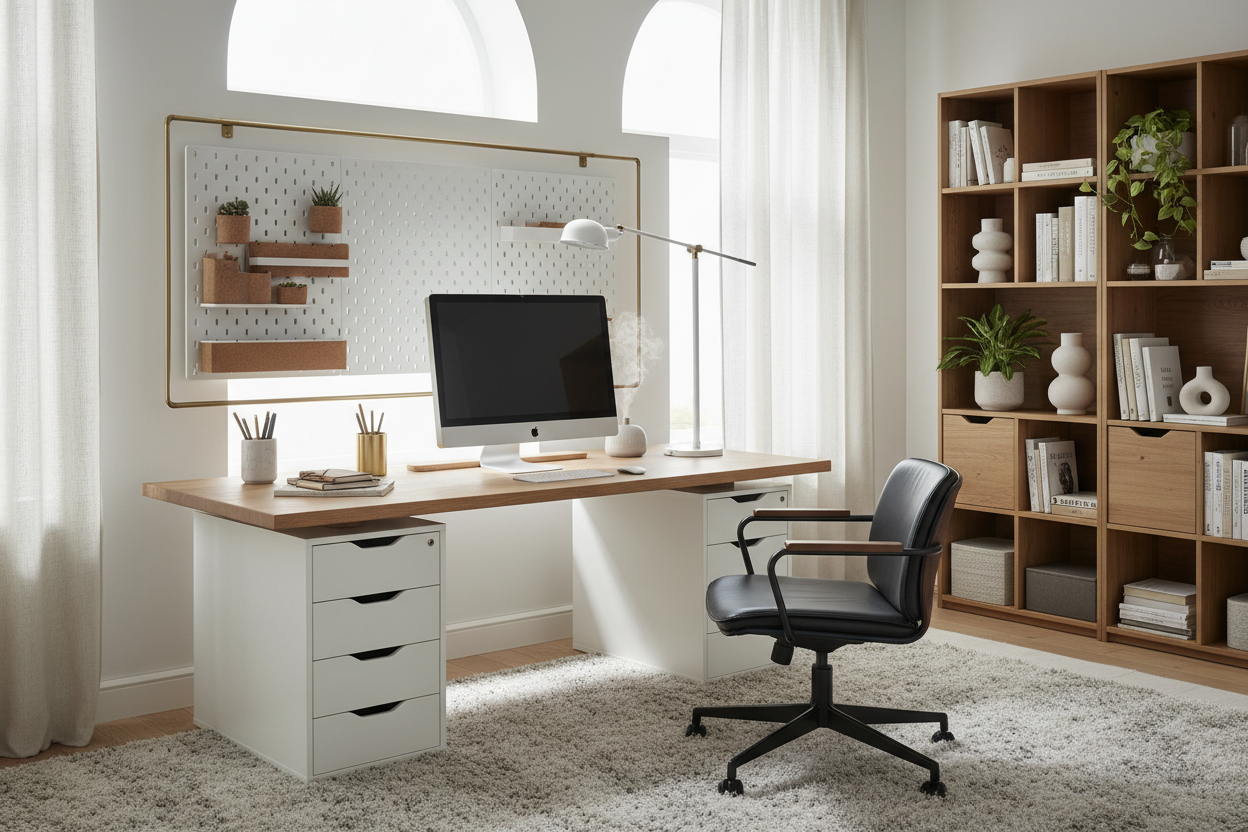
Balancing a child’s need for academic focus with your home’s curated interior is a frequent design challenge. You want a designated area that encourages productivity, yet you dread the visual clutter of standard-issue student furniture. The solution often lies in the versatility of an ikea homework station, provided you approach it not just as a purchase, but as a modular foundation for a custom design. By selecting the right components and applying interior design principles regarding lighting and layout, you can create a workspace that feels bespoke rather than boxed.
Key Features to Look For
- Surface Durability: Distinguish between hollow-core (honeycomb structure) tops like LINNMON versus solid veneer or particleboard options for longevity.
- Modular Adaptability: prioritizing systems like ALEX or BESTÅ that allow for future expansion as the student grows.
- Ergonomic Clearance: Ensuring the desk height (standard 29") allows for proper legroom when paired with an adjustable task chair.
- Integrated Cable Management: Look for pre-drilled grommets or hidden trays (common in the MICKE series) to maintain visual minimalism.
Selecting the Right Foundation
As a designer, I often advise clients to look past the pre-bundled desk sets and instead mix and match components to achieve a more substantial silhouette. The goal is to avoid the "temporary" look that lightweight furniture often projects.
Material Quality and Texture
When curating a homework station ikea setup, material selection is paramount. The popular white laminate is functional, but it can feel sterile. Consider the warmth of the KARLBY walnut veneer countertop placed over ALEX drawer units. This combination provides a tactile richness and a visual weight that mimics custom joinery. If you must use a laminate top, ensure it is scratch-resistant melamine rather than foil finish, which tends to peel at the edges over time.
Space Planning and Layout
The placement of the station dictates its utility. In smaller urban apartments or shared family rooms, visual integration is key. Avoid floating the desk in the middle of the room unless you have floor outlets; trailing cords ruin the aesthetic immediately.
Zoning with Verticality
Floor space is premium real estate. Utilize the vertical plane to draw the eye upward and reduce desktop clutter. The SKÅDIS pegboard system is excellent here, but to elevate the look, spray paint the metal components in a matte brass or matte black to match your room’s hardware. This creates a cohesive design language rather than a disjointed add-on.
Lighting and Ergonomics
Ambient lighting is insufficient for focused tasks. A homework station requires layered lighting. I recommend a directional task lamp with a warm temperature bulb (2700K-3000K) to reduce eye strain without creating the harsh, clinical feel of cool white light. Furthermore, the chair is not a place to skimp. While IKEA offers seating, pairing a basic desk with a higher-end, upholstered ergonomic chair can instantly upgrade the entire vignette.
My Personal Take on the IKEA Homework Station
In my years of installing these setups for clients, I’ve learned a few "unpolished" truths that the catalog won't tell you. Specifically regarding the MICKE series: the back panel on the add-on unit is essentially a folded piece of cardboard. It creates a visible seam that looks cheap once assembled.
Whenever I use this piece, I refuse to install it as-is. I either discard the back panel entirely (if the wall behind is painted a nice color) or I cover that flimsy board with a peel-and-stick wallpaper before nailing it on. Also, a word of warning on the white matte finishes: they are magnets for red marker stains that ghost even after scrubbing. I always insist my clients purchase a transparent desk pad immediately—it saves the finish and keeps the resale value intact.
Conclusion
Creating a functional study space doesn't require a custom millwork budget. By treating IKEA components as a raw canvas and applying thoughtful design principles—focusing on texture, lighting, and strategic reinforcement—you can build a workspace that supports learning while enhancing your home's aesthetic value.
Frequently Asked Questions
What is the best IKEA series for a small bedroom?
The MICKE series is generally the most space-efficient due to its shallow depth (approx. 19 inches), making it ideal for tight corridors or small nooks, though the ALEX series offers better storage density.
How can I make my IKEA desk look like a built-in?
To achieve a built-in look, fit the desk wall-to-wall if possible, and use filler strips (cut from matching cover panels) to close any gaps between the desk and the wall. Caulk the seams for a seamless transition.
Is the honeycomb paper filling durable enough for daily homework?
For standard writing and laptop use, yes. However, for heavy monitor arms or clamping accessories, the hollow core can crush. In those cases, reinforce the clamping area with a small block of wood or opt for a solid particleboard top.

Leave a comment
This site is protected by hCaptcha and the hCaptcha Privacy Policy and Terms of Service apply.